
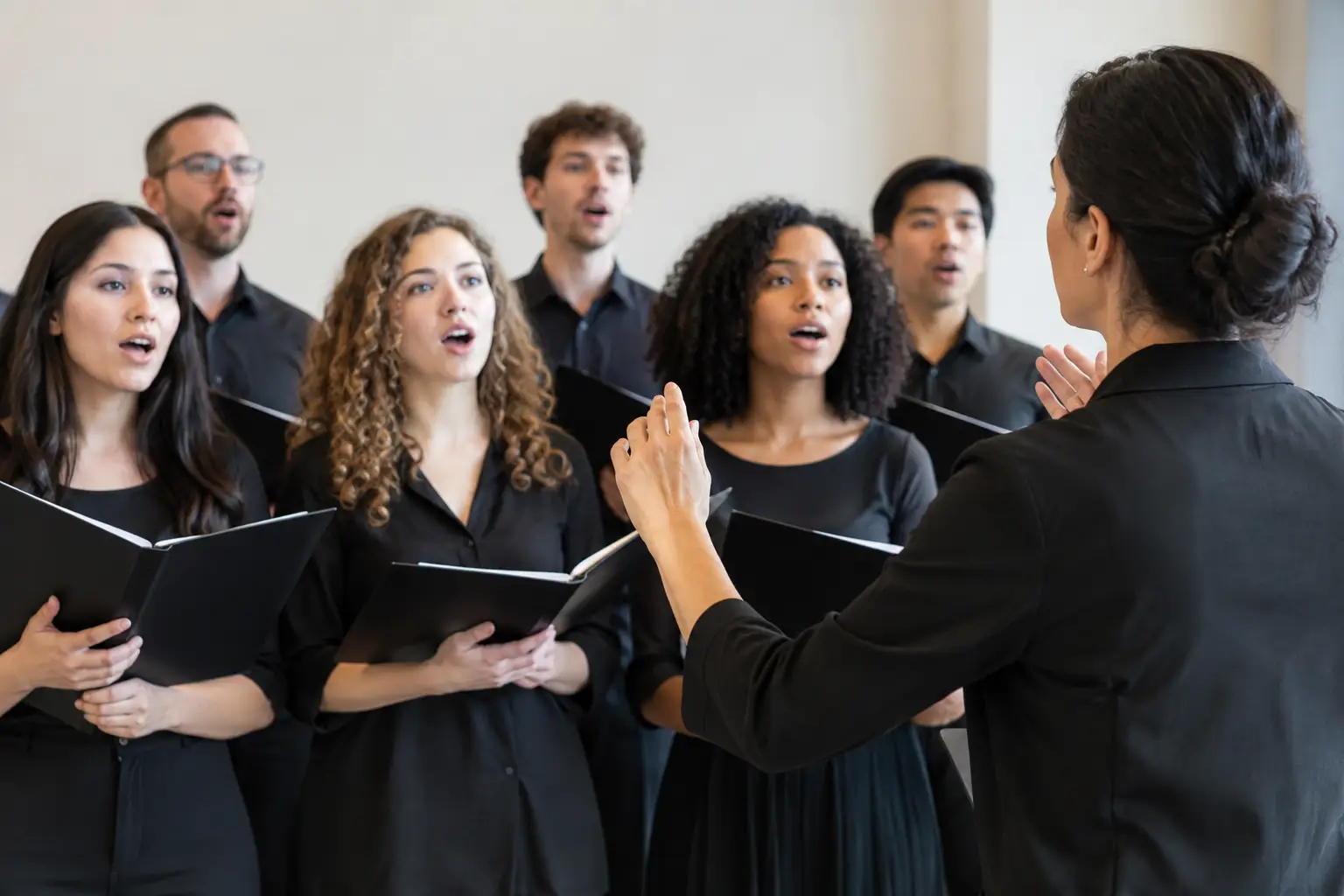
A memorable choral masterclass rarely begins with the first downbeat. It begins when singers arrive ready to listen differently: to the guest conductor, to one another, and to the story their shared sound can tell. This guía de clases magistrales corales is designed for choir directors and singers who want more than a polished performance. It is for ensembles seeking artistic growth, cultural exchange, and the kind of musical encounter that strengthens a choir long after the trip home.
A masterclass can bring a new perspective to familiar repertoire in a single rehearsal. A respected clinician may hear an imbalance in the altos, invite a more daring vowel from the tenors, or reveal a phrase ending that transforms the emotional meaning of a text. Those moments matter because they give every singer a clearer role in the collective sound.
What makes a choral masterclass meaningful
The strongest masterclasses balance high expectations with a welcoming room. Singers need to feel challenged, but they also need permission to take risks. A guest conductor who asks for a brighter tone, freer breath, or more unified diction is not simply correcting details. They are helping the ensemble discover what becomes possible when individual voices serve one musical purpose.
For directors, this is an opportunity to observe their choir from a fresh angle. You may recognize habits that have become invisible in your own rehearsal process, or find language that helps your singers understand a concept you have been teaching for months. The goal is not to replace your artistic leadership. It is to add another trusted voice to your ensemble’s learning.
The setting also shapes the experience. In an international festival, a masterclass becomes a meeting place for traditions, languages, and musical approaches. A warm-up can become a lesson in how another culture hears resonance. A discussion of text can reveal a shared human emotion across national borders. That is where technical work gains deeper meaning.
Guía de clases magistrales corales: prepare before you travel
The most productive masterclass is not a surprise rehearsal. Preparation allows singers to spend less time locating notes and more time responding to artistry, communication, and ensemble awareness.
Choose repertoire with a clear purpose
Select music your choir can sing securely enough to be flexible. A challenging work is welcome, but a piece still dominated by note-learning may limit what the clinician can explore. Choose repertoire with contrasting opportunities: perhaps one selection that highlights blend and legato, another with rhythmic energy, or a work whose text invites thoughtful interpretation.
If the masterclass is part of a festival program, study the score in its full context. Discuss the composer, language, and message before departure. When singers understand why a piece matters, feedback about dynamics or phrasing no longer feels like a technical exercise. It becomes part of communicating something honest.
Set an intention beyond sounding better
Every choir wants to sing well. A stronger intention asks what the ensemble hopes to become through the process. You might set a goal around unified vowels, confident soloists, listening across sections, or singing with greater generosity toward the audience.
For groups traveling internationally, consider a shared intention connected to cultural humility. Invite singers to arrive curious rather than convinced that their way is the only way. This mindset is especially valuable when meeting choirs of different ages, faith traditions, languages, and rehearsal cultures. Musical excellence and open-hearted exchange do not compete with one another. They reinforce one another.
Build a practical preparation plan
In the weeks before the event, make time for score review, text work, and basic performance routines. Singers should know where to stand, how to enter and exit calmly, and how to keep focus when a clinician stops and restarts a passage. These details protect valuable rehearsal time.
Directors can also normalize feedback in advance. Explain that comments may be addressed to a section, an individual, or the full ensemble, and that none of this is a judgment of anyone’s worth. The most useful response is immediate curiosity: try the suggestion fully, listen for the result, and ask a concise question when clarification is needed.
How singers can make the most of the room
A masterclass asks singers to be active participants. Bring a pencil, water, music that is clearly marked, and a willingness to adjust quickly. More importantly, bring attention. The instruction given to the sopranos may solve a resonance issue for the basses as well. The comment made about one phrase may illuminate the entire piece.
Listening is one of the most generous skills a choir can practice. When another section receives feedback, resist the urge to mentally check out. Notice how the change affects balance, color, consonants, and emotional direction. A choir improves fastest when every singer hears the whole, not only their own line.
Confidence matters, but it should not become defensiveness. If a guest conductor offers an interpretation that differs from what your choir has prepared, try it with commitment before deciding whether it serves the work. Not every suggestion will fit every ensemble or performance context. That is normal. The value lies in testing a new possibility with respect and discernment.
The director’s role during a guest-led session
A director creates the conditions for success before, during, and after the masterclass. Beforehand, communicate expectations clearly and make sure the clinician has accurate scores, pronunciation needs, and relevant background about the singers. If your ensemble includes youth singers, emerging musicians, or participants with different experience levels, that context can help the guest conductor shape their approach.
During the session, give the clinician space to lead. Your calm, attentive presence tells singers that this process is safe and worthwhile. Step in only when a logistical question needs an answer or when support is necessary. Avoid translating every comment into your usual vocabulary in real time. Let singers receive the guest artist’s perspective directly.
Afterward, reflect while the experience is fresh. Ask singers what surprised them, which change they heard most clearly, and what they want to carry into future rehearsals. Keep the conversation specific. “We sounded better” is encouraging, but “our final consonants became more unified when we watched the conductor’s release” gives the choir something practical to retain.
Turn feedback into lasting artistic growth
The real test of a masterclass is not the applause at its end. It is what happens in the rehearsals that follow. Choose two or three ideas to revisit rather than trying to preserve every comment at once. A new breathing concept or approach to vertical vowels needs repetition before it becomes part of the choir’s identity.
Record a rehearsal when appropriate, then listen together with kindness and purpose. Compare a passage before and after applying a specific idea. This helps singers hear progress as a shared achievement rather than as a vague compliment. It also reminds the ensemble that growth is ongoing, not confined to a special event.
For choirs gathering through Choral Fest Costa Rica, this continuation carries special weight. The festival experience brings together music, travel, community concerts, and encounters that can widen a singer’s sense of belonging. When a choir returns home and continues to sing with greater attention, courage, and empathy, the lessons extend beyond the rehearsal room.
A masterclass can change how a choir listens
The finest choral education does not ask singers to imitate a guest conductor forever. It helps them hear more deeply, respond more generously, and take greater responsibility for the sound they create together. Sometimes the breakthrough is a cleaner vowel or a more connected breath. Sometimes it is the realization that a room full of voices from different places can become one musical family.
Carry that spirit into the next rehearsal. Make space for the careful listening, brave experimentation, and shared purpose that a masterclass can awaken. Each phrase sung with intention is a small practice of harmony, and harmony remains one of the clearest ways a choir can offer peace to the world.