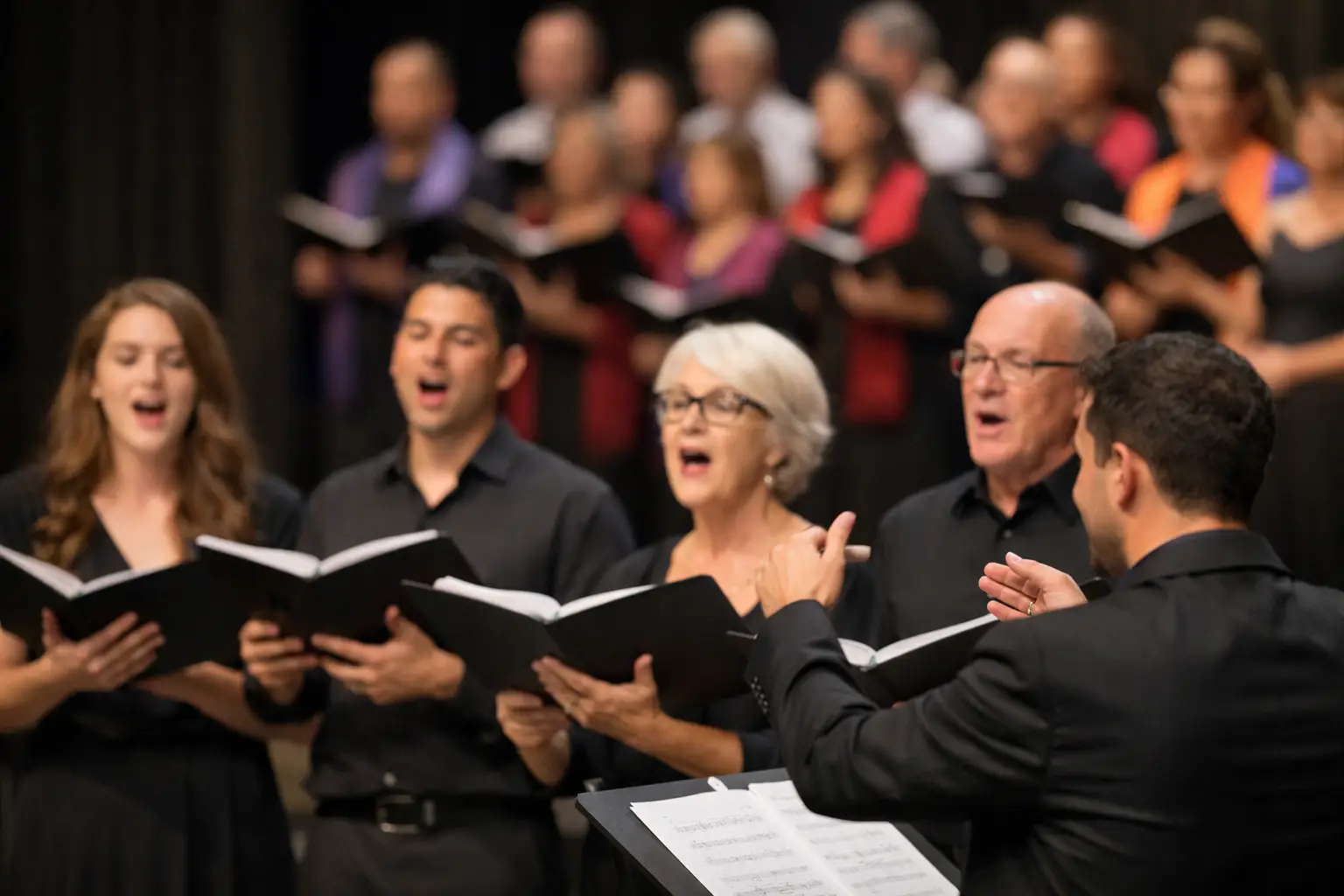
A choir can rehearse for months, polish every entrance, refine every vowel, and still feel that something essential is missing. Often, that missing piece is not another rehearsal. It is shared experience. That is where the beneficios de un festival coral become unmistakable. A well-designed festival gives singers and directors something rehearsal rooms rarely can – artistic challenge, human connection, cultural perspective, and a renewed sense of purpose.
For choir directors, vocal coaches, and ensemble leaders, this matters on a practical level as much as an emotional one. A festival is not simply a trip or a performance date on the calendar. At its best, it is a structured environment where a choir grows together, hears new ideas, and returns home stronger than it arrived.
The artistic benefits of a festival coral
A festival setting changes how singers listen. In rehearsal, a choir usually works within familiar habits, familiar acoustics, and familiar expectations. At a festival, those patterns shift. New venues, guest conductors, collaborative performances, and exposure to other ensembles create a healthy kind of pressure. Singers become more alert, more flexible, and more invested in every musical decision.
That is one of the most valuable beneficios de un festival coral for directors who want measurable growth. Students and adult singers alike tend to respond differently when they are placed in a larger artistic community. They hear repertoire interpreted in multiple ways. They watch how other conductors shape tone, phrasing, diction, and style. They absorb standards that may be higher than what they encounter in their routine schedule.
Masterclasses and workshops add another layer. A strong festival does not only showcase finished performances. It also creates room for instruction. Singers gain tools they can carry home, whether that means healthier vocal production, a clearer understanding of blend, or a more refined approach to text expression. Directors benefit too. Observing another clinician work with an ensemble often reveals solutions that are easy to adapt later in school, church, community, or conservatory settings.
Of course, not every festival offers the same level of artistic value. Some are heavily performance-driven and leave little space for learning. Others balance both elements well. The difference matters. If the goal is real development, the strongest festival experiences combine inspiration with pedagogy.
A stronger choir identity
One of the less obvious but more lasting benefits of festival participation is what it does for ensemble culture. Choir unity is built through repetition, yes, but also through memory. Shared travel, shared preparation, and shared performance create stories that singers carry with them long after the event ends.
This is especially important for youth choirs, school ensembles, and community groups where retention and morale can be fragile. A meaningful festival gives members a reason to stay engaged. It turns the choir from an activity into a community. Singers begin to feel that they belong to something larger than weekly attendance.
That shift can be powerful for directors. A choir that has traveled, learned, and performed with purpose often returns home with a deeper sense of commitment. Rehearsals feel less transactional. Members show greater responsibility because they now understand the group as a shared mission, not just a schedule.
There is a practical side to this as well. Recruitment becomes easier when current singers speak enthusiastically about what they experienced. Families, schools, faith communities, and local supporters are more likely to invest in a choir that clearly offers transformative opportunities.
Cultural exchange is not an extra – it is part of the music
Choral music has always crossed borders. Languages, sacred traditions, folk forms, and contemporary works all remind us that singing is one of the most human ways to meet across difference. That is why cultural exchange is one of the central beneficios de un festival coral, especially in an international setting.
When singers encounter other choirs from different regions and backgrounds, the lesson goes beyond repertoire. They begin to understand how culture shapes sound, movement, communication, and even rehearsal discipline. A festival can challenge assumptions gently but deeply. It invites participants to listen with curiosity rather than judgment.
For conductors, this kind of exchange expands programming imagination. A director may return home inspired to explore new languages, commission new work, or teach with greater cultural sensitivity. For singers, the impact is often even more immediate. They discover that harmony is not only a musical concept. It is also a social one.
This matters even more when a festival is intentionally built around peacebuilding and international fellowship. In that environment, performance becomes more than presentation. It becomes dialogue. The act of singing beside others, rather than competing against them, creates a different emotional climate. It affirms that excellence and generosity can coexist.
Why non-competitive festivals offer a different kind of value
Competition can motivate some choirs. It can sharpen preparation and give ensembles a concrete benchmark. But it also has limitations. In competitive settings, singers may focus more on ranking than listening, more on comparison than connection.
A non-competitive festival often opens the door to a fuller experience. Without the pressure of placement, choirs tend to be more receptive in workshops, more generous in collaboration, and more present in the music itself. That does not mean standards are lower. In fact, many directors find that artistic work becomes more honest when the primary goal is growth rather than trophies.
This distinction is worth considering for leaders who want their ensemble travel to reflect larger educational values. If your choir’s mission includes service, intercultural learning, and long-term artistic formation, a non-competitive model may serve those goals better than a ranking-based event.
Professional growth for directors and coaches
Choirs are not the only ones transformed by festival participation. Directors, accompanists, and vocal coaches often return with renewed creative energy. The daily demands of leading an ensemble can narrow perspective over time. Festivals interrupt that pattern in the best way.
Watching peer ensembles, hearing guest clinicians, and stepping into a broader choral network can restore a leader’s sense of possibility. Sometimes the most meaningful takeaway is not a dramatic new technique, but a simple reminder of why the work matters. That reminder has real value, especially for educators and ministry leaders carrying heavy responsibilities.
There is also a networking benefit. Festival environments naturally create conversations between professionals who might not otherwise meet. Those relationships can lead to repertoire exchanges, future collaborations, tour ideas, and a stronger sense of belonging within the international choral community.
For many leaders, that combination of inspiration and structure is exactly what makes the experience worthwhile. A festival should not feel chaotic or ornamental. It should support artistic ambition with thoughtful organization.
Travel with purpose changes the experience
Not every choir trip becomes a formative memory. Some are rushed, disconnected, or built around logistics rather than meaning. The strongest festivals understand that travel itself shapes the artistic outcome.
When singers experience a destination through its people, landscapes, and community spaces, the music lands differently. They are more attentive. More grateful. More open. Purposeful travel helps ensembles step out of routine and into reflection.
This is part of what makes a destination-based festival so compelling. In a place like Costa Rica, natural beauty, hospitality, and cultural richness can deepen the emotional impact of the event. For many choirs, that setting helps members slow down enough to truly hear one another. In the context of Choral Fest Costa Rica, that connection between artistry, peace, and place is central to the experience.
Still, directors should weigh practical realities. Budget, age group, travel confidence, and time of year all affect whether an international festival is the right fit. The benefits are real, but they are greatest when the event aligns with the choir’s readiness and goals.
The long-term benefits of a festival coral
A festival may last only a few days, but its effects often show up for months or years. Singers return with more confidence and a broader musical imagination. Directors return with fresh ideas and stronger momentum. The ensemble often gains a clearer identity, not only as a performing group but as a community with purpose.
That long-term effect is what makes festival participation more than a special event. It becomes a turning point. Repertoire may become more adventurous. Recruitment may improve. Alumni may stay more connected. Even audiences at home can sense the difference when a choir has been stretched, affirmed, and inspired in a wider artistic setting.
At the deepest level, the value of a festival is not just what happens on stage. It is what singers learn about listening, belonging, discipline, and shared humanity. Those lessons matter in music, and they matter far beyond music.
If you are considering what comes next for your ensemble, it may be worth asking a different question than whether a festival is exciting or impressive. Ask whether it can help your choir sing with greater skill, deeper unity, and clearer purpose. When the answer is yes, the experience tends to stay with people long after the final chord fades.