
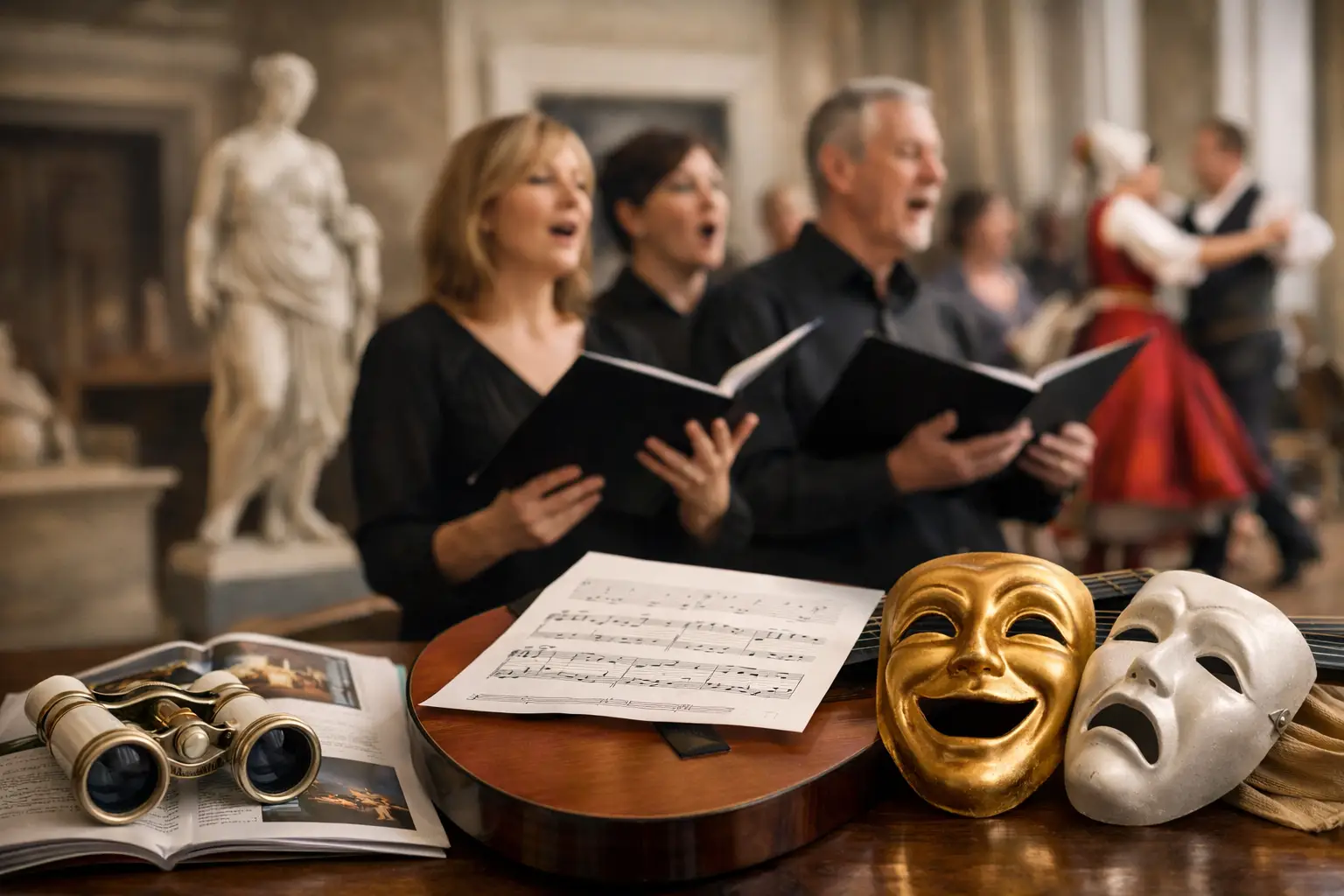
A choir tour can be remembered for a beautiful concert hall, but its deepest impact often happens after the applause: sharing a meal with local singers, learning why a song carries a community’s memory, or hearing members describe a new place in their own words. The mejores actividades culturales para coros do more than fill an itinerary. They give every rehearsal, performance, and conversation a stronger sense of purpose.
For directors planning group travel, the goal is not to pack each day with attractions. It is to create experiences that support artistic growth, honor the host culture, and help singers feel that they belong to something larger than their own ensemble. The right cultural activity can turn a performance trip into a lasting lesson in empathy, listening, and global fellowship.
Why cultural experiences belong in every choir tour
Singing is already a cultural act. Every repertoire choice reflects language, history, faith, celebration, struggle, or community identity. When singers encounter those living traditions beyond the printed score, their musical interpretation gains depth. A rhythmic pattern becomes connected to a dance. A folk melody becomes connected to a family story. A text in another language becomes a human voice rather than a pronunciation exercise.
Cultural programming also strengthens the choir itself. Travel can challenge a group’s routines, especially for youth ensembles or singers traveling internationally for the first time. Shared experiences outside rehearsal help members see one another with fresh respect. The quiet singer may become the most curious questioner in a museum. A confident soloist may discover humility while learning an unfamiliar tradition from a local artist.
There is a practical consideration, too. Not every activity needs to be formal or costly. A private workshop with tradition bearers may be transformative, but a thoughtfully guided neighborhood walk, a community meal, or an exchange rehearsal can be equally meaningful. What matters is intention, preparation, and room for reflection.
How to choose cultural activities for a choir
Start with the age, energy, and musical goals of your ensemble. A university choir may be ready for an intensive rhythm workshop followed by a late concert, while a youth choir may benefit more from a daytime cultural exchange and a shorter performance schedule. Accessibility, transportation time, dietary needs, and adequate rest are not minor details. They allow singers to be present when the meaningful moments arrive.
Choose experiences where local people have agency in telling their own story. Rather than treating culture as entertainment to consume, look for artists, educators, community leaders, and host choirs who can guide the encounter. Pay fairly for their expertise and approach every visit with curiosity instead of assumptions.
Finally, connect each activity to music whenever it is natural. You do not need to turn every outing into a lesson. But a few framing questions can help: What do we hear here? What stories are being preserved? How might this experience change the way we sing together tonight?
8 cultural activities that help choirs sing with purpose
1. Share an exchange rehearsal with a local choir
An exchange rehearsal is one of the most direct forms of cultural connection available to a traveling ensemble. Each choir can sing one or two selections, teach a short section to the other group, and join together on an accessible shared piece. The music does not need to be technically difficult to be moving. The point is to listen, collaborate, and experience the joy of creating one sound across different backgrounds.
Build in time for informal conversation afterward. A meal, refreshments, or a simple question-and-answer circle often creates the friendships that singers carry home. For many participants, this is where international travel becomes personal.
2. Learn from a local conductor, composer, or vocal artist
A masterclass led by a respected local musician offers artistic development that cannot be replicated in a sightseeing program. The guest artist might introduce regional repertoire, explain stylistic practices, lead a vocal technique session, or discuss the social role of choral music in the country.
Directors should share their ensemble’s level and repertoire in advance so the session has a clear focus. A great workshop leaves singers with practical tools, but it also invites them to reconsider what musical excellence can sound like in another cultural context.
3. Participate in a traditional music and movement workshop
For choirs, rhythm is not only counted. It is felt in the body. A workshop in traditional percussion, dance, or movement can help singers understand the physical energy behind a musical style while bringing fresh freedom to their ensemble sound.
This activity works especially well when preparing music connected to the destination, though it is valuable even when it is not tied to concert repertoire. The trade-off is that some singers may feel self-conscious at first. A welcoming facilitator and a spirit of participation over perfection make all the difference.
4. Visit a market with a food-centered cultural conversation
Food invites conversation across generations and languages. A guided market visit, cooking demonstration, or hosted meal introduces singers to regional ingredients, family traditions, and the everyday rhythms of local life. It is also an approachable activity for groups that include non-musicians traveling alongside the choir.
The best version goes beyond sampling local dishes. Invite the host to explain the origins of the food, the people who grow it, and the place it holds in celebrations or daily meals. A choir that has shared food thoughtfully often arrives at its next rehearsal more connected and grateful.
5. Offer a community outreach concert
A concert in a school, senior center, community space, hospital, or neighborhood gathering can be among the most meaningful moments of a tour. Outreach performances shift the focus away from prestige and toward service. They remind singers that their art can bring comfort, joy, and recognition to people who may not attend a formal concert venue.
Keep the program flexible and welcoming. Include familiar songs, short introductions, and opportunities for audience participation when appropriate. The goal is not to present a flawless set. It is to create a genuine exchange through music.
6. Explore history through a local guide’s perspective
Historic sites, museums, and city walks become far more powerful when led by a guide who can connect places to lived experience. For a choir, this can reveal the context behind sacred spaces, migration stories, Indigenous traditions, architecture, or periods of social change that shaped a region’s music.
Avoid overloading the day with too many stops. One well-guided visit with time to reflect is more valuable than rushing through several landmarks. Ask singers to notice a sound, image, or story they may want to carry into their next performance.
7. Take part in an environmental stewardship activity
For groups traveling to destinations known for natural beauty, a conservation activity can align the values of care, community, and shared responsibility. A beach cleanup, tree-planting project, or educational visit with local environmental leaders helps singers understand that cultural exchange is connected to the health of the place and the people who call it home.
This choice requires careful logistics and should never feel like symbolic volunteerism. Work with established local partners, choose a project with real community value, and prepare the choir to follow local guidance. When done well, service becomes a quiet but powerful expression of gratitude to the host destination.
8. Create a reflection circle before the final concert
Reflection is not an extra. It is what helps singers connect individual moments into a shared understanding. Before the final concert, gather the ensemble in a calm setting and invite members to speak about one encounter that changed their perspective, one act of kindness they received, and one intention they want to bring into the performance.
Directors can also ask singers to write a few private notes in a journal. These reflections often become the language members use when they describe the tour to family, supporters, and future participants. More importantly, they remind the choir that the final concert is not an ending. It is an offering shaped by everything they have learned together.
Building a balanced cultural itinerary
The strongest itineraries alternate high-energy activities with quieter opportunities to absorb the experience. A morning workshop may pair well with free time before an evening exchange concert. A major performance day may need only one cultural visit, not three. Over-programming can make even extraordinary experiences feel rushed.
It also helps to prepare the choir before departure. Introduce key customs, basic language phrases, concert etiquette, and the mission behind the trip. Encourage singers to be punctual, attentive, and open-hearted guests. Cultural humility is not about being afraid to ask questions. It is about asking with respect and accepting that the group is there to learn, not simply to be entertained.
At Choral Fest Costa Rica, this balance between artistic learning, cultural discovery, and purposeful performance is central to the festival experience. When choirs gather across borders, every shared rehearsal and community encounter becomes a small act of peacebuilding.
The most memorable cultural activity may not be the one with the most impressive photo. It may be the conversation after a joint rehearsal, the unfamiliar rhythm that finally settles into the body, or the moment a singer realizes that a room full of strangers can become family through one shared song. Plan for those moments, protect time for them, and let them shape the way your choir sings long after the journey ends.