
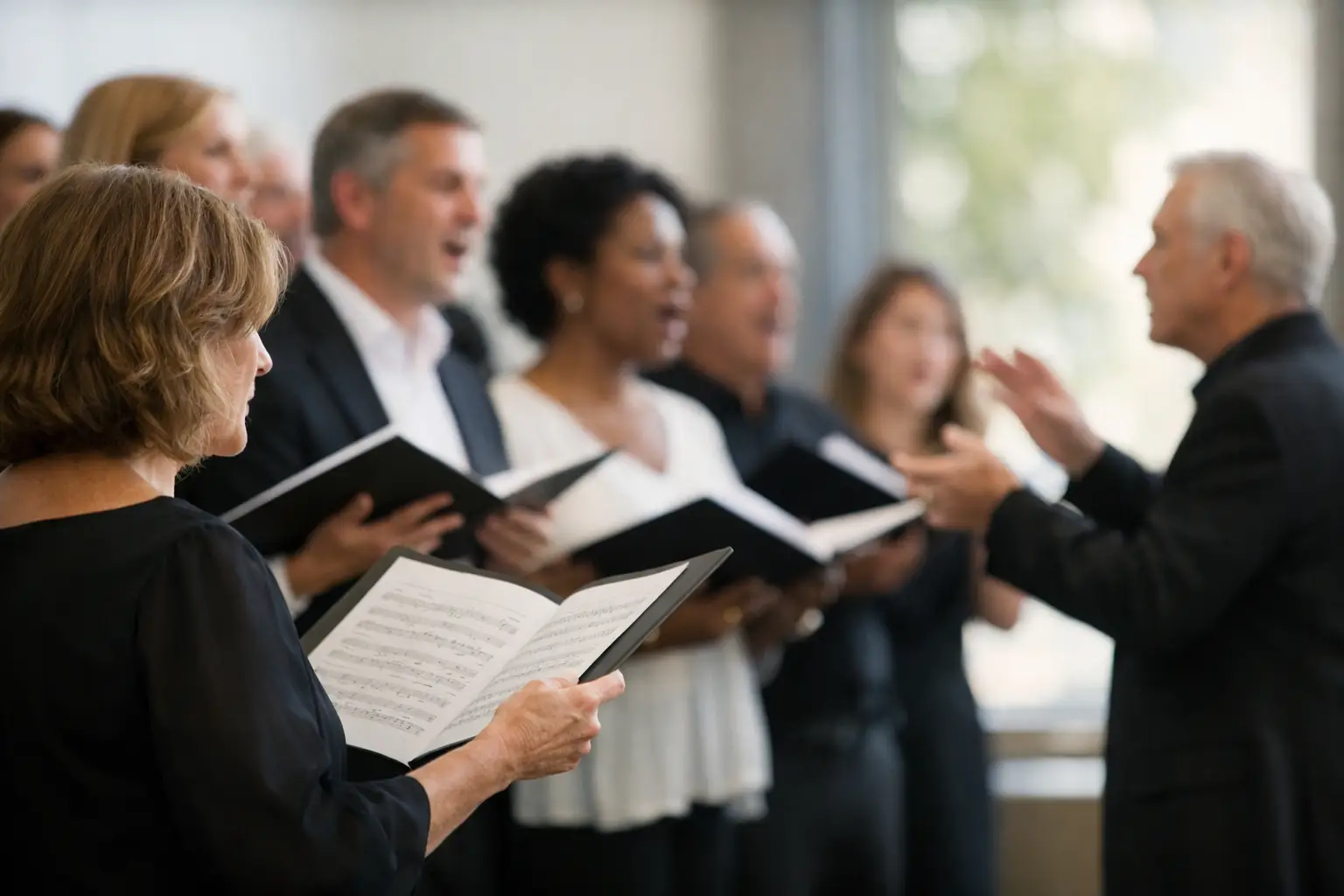
A choir does not need to share one language to share one breath. In the first held chord of a rehearsal, singers learn to listen beyond themselves: to match a vowel, soften a consonant, make room for another voice. That is where música para la paz begins – not as a slogan, but as a daily practice of attention, trust, and shared responsibility.
For choir directors, vocal coaches, and ensemble leaders, this idea carries a practical question: how can a performance experience help singers become not only stronger musicians, but more generous citizens of the world? The answer is not that music solves every conflict. It does not. But choral singing can create the conditions peace requires: curiosity, discipline, empathy, and the willingness to remain present with people whose stories differ from our own.
Música para la paz is an act of listening
Peace is often described in large terms: diplomacy, treaties, policy, reconciliation. Those efforts matter deeply. Yet peace also depends on smaller human habits that are easy to overlook. A choir rehearses many of them every week.
Singers cannot create balance by insisting that every section be heard at maximum volume. They must assess the room, notice who carries the melody, and adjust. A conductor may ask altos to bring forward an inner line, tenors to release a phrase, or sopranos to let a quieter harmony bloom. The musical goal is not uniformity. It is unity with purpose.
That distinction matters when choirs travel and perform alongside groups from other regions, languages, faith traditions, and musical backgrounds. Cultural exchange is most meaningful when it moves beyond polite applause. It asks participants to hear unfamiliar rhythms, honor different vocal colors, and recognize that another ensemble’s way of making music may hold wisdom their own group has not yet encountered.
A peace-centered choral gathering gives that encounter structure. Rehearsals, masterclasses, shared concerts, and informal conversations all create opportunities for singers to meet as collaborators rather than spectators. The result can be a powerful shift in perspective: people who arrived as separate groups leave having contributed to one collective sound.
Why singing together creates real connection
A choir is one of the few communities where people with different ages, professions, personalities, and experiences must coordinate in real time. There is no meaningful shortcut. Each singer is accountable to the music and to the people standing nearby.
This is especially visible in a combined choir performance. A large finale may bring together singers who have only had a limited time to rehearse as one ensemble. They must follow a common conductor, learn one another’s breathing patterns, and commit to a shared interpretation. The final sound is moving precisely because it depends on cooperation.
For young singers, that experience can shape how they understand belonging. They see that excellence is not reserved for the loudest voice or the most familiar tradition. It comes from preparation, humility, and the courage to contribute fully while remaining connected to the whole.
For adult and community choirs, international collaboration can renew a sense of purpose. Many ensembles work hard throughout the year toward local concerts, worship services, competitions, or seasonal programs. Those goals have value. Still, a festival rooted in peace can remind singers why choral music reaches beyond the stage. Their work becomes part of a larger conversation about human dignity and global fellowship.
Artistic excellence and peace belong together
There is a misconception that mission-driven music making must be less rigorous, as though artistic standards and social purpose compete with one another. In meaningful choral work, the opposite is true. A powerful message needs careful preparation.
When singers develop healthy technique, precise diction, expressive phrasing, and stylistic awareness, they become more capable of communicating a text with integrity. When directors study repertoire in its cultural and historical context, they help their ensembles avoid treating music from another community as decoration. When a choir learns to perform with sensitivity, it honors both the composer and the audience.
That is why masterclasses and workshops are more than additions to a travel itinerary. They give singers practical tools they can bring home: a new approach to tone, rehearsal strategies, conducting insight, repertoire ideas, and renewed confidence. Professional growth makes the peace mission more credible because it asks participants to show respect through preparation.
It also requires discernment. Not every song about unity is appropriate for every choir or event. Some pieces carry religious, political, historical, or cultural meanings that deserve thoughtful context. Directors should consider the language of the text, the origin of the work, the voices represented, and whether performers have enough time to understand what they are singing. Purposeful programming is not about choosing only easy messages. It is about choosing honestly and responsibly.
The journey matters as much as the concert
A concert can open a door. Travel allows people to walk through it.
When a choir visits another country, singers step outside familiar routines. They navigate a new environment, encounter local traditions, taste regional food, and hear the everyday sounds of a different place. These details may seem separate from rehearsal, but they deepen musical connection. A singer who has experienced a community firsthand is more likely to approach its music with respect rather than assumption.
Costa Rica offers a particularly meaningful setting for this kind of gathering. Its natural beauty invites reflection, while its culture of hospitality creates room for conversation and celebration. For groups traveling together, organized accommodations, transportation, and a thoughtfully planned schedule provide an essential foundation. Safe, clear logistics do not diminish the spirit of the journey. They allow directors and singers to focus on what matters: learning, performing, and building relationships.
At Choral Fest Costa Rica, the festival experience is designed around that balance. Choirs can pursue artistic development through collaborative performances and learning opportunities while participating in a wider community shaped by cultural exchange and service. The goal is not simply to visit a beautiful destination. It is to return home with stronger musical skills, deeper friendships, and a renewed sense of what singing can offer the world.
How directors can bring peace into the rehearsal room
A peace mission becomes believable when it is reflected in everyday ensemble culture. Directors do not need to build an entire season around one theme to make a difference. They can begin by making rehearsal a place where every singer is expected to listen, prepare, and treat others with dignity.
Choose repertoire that introduces varied musical traditions, then give singers context before the first note. Invite discussion about a text’s meaning and the community from which it comes. Make space for section leaders and students to speak, especially when their lived experience can deepen the group’s understanding.
Consider how the choir responds when mistakes happen. An environment built on fear may produce compliance, but it rarely produces generosity or lasting growth. Clear expectations and high standards can exist alongside encouragement. The best rehearsal rooms hold singers accountable while making it safe to take artistic risks.
Community outreach performances can also connect the choir’s work to a tangible purpose. A concert at a school, senior center, community space, or local partner organization reminds singers that audiences are not abstract. The music reaches people carrying real joys, losses, and hopes.
A shared song can become a shared future
No festival, concert, or anthem can single-handedly create peace. The work is too complex, and the wounds in our world are too real for simple promises. But music can help people practice the human skills that peace demands.
When singers from different places stand shoulder to shoulder, they demonstrate something worth carrying forward: harmony is not the absence of difference. It is the decision to bring distinct voices into relationship, with care and intention. For every choir ready to sing with purpose, that decision can begin with the next rehearsal, the next journey, and the next shared song.