
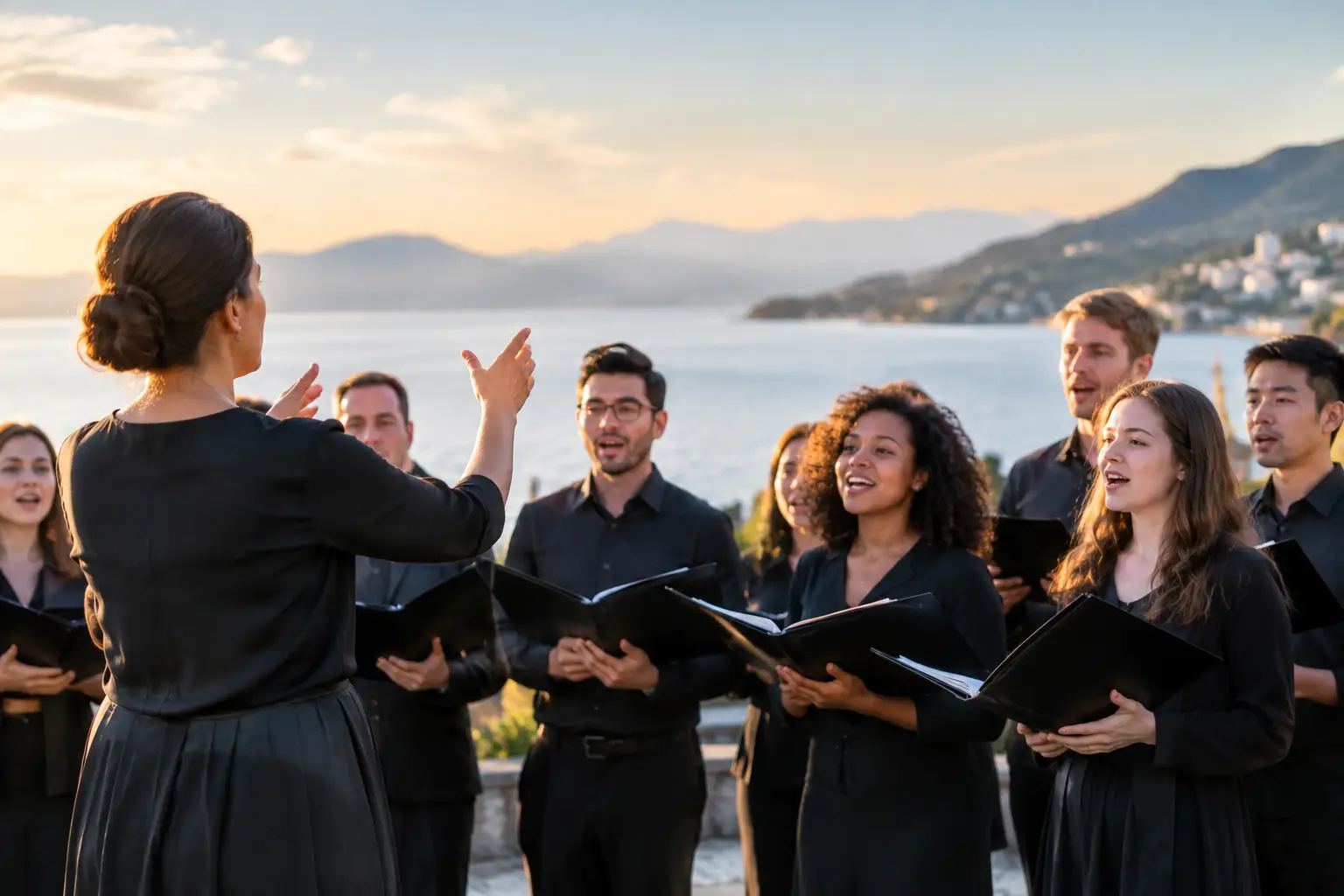
A choir can rehearse the same piece for months, refining vowels, balance, breath, and blend. But when that music is carried across borders and shared with people whose stories differ from your own, something changes. Choral tourism turns a performance trip into an act of connection – a chance for singers to grow artistically while participating in a larger human conversation.
For choir directors, that distinction matters. A successful tour is not measured only by the applause after a concert or the number of landmarks checked off an itinerary. It is measured by what singers carry home: stronger musicianship, deeper trust in one another, respect for another culture, and a renewed sense that their voices can serve a purpose beyond themselves.
What Choral Tourism Can Be
At its best, choral tourism brings together music education, cultural exchange, organized travel, and community engagement. Choirs travel not simply to present a polished program, but to listen, learn, collaborate, and contribute. The destination becomes part of the musical experience rather than a backdrop between concerts.
This can include performances in meaningful local venues, workshops with distinguished conductors, shared repertoire with visiting ensembles, and outreach concerts that bring music into community spaces. It also includes the quieter moments: a meal with new friends, a conversation after rehearsal, a singer hearing a familiar hymn in another language, or a student realizing that a different culture can feel welcoming rather than distant.
That is why choral travel has particular power for youth, school, church, community, and university ensembles. Singing asks people to pay attention to each other in real time. Every entrance depends on listening. Every phrase requires shared intention. When an ensemble applies those habits to international travel, it gains more than a concert memory. It practices global citizenship.
Why Purpose Changes the Travel Experience
A typical performance tour can be exciting, and there is nothing wrong with celebrating a beautiful venue or an unforgettable city. Yet a purpose-centered festival asks a more meaningful question: What can this group offer and receive through music?
The answer looks different for every choir. A youth ensemble may gain confidence by singing alongside adults from another country. A church choir may find new spiritual fellowship through shared sacred music. A community chorus may reconnect with its mission after years of routine concerts. For directors, travel can create an environment where singers become more receptive to feedback, more present in rehearsal, and more aware of the responsibility that comes with representing their home community.
Purpose also changes the way choirs approach repertoire. Music does not need to be solemn to support unity, nor does every program need to make an explicit statement. Joyful folk songs, spirituals, contemporary works, traditional music, and newly commissioned pieces can all create bridges when they are offered with context, care, and respect. The most moving moments often come when a group understands not only what it is singing, but why it is sharing that music in a particular place.
The Artistic Value of Traveling Together
Directors sometimes worry that travel will take time away from musical preparation. It can, especially when schedules are rushed or logistics are unclear. But a well-designed choral travel experience can strengthen artistry in ways that are difficult to reproduce at home.
New Conductors, New Language for Learning
A masterclass with a respected conductor gives singers fresh vocabulary and a new physical perspective on sound. One conductor may transform a choir’s approach to text; another may reveal a better way to shape a long phrase or create rhythmic energy. These encounters do not replace a choir’s director. They often affirm the director’s work while helping singers hear familiar guidance with new ears.
For directors and vocal coaches, observing other teaching styles can be equally valuable. The goal is not to collect techniques as trends. It is to return home with useful ideas that fit the ensemble’s age, culture, and artistic goals.
Collaboration Builds Listening Skills
When choirs combine for a shared work, the experience demands generosity. Singers must adapt to another ensemble’s sound, language, posture, and rehearsal habits. They learn quickly that musical excellence is not identical everywhere.
That adjustment can be challenging. Large combined performances require clear preparation, realistic rehearsal time, and repertoire suited to the participating groups. Yet when thoughtfully organized, the result is powerful: hundreds of individual voices learning to become one musical community without losing their distinct identities.
A Different Place Can Refresh a Choir’s Sound
Travel changes attention. Singers step away from familiar classrooms, sanctuaries, and rehearsal halls, and they often become more alert to their surroundings and one another. A rehearsal in a new acoustic space can reveal details that have gone unnoticed. A concert in a scenic or culturally significant venue can help performers understand the emotional weight of presence.
The destination should never be treated as decoration. Local history, language, environment, and artistic traditions deserve genuine curiosity. When a choir approaches a host community with humility, cultural exchange becomes reciprocal rather than performative.
Planning Choral Travel With Care
Inspiration needs structure. Choir directors carry real responsibility for their singers’ safety, finances, health needs, and experience. The most meaningful tours are built on clear expectations long before departure.
Start by defining the purpose of the trip. Is the priority professional development, cultural immersion, outreach, performance, or a balance of all four? A clear answer helps determine the right festival, itinerary, repertoire, travel dates, and participant expectations. It also helps directors explain the value of the experience to parents, school administrators, boards, and potential donors.
Budget conversations should be honest from the beginning. Travel packages, deposits, flights, meals, lodging, local transportation, and optional excursions all affect accessibility. A lower price is not always the best value if it leaves a director managing unreliable transportation or unclear accommodations. At the same time, a highly structured package may not fit a choir that wants more independent exploration. It depends on the group’s size, age range, travel experience, and comfort with logistics.
Communication is another form of care. Participants need a realistic itinerary, payment schedule, packing guidance, performance expectations, and a clear understanding of the cultural environment they will enter. Families and singers should know who is responsible for what. When the details are organized well, the choir has more freedom to be present for the music and the people around them.
Costa Rica as a Setting for Shared Song
Costa Rica offers a compelling setting for choirs seeking both artistic enrichment and a meaningful travel experience. Its natural beauty encourages reflection, while its welcoming culture and commitment to peace create a fitting context for music that centers human connection. From San José’s cultural energy to the country’s forests, coastlines, and biodiversity, the journey can remind singers that the world is both vast and deeply interconnected.
For groups participating in Choral Fest Costa Rica, the festival experience can unite collaborative concerts, masterclasses, workshops, outreach opportunities, and curated travel support in one purposeful gathering. The focus is non-competitive by design. Rather than asking which choir is best, the festival invites ensembles to ask how their collective voices can create harmony across cultures.
That approach does not lower artistic standards. It gives excellence a larger reason to exist. Singers still prepare carefully, directors still pursue musical precision, and performances still matter. But the destination is not a trophy, and the stage is not the final point. Music becomes a meeting place.
What Singers Remember Years Later
Most singers will remember a favorite concert, an unexpected audience response, or the thrill of hearing a combined choir fill a hall. They may also remember the bus ride where strangers became friends, the local musician who introduced them to a new rhythm, or the moment they realized their voice belonged to something larger than their own section.
Those memories are not extras around the music. They are often the reason the music stays alive. A choir that travels with purpose returns with stories that deepen its identity and renew its commitment to one another.
When planning your next journey, choose an experience that gives your singers room to perform beautifully, learn generously, and meet the world with open ears. The song may end at the final cadence, but the connection it begins can continue for years.