
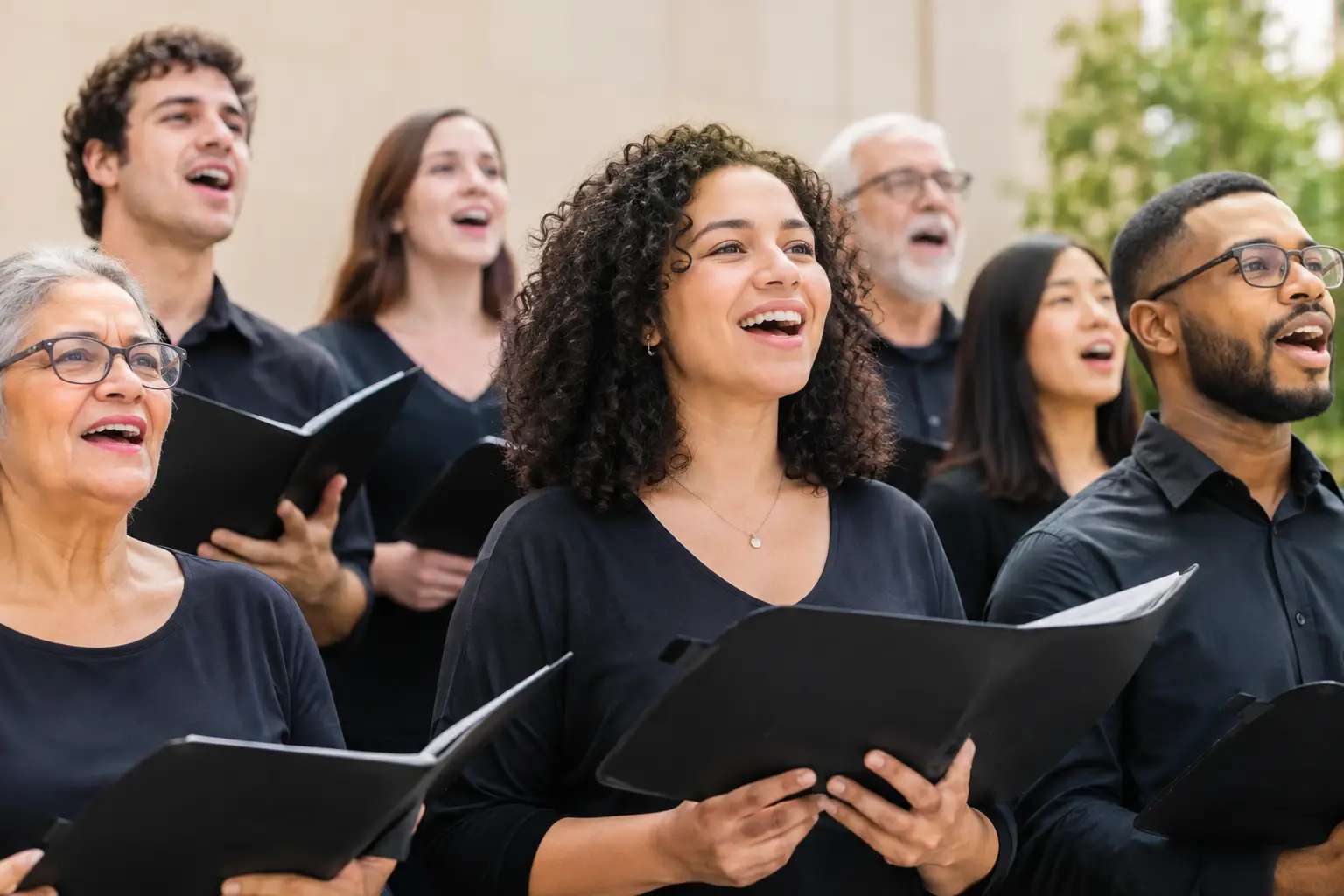
A community concert can begin with a familiar song and end with strangers speaking to one another. That is the promise behind ideas de conciertos corales comunitarios: not simply filling a program, but creating a shared experience in which singers, listeners, and local partners recognize that their voices belong to something larger.
For choir directors, the challenge is meaningful. A concert must still honor musical standards, rehearsal time, vocal health, venue realities, and the personality of the ensemble. Yet when purpose shapes those choices from the start, a performance becomes more than a polished presentation. It becomes an act of welcome, cultural exchange, and hope.
Start with a purpose people can feel
The strongest community choral concerts have a clear human reason for gathering. “Community” alone is too broad to guide repertoire, partnerships, or communication. Ask a more focused question: What relationship do we want to strengthen through this event?
Perhaps the concert welcomes newly arrived families, celebrates a neighborhood’s many cultural roots, supports an environmental initiative, or brings generations together through song. A choir might also use music to honor caregivers, educators, veterans, or local volunteers. The purpose does not need to be political or complicated. It needs to be sincere enough that singers can carry it into every phrase.
Build the concert theme around that purpose, then let the repertoire serve it. A program about belonging could move from songs of home and journey to music of invitation and shared celebration. A peace-centered program might include music from several traditions, chosen with care and proper context, alongside a newly commissioned local work or a spoken reflection from a community partner.
The goal is not to force every piece into the same message. Contrast creates emotional movement. A quiet lament, a joyful folk song, and a hopeful finale can speak to one another when the program has an honest center.
Community concert ideas that invite participation
A chorus should remain the artistic anchor of the event, but listeners do not have to remain passive. Thoughtful participation turns an audience into a temporary singing community without lowering musical expectations.
Create a shared-song moment
Choose one accessible song, refrain, or round that can be taught in less than five minutes. Print the text in the program or project it clearly, and ask a confident singer or conductor to lead the room. The musical material should be simple, but the invitation should never feel casual or rushed.
This works especially well near the end of the program, after the choir has earned the audience’s trust. A shared song gives people a physical experience of harmony, breath, and listening. It also creates a memory that lasts longer than applause.
Pair generations on one stage
Invite a school choir, senior singers’ group, children’s ensemble, or university chorus to collaborate on two or three carefully selected pieces. Intergenerational concerts are powerful because they make continuity visible: experienced singers offer steadiness, while younger voices bring energy and possibility.
The trade-off is rehearsal coordination. If schedules make a fully combined set unrealistic, each ensemble can perform separately and unite only for a final piece. Even that brief moment can be profoundly moving when it is prepared with intention.
Build a neighborhood soundscape
Instead of presenting music only from the traditional concert stage, include brief recorded or live sounds from the local community: birds at a nearby park, market voices, church bells, ocean waves, or spoken memories from residents. A composer or arranger can weave these sounds into transitions, or they can be used before selected works.
This approach is most effective when it serves a story rather than becoming a novelty. Seek permission, explain the context, and make sure the sound design supports the singers instead of competing with them.
Host a concert with a cause, not just a collection
A partnership with a food pantry, literacy program, youth center, refugee-support organization, or conservation group can give a concert tangible local impact. Invite the organization to share a brief message in the lobby, collect requested items, or display clear information about its work.
Keep the partnership respectful. The nonprofit should not feel like a decorative addition to the program, and the concert should not imply that music alone solves a complex problem. Singing can open hearts, raise visibility, and bring people into relationship. The community partner brings expertise and sustained action.
Design the audience journey, not only the repertoire
Many memorable concerts are shaped by what happens before and after the music. Consider the audience’s full experience from arrival to farewell. Are they greeted warmly? Do they understand why this concert matters? Can they meet the people and stories behind it?
A lobby exhibit featuring student artwork, photographs from a local history project, or notes from choir members can establish connection before the first note. Short spoken introductions between sets can add meaning, especially when they are personal and concise. Rather than offering a lecture about every composition, share one detail that helps listeners hear more deeply.
Venue choice matters as well. A formal concert hall brings acoustic advantages and a sense of occasion. A library, community center, outdoor plaza, house of worship, or school courtyard may feel more accessible to audiences who do not normally attend choral performances. The best venue depends on the choir’s sound, accessibility requirements, weather plan, technical needs, and the community you hope to welcome.
Bring cultural exchange to the center
For traveling choirs and international ensembles, community concerts can become a meaningful form of cultural exchange. The key is reciprocity. A visiting choir should not arrive simply to perform for a community; it should create space to listen, learn, and sing alongside local artists.
Plan a collaborative work with a host choir or invite local tradition-bearers to share music in their own voice. Learn pronunciation, historical context, and performance practice with humility. If a piece comes from a culture outside the choir’s own experience, consult knowledgeable musicians whenever possible and credit the source clearly.
At Choral Fest Costa Rica, this spirit of exchange is central to the musical experience: choirs gather not to compete, but to grow through shared performance, learning, and fellowship. That same principle can guide a concert anywhere. Excellence and openness are not opposing values. In the right setting, each strengthens the other.
Make the singers part of the mission
A community-focused concert becomes more convincing when singers understand their role beyond learning notes. Build a few minutes of reflection into rehearsals. Ask what the program’s theme means to them, what they hope listeners will feel, or how they can welcome guests who may be attending a choral concert for the first time.
This does not require turning every rehearsal into a discussion circle. Singers still need clear instruction, efficient sectionals, and disciplined musical work. But a shared purpose can improve artistry. When an ensemble understands the emotional stakes of a text, diction becomes more intentional, phrasing gains direction, and the group listens with greater generosity.
Consider assigning small ambassador roles on concert day. Some singers can welcome guests, others can guide audience members to community-partner tables, and a few can stay afterward to speak with attendees. These simple gestures help replace the distance that sometimes separates performers from listeners.
Plan for access, care, and long-term connection
An event designed for community should be genuinely reachable. Offer clear accessibility information, reserve seating for guests with mobility needs, provide large-print programs when possible, and consider sensory needs around lighting and volume. If budget allows, translation, captioning, or multilingual program notes can greatly expand who feels included.
Ticketing deserves the same care. Free admission can remove barriers, but it may require sponsorship or donations to support production costs. Pay-what-you-can pricing can balance access and sustainability. A ticketed concert with a limited number of community invitations may be the right model for another organization. There is no single ethical format, only the responsibility to make the choice intentionally.
After the concert, keep the relationship alive. Thank community partners, share photos with permission, invite audience members to future open rehearsals, and ask what felt meaningful. The real measure of success is not only the size of the crowd or the volume of the applause. It is whether someone leaves believing that their community has room for their voice.
A well-planned choral concert can offer that belief in a direct, beautiful form: one room, many stories, and a harmony no one could create alone.