
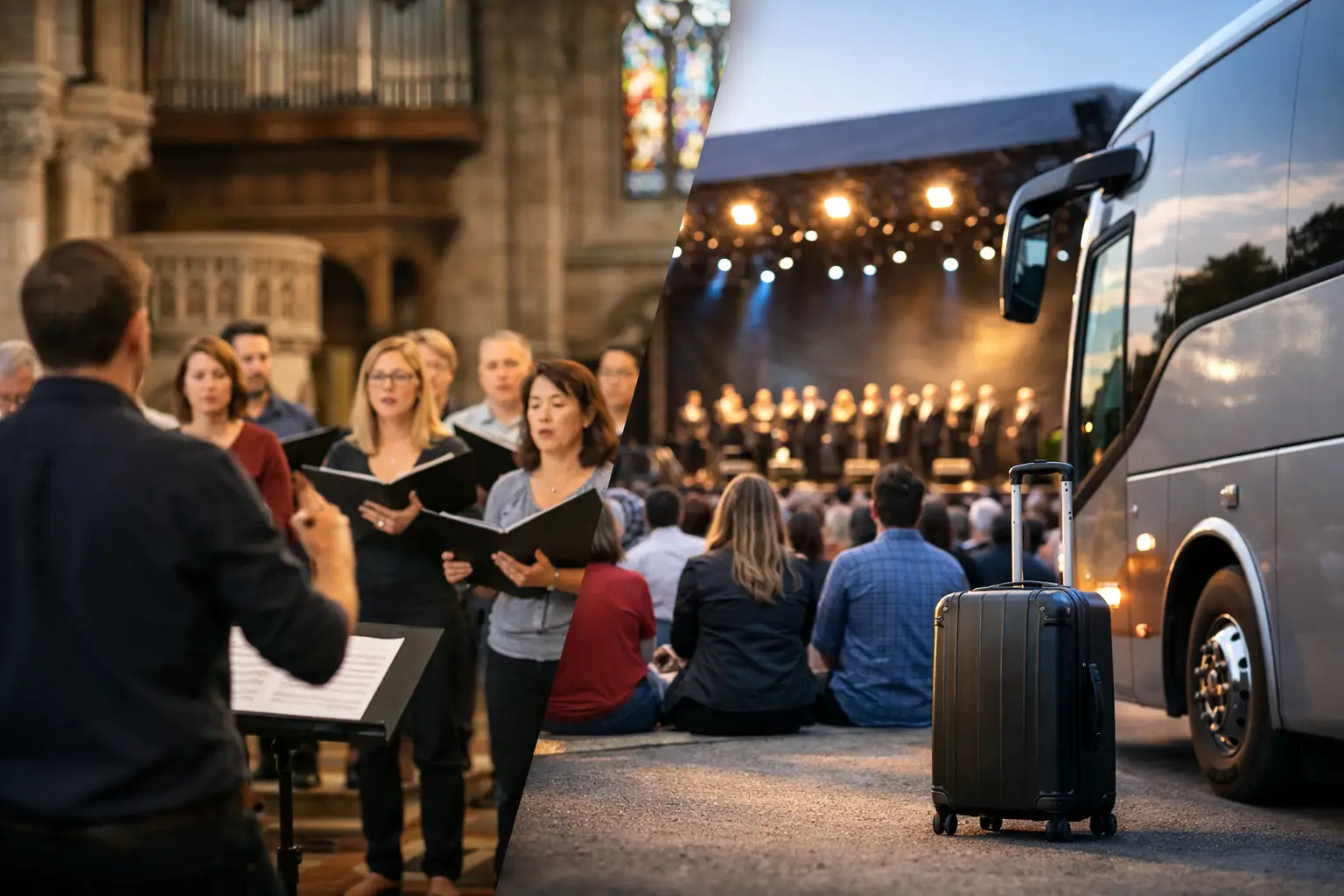
A choir’s travel calendar can shape far more than its next season of concerts. It can determine whether singers return home with a few strong performance memories or with new musical confidence, deeper friendships, and a renewed sense of why they sing together. When considering a choir residency versus concert tour, directors are not simply choosing an itinerary. They are choosing the kind of growth they want their ensemble to experience.
Both models can be meaningful. A concert tour gives singers the energy of the road, the focus of public performance, and the satisfaction of sharing their music in multiple places. A residency creates time to learn with local artists, work in depth with guest conductors, and become part of a community rather than simply passing through it. The best choice depends on your choir’s goals, preparation, budget, and readiness for an experience built around connection.
What a Concert Tour Gives a Choir
A traditional concert tour is performance-forward. The choir travels from city to city, church to church, or venue to venue, presenting a prepared program for different audiences. For many ensembles, especially those with a polished repertoire and a strong desire to perform, this structure feels familiar and rewarding.
The greatest strength of a concert tour is momentum. Singers feel the shared purpose of packing, traveling, warming up, performing, and then doing it again in a new setting. Every concert becomes a chance to represent the school, church, or community they call home. A well-planned tour can also build discipline quickly. When schedules are full and concert standards must remain high, singers learn to care for their voices, arrive prepared, and depend on one another.
Tours can be especially effective when an ensemble has a clear artistic message to share. A sacred choir may want to bring its worship repertoire to partner congregations. A school ensemble may be celebrating an anniversary or honoring a commission. A community choir may be eager to bring a signature program to audiences beyond its hometown.
There are trade-offs. A tightly scheduled tour can leave little room to absorb the culture of each destination. The choir may meet appreciative audiences, but singers may have limited opportunities to sing with local musicians, receive coaching, or understand the stories behind the places they visit. If the tour becomes a series of buses, hotel check-ins, and sound checks, the experience can feel exciting but fleeting.
What Makes a Choir Residency Different?
A choir residency places learning and relationship at the center of the journey. Rather than moving quickly between performances, the ensemble spends sustained time in one location or within one festival community. Rehearsals, workshops, masterclasses, cultural encounters, collaborative singing, and outreach activities become part of the musical experience.
In a residency, a singer may spend the morning refining vowel color with an experienced conductor, the afternoon learning about local traditions, and the evening performing alongside singers from another country. That combination changes the purpose of travel. Performance remains important, but it is no longer the only measure of success.
For directors, this format can bring fresh insight into their own leadership. Observing another conductor’s rehearsal language, gesture, repertoire choices, or approach to ensemble tone often sparks ideas that continue long after the trip. Vocal coaches and accompanists also benefit from working within a broader artistic community where questions, techniques, and perspectives are shared openly.
A residency asks more of participants emotionally. Singers must be willing to listen, adapt, and engage with people whose languages, customs, and musical traditions may differ from their own. Yet that is precisely where much of the transformation happens. The choir becomes not only a traveling ensemble, but a group of cultural ambassadors learning to lead with humility and curiosity.
Choir Residency Versus Concert Tour: Compare the Outcomes
The practical distinction is simple: a concert tour prioritizes presentation, while a residency balances presentation with participation. The deeper distinction is about what your choir will carry home.
After a concert tour, singers often remember the applause, the venues, the road-trip moments, and the pride of performing at a high level. Those memories have real value. They can strengthen ensemble identity and motivate singers to continue striving for excellence.
After a residency, singers may also remember the concert, but they are more likely to speak about the person they met, the rehearsal that shifted their listening, the unfamiliar song they learned, or the community they served. These experiences can strengthen empathy alongside musicianship. For youth singers in particular, that can be a defining lesson in global citizenship.
Neither outcome is automatically better. A choir preparing for a major artistic milestone may need the clarity and focus of a concert tour. An ensemble seeking renewal after several demanding seasons may benefit more from a residency’s slower, more intentional rhythm. The question is not which option sounds more impressive. It is which one serves your people now.
Consider Your Choir’s Readiness
Before choosing a format, directors should honestly assess their ensemble’s musical and logistical readiness. A concert tour often requires a full-length program that can withstand repeated performances. Repertoire must travel well, singers need stamina, and the group must be prepared for changing acoustics, limited rehearsal time, and unfamiliar instruments or equipment.
A residency still calls for preparation, but it creates more room for learning in the moment. This can make it a strong fit for choirs that want artistic challenge without the pressure of presenting a different formal concert every day. It can also be more welcoming for ensembles with a broad range of experience, from advanced youth choirs to adult community groups returning to international travel.
Age and group culture matter, too. Younger singers may thrive when structured workshops, supervised cultural activities, and shared festival events give each day a clear purpose. Adult choirs may value the chance to connect deeply with fellow singers while still having time to explore a destination. In either case, organized transportation, lodging support, and a thoughtful daily schedule help keep the focus where it belongs: on music and meaningful exchange.
Costs, Time, and the Value of Purposeful Travel
Budget conversations should go beyond the advertised price. A concert tour can involve multiple transportation legs, several venues, performance production needs, and meals on the move. A residency may concentrate logistics in one region, while adding costs for faculty, workshops, or festival programming. The most affordable choice varies by destination and group size.
What matters is whether the investment matches the outcome you promise families and singers. If your goal is to perform in celebrated spaces and reach multiple audiences, touring expenses may be justified. If your goal is educational enrichment, cultural understanding, and collaborative music-making, a residency may offer more depth per day of travel.
Directors should also consider the hidden value of time. A five-day tour with four concerts can be exhilarating, but singers may be exhausted by the final performance. A five-day residency can leave room for reflection, recreation, and informal conversations that help an international experience settle into the heart. Those quieter moments are often where a choir’s sense of family grows strongest.
When a Festival Residency May Be the Right Choice
A festival-based residency is particularly compelling for choirs that want both professional artistic guidance and a welcoming framework for international travel. Instead of carrying the full responsibility of designing every performance, workshop, and cultural activity, directors can bring their singers into a program built around shared musical purpose.
At Choral Fest Costa Rica, this approach brings visiting choirs together for masterclasses, collaborative performances, community outreach, and cultural experiences in a country known for its natural beauty and warm hospitality. The goal is not competition or prestige for its own sake. It is to create harmony across borders through disciplined artistry, mutual respect, and the human act of singing together.
That mission can be especially meaningful for ensembles looking for a tour that gives singers something more enduring than photographs and applause. A choir that serves a community, learns from an international conductor, and joins its voice with singers from other cultures sees firsthand that music can be a practice of peace.
Choose the Experience Your Singers Need
If your ensemble is eager to showcase a finished program, build performing confidence, and bring its sound to several audiences, a concert tour may be the right next chapter. If your singers are ready to grow through mentorship, exchange, and shared purpose, a residency can offer a more immersive path.
Whichever you choose, protect space for wonder. Plan enough structure to keep travel safe and organized, but leave room for singers to notice a new landscape, hear an unfamiliar language, and recognize themselves in another choir’s song. Those are the moments that remind us that every rehearsal can prepare more than a concert. It can prepare us to meet the world with open ears and open hearts.