
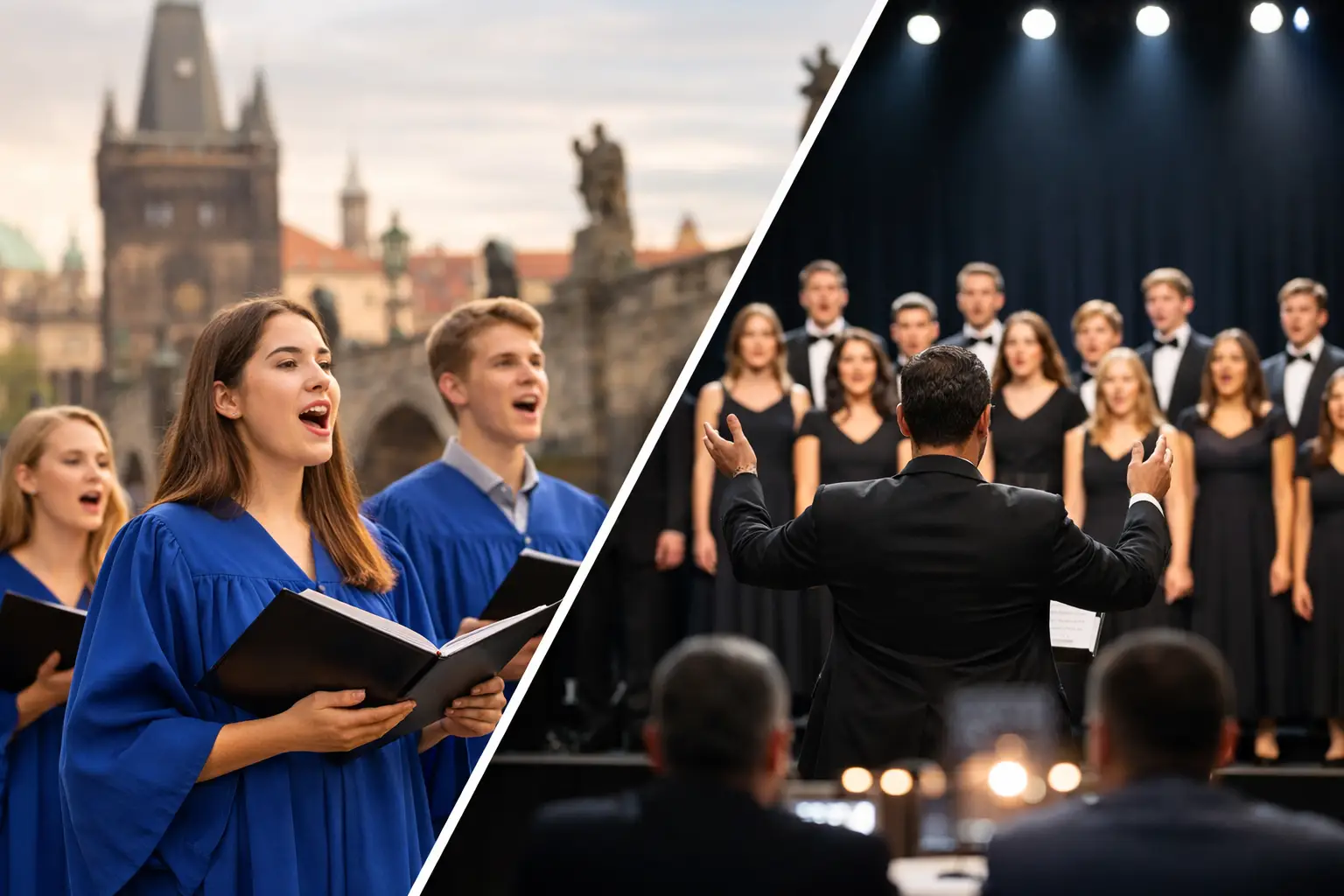
A trophy can feel thrilling for a moment. A shared rehearsal with singers from another country, a community concert that moves an audience, or a student’s first realization that music can cross language barriers can shape a choir for years. When considering a choir tour versus competition, the best choice is not about deciding which experience is more legitimate. It is about choosing the experience that serves your singers, your program, and your purpose.
Competitions can sharpen musical standards and give ensembles a clear performance target. Tours and non-competitive festivals can create room for learning, cultural exchange, and meaningful connection. Both can be excellent. The difference lies in what each format asks of a choir – and what it gives back.
What a Competition Can Give Your Choir
A choral competition creates focus. There is usually a defined adjudication process, repertoire expectations, performance rules, and a clear deadline. For directors leading advanced ensembles, that structure can motivate disciplined preparation. Singers learn how to refine details under pressure: tuning a difficult chord, shaping a unified vowel, responding to a conductor in an unfamiliar hall, and recovering gracefully when something does not go as planned.
Competition can also provide useful professional feedback. A thoughtful adjudicator may identify strengths your choir should preserve and technical habits that deserve attention. For groups preparing for a major season, audition, or performance assessment, this outside perspective can be especially valuable.
There is also joy in striving together. A shared goal can strengthen commitment, and recognition can affirm the work singers have invested over months of rehearsal. For some ensembles, particularly those with a competitive identity, the challenge itself is energizing.
Still, competition changes the emotional center of a trip. Time is often built around ratings, rankings, required repertoire, warm-up schedules, and results. Singers may meet other choirs, but their interaction can be brief when everyone is preparing to be evaluated. Even in supportive settings, comparison is part of the experience.
That does not make competition harmful. It simply means directors should ask whether evaluation is the right centerpiece for this particular group and this particular moment.
What a Choir Tour Can Make Possible
A choir tour is often designed around participation rather than placement. The ensemble still performs, rehearses seriously, and grows artistically, but the purpose expands beyond earning a score. Singers become guests in another community, collaborators with musicians they have just met, and ambassadors for their school, church, or hometown.
In a well-designed international festival, the learning can be remarkably rigorous. Masterclasses with recognized conductors, workshops on vocal technique and interpretation, combined concerts, and opportunities to hear diverse choral traditions all challenge singers to listen more deeply. The difference is that growth is not measured only by a panel’s ranking.
A non-competitive tour also creates more space for the experiences that build a choir’s shared story. A group may sing in a scenic venue, participate in a community outreach concert, learn from local artists, or share meals and conversations with singers from different cultures. Those moments can give repertoire a new meaning. A song about hope, peace, faith, or home lands differently when it is sung alongside an international community.
For youth choirs especially, travel can become a powerful lesson in global citizenship. Students return with stronger musical skills, certainly, but also with greater confidence, curiosity, independence, and empathy. Adult community and church choirs can find the same renewal: a reminder that their voices belong to something larger than their weekly rehearsal room.
Choir Tour Versus Competition: Start With Your Goal
The most helpful question is not, “Which option looks more impressive?” It is, “What do we want our singers to carry home?”
If your ensemble needs a demanding external benchmark, detailed adjudication, or a concentrated push toward technical excellence, a competition may be the right fit. This is often true for advanced auditioned choirs with established competitive goals. A festival can still be valuable later, once the group has achieved that milestone and wants a different kind of challenge.
If your larger goal is artistic development within a spirit of connection, a choir tour may be the stronger choice. This format is often especially effective for groups with a wide range of experience levels, singers traveling internationally for the first time, or directors seeking to strengthen belonging across the ensemble. The performance standard should remain high, but the atmosphere can be more generous and less anxious.
It also depends on the culture you are building. A choir that defines success only through comparison may miss the quieter achievements that sustain a program: a shy singer finding confidence, sections learning to support one another, or members discovering that their music can serve a community.
Consider the Practical Reality, Too
Your decision should honor logistics as much as ideals. Competitions may require specific repertoire, accompaniment arrangements, uniform standards, or rigid travel timing. They can be excellent for a group already prepared to meet those requirements, but they may limit flexibility for sightseeing, workshops, or cultural activities.
A festival tour often offers a broader itinerary, with organized lodging, transportation support, performance planning, and cultural experiences included in the overall program. For directors coordinating a large group, that structure can reduce the administrative burden while giving families greater confidence in the travel plan.
Budget matters as well. Neither format is automatically less expensive. Compare what is included, how much rehearsal time is needed before departure, whether singers will have meaningful performance opportunities, and whether the trip serves multiple educational goals. A lower initial price is not always better value if the experience is narrow or leaves directors responsible for complicated arrangements.
Ask organizers clear questions before committing: Who leads the educational sessions? How are concerts curated? Will singers interact with local communities and other participating choirs? What support is available for group travel? Is the program built around genuine cultural exchange, or is the destination merely a backdrop for an event?
A Different Definition of Excellence
Excellence and peace are not opposing values. The finest choral work requires discipline, careful listening, courage, and respect for every voice in the room. Those same qualities make international fellowship possible.
At Choral Fest Costa Rica, the non-competitive model is built on that belief. Choirs come to San José not to prove they are better than one another, but to sing with purpose through collaborative performances, masterclasses, workshops, and community connection. The goal is still artistic growth. It simply places that growth within a larger vision of harmony between people and cultures.
This approach can be particularly meaningful after a demanding season. A choir that has worked tirelessly toward concerts, assessments, or competitions may need an experience that restores joy. Instead of asking singers to perform for judgment, a festival invites them to perform in service of connection. That shift can rekindle the reason many people joined choir in the first place.
Choose the Experience Your Singers Need Now
There is a time for the intensity of the contest stage. There is also a time to step into a new country, meet fellow musicians, and discover what happens when achievement is shared rather than ranked. Neither choice needs to define your choir forever.
Choose the trip that matches your current musical goals, your community’s capacity, and the kind of people you hope your singers will become. When a choir travels with intention, every rehearsal, conversation, and final chord can become part of a larger practice of listening to the world – and answering it together in song.