
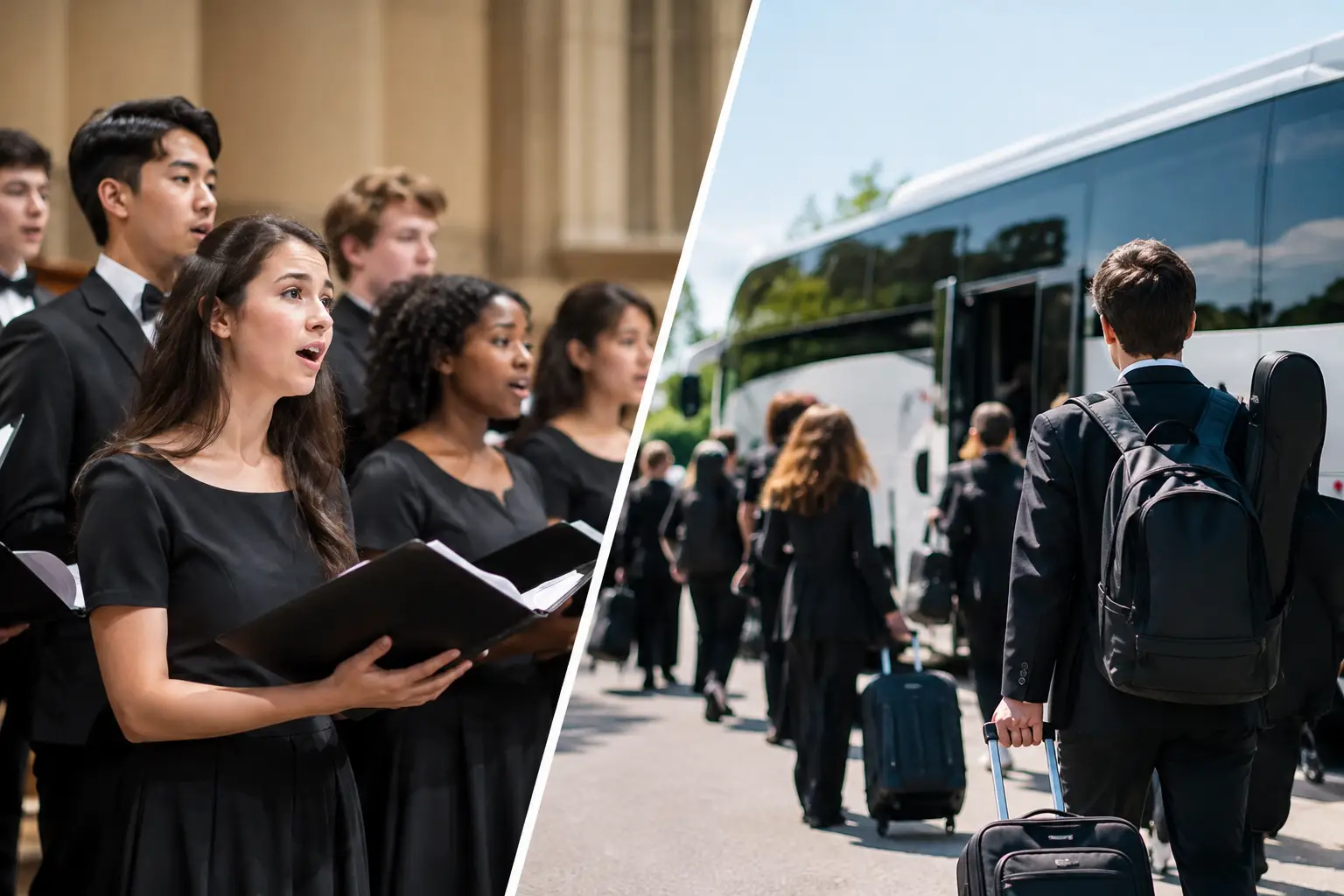
A choir trip can become one of the defining chapters in an ensemble’s life, but the format shapes what members carry home. When weighing a choral festival versus concert tour, directors are not simply choosing venues and itineraries. They are choosing whether the central experience is presenting their choir to new audiences, joining a wider musical community, or balancing both.
A concert tour can sharpen a choir’s identity through repeated performances. A festival can place that identity in conversation with singers, conductors, and cultures from around the world. Neither is automatically better. The right choice depends on your artistic goals, the age and readiness of your singers, available planning capacity, and the kind of purpose you want travel to serve.
Choral Festival Versus Concert Tour: The Essential Difference
A concert tour is built around your ensemble. Your choir travels to perform a prepared program in multiple locations, often for audiences that may include local communities, partner organizations, churches, schools, or family connections. The repertoire, pacing, and public presentation are largely yours to shape. For a choir that has worked all year toward a polished program, that autonomy can be deeply rewarding.
A choral festival is built around shared participation. Your choir still performs, but it enters a larger program with other ensembles, guest conductors, workshops, cultural activities, and collaborative music-making. The emphasis is not only on what your choir can deliver independently. It is also on what becomes possible when many voices learn, listen, and sing together.
That distinction matters because a tour often asks, “How can we represent ourselves well?” A festival also asks, “How can we grow through one another?” For directors who see choral music as a practice of global citizenship, that second question can transform a trip from a performance schedule into a meaningful educational experience.
What a Concert Tour Does Best
A concert tour offers a clear artistic focus. Directors can choose repertoire that reflects the choir’s sound, values, faith tradition, heritage, or current season. They can design each concert to fit the audience and venue, allowing singers to experience the discipline of adapting their performance while remaining true to a unified artistic vision.
Tours can also create strong bonds with host communities. A school choir may connect with a partner school. A church choir may sing in communities with longstanding relationships. An alumni or adult choir may visit places that hold cultural or historical significance for its members. When those relationships are genuine, concerts become more than stops on an itinerary. They become occasions for hospitality, conversation, and mutual appreciation.
For some groups, a tour is the practical choice. A small ensemble may need a flexible schedule. A director may have a distinctive program that deserves to be heard in full. A choir with limited travel days may prefer direct performance opportunities rather than a larger event calendar. Tours can also be easier to frame for supporters because the purpose is tangible: prepare, travel, perform, represent.
Still, touring asks a great deal of the director and planning team. Securing venues, coordinating local contacts, arranging transportation, building meaningful cultural experiences, and protecting singers’ energy can become an extensive second job. The artistic independence of a tour comes with responsibility for every logistical detail.
What a Choral Festival Makes Possible
A festival brings singers into a room where the musical standard is larger than any one ensemble. Masterclasses and workshops expose participants to new conducting language, rehearsal methods, vocal ideas, and repertoire traditions. A respected guest conductor can invite a choir to hear familiar habits differently, then apply those insights long after the flight home.
Collaborative singing is often the most lasting part of the experience. A young singer who has only performed with classmates may suddenly stand beside adults, university singers, church choirs, and international guests. An experienced community singer may rediscover the joy of learning from another director. In a shared finale, individual sections become part of a sound that no single choir could create alone.
This does not mean a festival requires a choir to surrender its identity. The best festivals create space for featured performances while offering common repertoire and shared learning. Your ensemble arrives with its own story and leaves having contributed that story to a global choral family.
For groups traveling internationally, festival organization can also reduce uncertainty. A thoughtfully structured event may include performance planning, educational sessions, local cultural programming, lodging coordination, and transportation support. That framework allows directors to focus more fully on their singers. It is particularly valuable for youth choirs and school groups, where safety, communication, and dependable logistics are essential.
At Choral Fest Costa Rica, this shared framework is connected to a non-competitive vision of peacebuilding. The purpose is not to rank choirs against one another. It is to create artistic growth, cultural exchange, and community impact through singing with people who may otherwise never meet.
Consider the Learning Outcome, Not Just the Destination
Costa Rica, or any appealing destination, can inspire enthusiasm quickly. Beautiful scenery and cultural discovery are meaningful parts of travel, but directors should begin with the learning outcome. Ask what you want singers to understand differently when they return.
If the answer is confidence in presenting demanding repertoire, a concert tour may be the stronger fit. Repeated performances teach focus, resilience, audience awareness, and pride in preparation. If the answer is broader musical perspective, cultural curiosity, and the ability to collaborate across differences, a festival may offer more direct opportunities.
Age and ensemble maturity matter here. Younger singers often benefit from the excitement and structure of a festival, especially when workshops and group activities give them many ways to participate. At the same time, a well-prepared youth choir can thrive on a tour that gives it ownership of major performances. Adult and community choirs may value a festival’s professional development and international fellowship, while also enjoying the independence of a performance-driven tour.
There is no universal formula. A choir that has toured several times may be ready for a festival that expands its horizons. A choir that has attended festivals may be ready to build a custom tour around its own artistic voice.
Budget, Time, and Planning Reality
The most inspiring concept must still work for families, singers, and the organization behind the trip. Festival registration can provide predictability because many core elements are bundled into a defined program. That can make it easier to communicate what participation includes and why it matters. However, directors should examine what is covered, what is optional, and how travel arrangements fit their group’s needs.
A concert tour can sometimes offer more control over spending, but it can also produce surprises. Individual venue fees, ground transportation, meals, guides, insurance, lodging, and last-minute changes add up quickly. It is wise to compare complete trip costs rather than comparing only a festival fee with a tour package headline price.
Think honestly about leadership bandwidth as well. If your team has experienced travel coordinators and trusted hosts, a tour may be manageable and deeply personal. If the director is already carrying the work of rehearsals, fundraising, permissions, communication, and musical preparation, an organized festival can provide welcome support.
A Choice of Purpose
The strongest choir travel experiences do not treat music as background entertainment for a vacation. They make singing the way people encounter a place, meet one another, and grow in courage. Whether your choir chooses a concert tour or a festival, build the journey around moments that invite reflection: a conversation with local singers, a community outreach performance, a rehearsal led by a new conductor, or a quiet realization that many languages can still find one chord.
Choose the format that gives your singers more than photographs and applause. Choose the one that helps them return home listening more generously, singing more bravely, and believing that harmony is something people can practice together.