
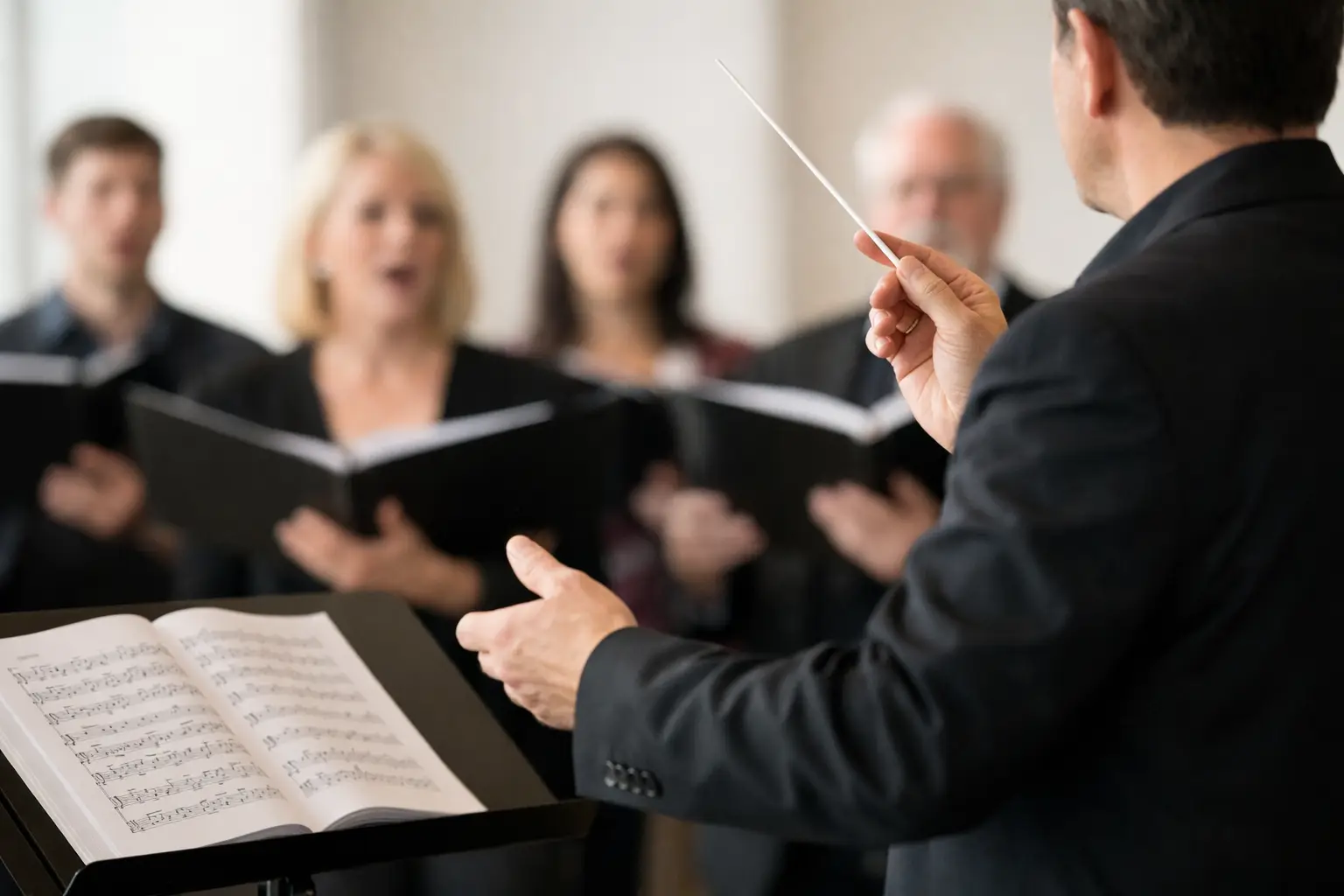
A great conducting masterclass can change the sound of a choir before anyone sings a new note. This conductor masterclasses guide is designed for choir leaders who want more than a polished gesture or a memorable rehearsal trick. The right learning experience can sharpen musical decisions, renew a director’s confidence, and help an ensemble sing with greater listening, purpose, and connection.
For directors leading school, church, community, youth, or university choirs, the value often reaches beyond the podium. A masterclass becomes most meaningful when its lessons return home with you: into warm-ups, repertoire choices, rehearsal language, and the way your singers understand their role in a shared musical community.
What a Conductor Masterclass Should Offer
A conductor masterclass is not simply a lecture by an accomplished musician. At its best, it is an active learning environment where conductors observe, conduct, receive specific feedback, and reflect on how musical leadership affects the people in front of them.
The strongest sessions balance technique with artistry. Participants may work on beat clarity, preparatory gestures, cueing, releases, tempo relationships, score study, and rehearsal pacing. Yet those elements matter because they help singers feel secure enough to take artistic risks. A clear ictus is useful; a clear musical intention is transformative.
For choral directors, the most valuable masterclasses also address the human side of conducting. How do you invite a hesitant choir to sing freely? How do you correct pitch without draining the energy from the room? How do you honor different cultural backgrounds and vocal traditions while pursuing a unified sound? These are leadership questions as much as musical ones.
Choosing the Right Conductor Masterclass
Not every respected conductor will be the right teacher for your current season of growth. Before registering, consider what you and your ensemble actually need. A beginning director may benefit from concentrated work on gesture and rehearsal planning. An experienced conductor may be seeking fresh approaches to interpretation, vocal color, multilingual repertoire, or leading singers through emotionally demanding music.
Look closely at the format. Some masterclasses are primarily observational, with participants learning by watching a clinician work with an ensemble. Others offer podium time and immediate feedback. Both can be valuable, but they produce different results. If you want help with your own physical communication, conducting time is essential. If you are exploring repertoire, programming, or rehearsal philosophy, observation and discussion may be equally powerful.
The ensemble involved also matters. Working with a skilled festival chorus can reveal what a gesture communicates when singers respond quickly. Working with a youth choir or community ensemble may offer more direct lessons for directors who lead similar groups each week. Neither setting is inherently better. The best choice depends on where you hope to apply the learning.
Finally, seek a clinician whose teaching style encourages growth without fear. Direct feedback is necessary, but the most lasting instruction identifies a problem, explains why it is happening, and gives the conductor a practical way to try again. A masterclass should challenge participants while preserving the curiosity that brought them there.
Prepare Before You Step to the Podium
Preparation turns a brief podium opportunity into a meaningful artistic exchange. If repertoire is provided in advance, study it beyond the notes. Mark entrances, breaths, harmonic changes, text stresses, phrase peaks, and places where the choir may need a clear invitation or release. Know the translation and emotional landscape of every text you conduct.
It also helps to arrive with one or two questions you genuinely want answered. Perhaps your choir rushes through transitions. Perhaps singers watch carefully during loud passages but disconnect in softer ones. Perhaps you are unsure how much verbal explanation a particular piece requires. Specific questions make feedback easier to absorb and test.
Do not try to display every skill you possess during a short session. Choose a musical priority. You may decide that your focus is shaping a long phrase, establishing a new tempo, or helping the singers articulate a difficult consonant together. A conductor who knows what they are listening for will learn more than one who attempts to fix everything at once.
If travel is part of the experience, prepare your choir as well. Explain why you are participating and what you hope to bring back. This creates shared anticipation rather than making professional development feel separate from ensemble life. Your singers become partners in the learning that follows.
During the Session: Listen With Your Eyes and Ears
When it is your turn to conduct, begin with calm clarity. Take a moment to establish breath, posture, and tempo before giving the first gesture. The ensemble will read your physical preparation before it hears your musical instructions.
Feedback can feel vulnerable, especially in front of peers. Resist the urge to defend your choice immediately. Listen for the central point beneath the wording. A clinician may comment on a late cue, for example, but the deeper issue could be that your internal pulse was not sufficiently settled. Ask a brief clarifying question when needed, then try the adjustment physically.
Observation deserves equal attention. Watch where other conductors succeed and where communication breaks down. Notice how the ensemble’s sound changes when a conductor changes only the size of a gesture, the placement of a breath, or the direction of a release. Keep notes on ideas that feel transferable, but avoid copying every mannerism. Effective technique must eventually fit your own body and musical personality.
The most generous masterclass environments also encourage conversations among participants. Directors from different regions, traditions, and age groups often face familiar challenges: limited rehearsal time, uneven attendance, changing voices, and the search for repertoire that speaks honestly to singers. Those exchanges can be as instructive as the podium work itself.
Turn Feedback Into Better Rehearsals
The real measure of a masterclass is what happens after you return to your choir. Within a few days, review your notes and choose one technical habit and one rehearsal practice to test. For example, you might refine your preparatory beat for pickups while also reducing the amount of talking between repetitions.
Give yourself time to integrate change. If you alter every aspect of your conducting at once, your singers may feel uncertain and you may not know what is producing results. Work with one idea long enough to notice whether the choir responds more confidently, listens more deeply, or sings with greater consistency.
Invite constructive observation when possible. A trusted colleague can watch a rehearsal and tell you whether your gesture matches the sound you are requesting. Recording a rehearsal can also be revealing. You may discover that an instruction felt clear in your mind but was not visible from the singers’ perspective.
Share appropriate insights with your ensemble. You do not need to report every comment you received, but singers appreciate knowing that their director is still learning. A simple statement such as, “I am working on giving you a clearer breath before entrances,” builds trust and helps the choir recognize its role in the process.
Masterclasses as Cultural Exchange
International choral gatherings add a dimension that cannot be recreated in a private studio. Conductors encounter different rehearsal customs, vocal colors, languages, and musical assumptions. A phrase that feels natural in one tradition may require a different approach in another. This is not an obstacle to overcome; it is an invitation to lead with attention and respect.
At Choral Fest Costa Rica, masterclasses can become part of a wider encounter among choirs united by a belief that singing creates connection across borders. The setting matters because participants are not only studying conducting. They are sharing music, stories, performances, and community with people whose experiences may be different from their own.
That perspective can reshape artistic goals. Excellence still matters, and careful preparation remains essential. But excellence is not limited to precision or prestige. It can also mean creating a rehearsal room where singers feel heard, presenting texts with cultural care, and building performances that leave audiences with a stronger sense of human fellowship.
A Better Question to Bring With You
Before choosing a masterclass, ask more than, “What will I learn?” Ask, “Who will my choir become because I learned it?” That question keeps professional development connected to service, artistry, and the lives of the singers who trust you to lead them.
The most meaningful conductor training does not ask you to imitate someone else at the podium. It helps you become more present, more prepared, and more capable of drawing a truthful sound from your own community. Carry that spirit into your next rehearsal, and let every clearer gesture make more room for listening, courage, and harmony.