
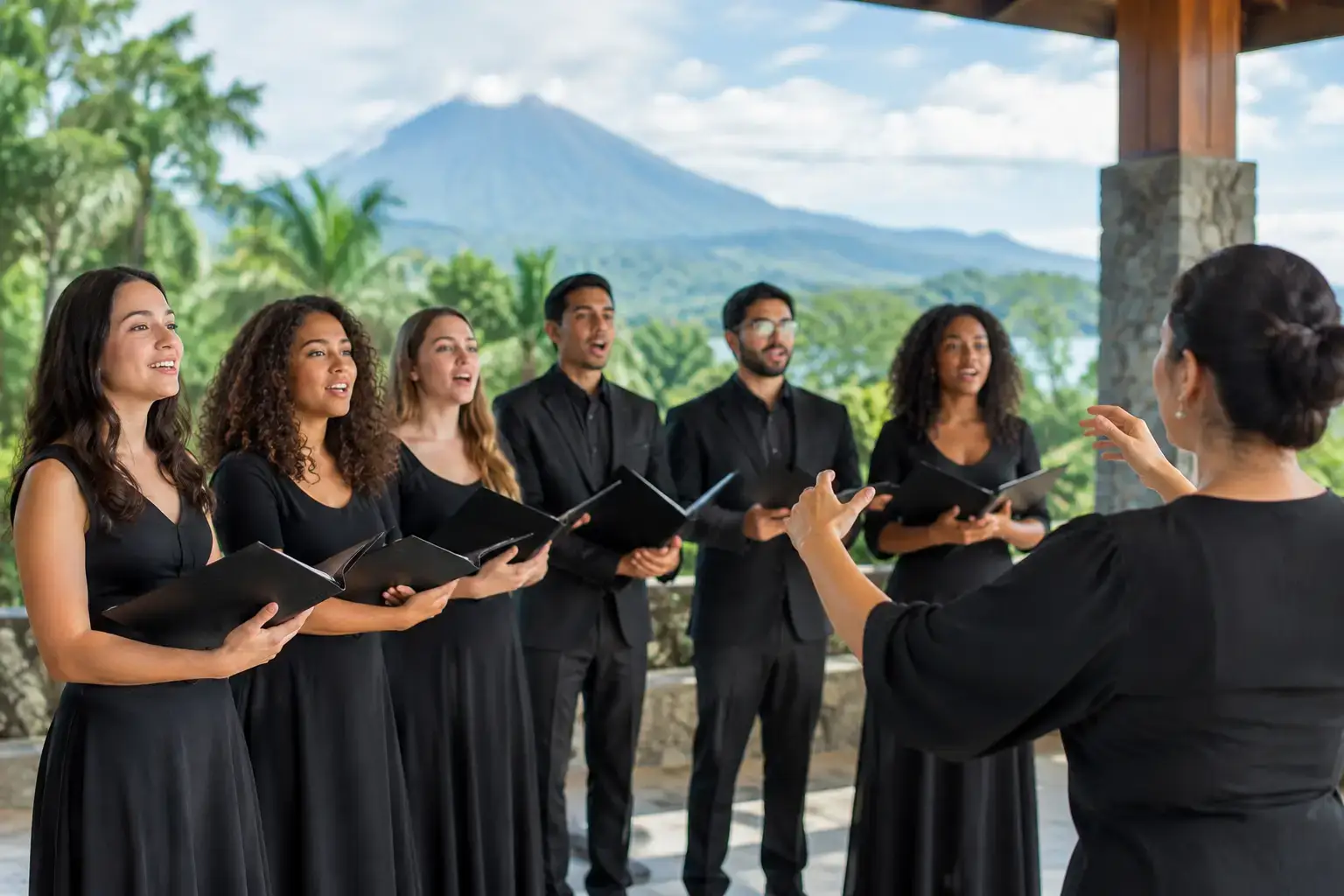
A choir can rehearse for months, travel across borders, and prepare every note with care, yet the setting of a performance is often what transforms the concert into a lasting memory. The right Costa Rica choir venues do more than provide a stage. They help singers feel the meaning behind the music, invite audiences into a shared experience, and give every voice a place within a larger story of culture, peace, and human connection.
For a director planning international travel, venue selection should never be an afterthought. Acoustics matter, of course, but so do accessibility, audience relationships, transportation, weather, repertoire, and the purpose your ensemble carries with it. Costa Rica offers an especially rich range of possibilities, from formal urban theaters to sacred spaces and community settings where singing can become a genuine exchange.
What Makes a Venue Right for a Traveling Choir?
A beautiful room is not automatically a successful choral venue. A choir needs a space that respects the ensemble’s sound and the group’s practical needs. Before choosing a location, consider whether the room supports blended singing without swallowing diction or creating distracting echoes. A chamber ensemble may thrive in an intimate church, while a large youth choir may need a wider platform, clear sightlines, and room for safe entrances and exits.
The audience experience matters just as much. In a theater, listeners may arrive expecting a polished formal program. In a community venue, the atmosphere may be more immediate and relational. Neither is better in every situation. It depends on your repertoire, the size and age of your singers, and whether your priority is artistic presentation, cultural exchange, outreach, or a balance of all three.
Travel logistics shape the decision as well. A venue that is musically inspiring but difficult to reach can create unnecessary pressure on performance day. Groups should ask about bus access, rehearsal availability, dressing areas, restrooms, security, stage dimensions, piano or sound equipment, and contingency plans for rain if the event is outdoors. These details protect the energy singers need to focus on one another and the music.
Costa Rica Choir Venues in San José
San José is a natural home base for international choral groups because it brings cultural institutions, hotels, restaurants, and transportation routes within manageable reach. It is also a city where a performance can place visitors in direct conversation with Costa Rican artistic life rather than keeping them separate from it.
Historic theaters and formal concert halls
For gala concerts, closing celebrations, and programs that call for a traditional concert environment, historic theaters and formal halls offer a sense of occasion. Their stages, lighting, and seating arrangements can support a carefully produced event, particularly when multiple choirs share a program. These spaces are often best for ensembles presenting substantial classical works, demanding contemporary repertoire, or a curated concert that needs a focused listening environment.
The trade-off is that formal venues usually require greater planning. Load-in schedules, technical requirements, audience capacity, and rehearsal time may be more structured. For many directors, that organization is welcome. It allows singers to experience the discipline and pride of presenting music in a professional setting.
Churches and sacred spaces
Costa Rica’s churches and sacred spaces can offer a profound setting for choral singing, especially for groups whose repertoire includes spirituals, sacred works, Latin American music, or reflective a cappella pieces. The architecture may lend natural resonance and visual beauty, helping singers and audiences slow down and listen deeply.
Still, directors should avoid assuming that every church is acoustically ideal. Some reverberant rooms enrich sustained harmony but can blur fast text, rhythmic music, or a large ensemble. A site visit or advance recording can help determine whether repertoire needs adjustment. Respect for the host congregation is equally essential. A concert in a sacred setting should honor the customs, schedule, and community that make the space meaningful.
Cultural centers and community spaces
A community-centered performance can be one of the most memorable parts of a choir tour. Cultural centers, schools, local gathering spaces, and neighborhood arts venues bring singers closer to the people whose country they are visiting. The production may be simpler than a gala concert, but the exchange can be extraordinary.
These settings work beautifully for shared concerts, informal presentations, workshops, and programs that include local musicians or student ensembles. They invite choirs to move beyond performing for an audience and toward singing with a community. That distinction matters when travel is rooted in global fellowship rather than prestige alone.
Outdoor and nature-connected settings
Costa Rica’s landscapes naturally inspire visitors, and an outdoor performance can create a powerful sense of place. Gardens, courtyards, covered pavilions, and scenic public spaces may be ideal for a welcome event, cultural celebration, or shorter program with accessible repertoire. The visual atmosphere can be unforgettable for singers and families alike.
Outdoor music requires realism. Wind, rain, traffic, birds, temperature, and uneven ground can affect both sound and comfort. A thoughtful organizer prepares a covered alternative, keeps programs flexible, and avoids repertoire that depends on delicate dynamics or precise accompaniment conditions. When planned well, nature-connected singing can remind a choir that music belongs not only in concert halls, but also among people and the living world around them.
Match the Venue to the Purpose of the Concert
The most meaningful tours usually include more than one kind of performance. A formal concert may showcase the ensemble’s preparation and artistic growth. A community outreach appearance may create the deepest human connection. A collaborative final concert can give singers the unforgettable experience of hearing many choirs become one sound.
This is why directors should begin with a question larger than, “Where can we perform?” Ask what each concert should accomplish. Is the goal to celebrate your choir’s identity? To learn from Costa Rican artists? To share a message of peace? To give students confidence in a professional setting? Once the purpose is clear, the right type of venue becomes easier to recognize.
At Choral Fest Costa Rica, this balance is central to the festival experience. Performances, workshops, masterclasses, and cultural encounters are designed to help choirs grow musically while participating in a larger movement of unity through song. The venue is part of that educational and human journey, not simply the backdrop.
Plan for Sound, Safety, and Shared Respect
Directors have enough to manage without last-minute surprises. A strong venue plan begins well before the flight departs. Confirm the performance schedule, warm-up location, expected audience, stage layout, sound check process, available equipment, and transportation timing in writing. If singers will wear concert attire, make sure they have a secure and comfortable place to change and store personal items.
It also helps to prepare singers for the character of each space. A formal theater may call for concert etiquette and careful backstage movement. A church may require modest attire or quiet respect before and after the event. A community program may invite singers to remain afterward, meet local participants, and receive the experience with humility. These small preparations show hosts that your choir has come not merely to visit, but to contribute.
When collaborating with local choirs, leave room for genuine exchange. Build a program that does not treat Costa Rican musicians as an opening act. Consider a shared piece, a spoken welcome, or time for singers to listen to one another’s music. The strongest international concerts are not one-directional presentations. They are acts of mutual recognition.
Give Every Performance a Sense of Place
A concert tour becomes meaningful when singers can connect the music they offer to the people and places receiving it. Encourage your ensemble to learn about Costa Rica before departure, practice a short greeting in Spanish, and approach each host venue with curiosity. These choices can change the emotional temperature of a performance.
The best Costa Rica choir venues are ultimately the ones that allow your group to sing with clarity, confidence, and generosity. Whether the room is grand, intimate, sacred, or open to the breeze, let it serve a purpose beyond applause. When voices meet with respect and intention, a concert can become a small but real act of peace.