
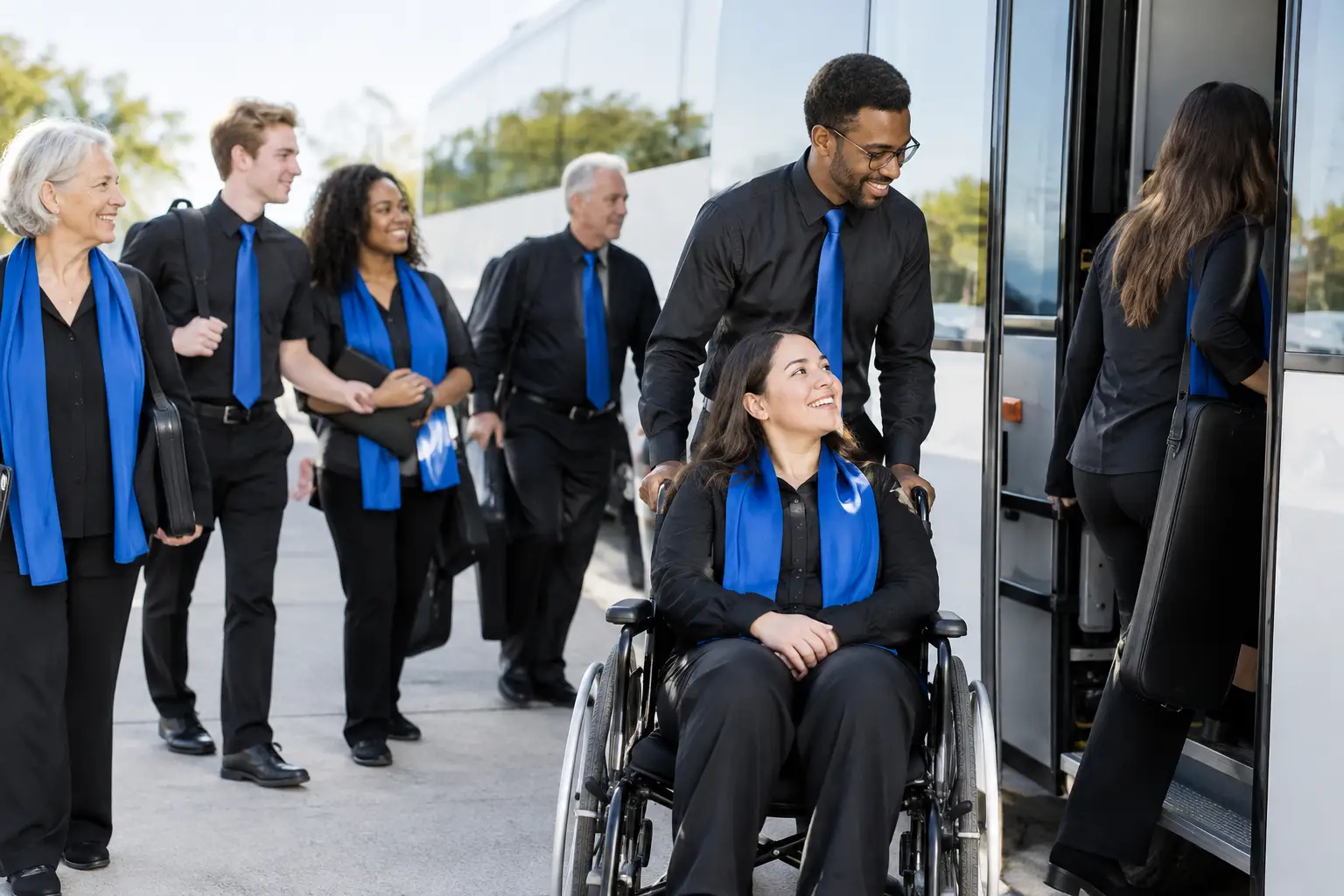
A choir’s sound changes when every voice can take part. That is why group travel accessibility is not a side detail to handle after flights are booked. It is part of the musical and human promise of an international festival: every singer deserves the chance to learn, perform, travel, and belong with confidence.
For choir directors, planning an accessible journey can feel complex, especially when the group includes different ages, mobility needs, medical considerations, sensory needs, or varying levels of travel experience. Yet thoughtful preparation does not diminish the adventure. It gives more people the freedom to experience it fully. A well-organized choral tour creates room for artistic growth, cultural exchange, and the kind of fellowship that stays with singers long after the final chord.
Why Group Travel Accessibility Matters in Choral Travel
Traveling as an ensemble asks people to rely on one another. Rehearsals, performances, meals, buses, airports, and unfamiliar streets all become shared experiences. When accessibility is built into the plan, singers are not left to solve barriers alone or worry about whether they can keep up with the group.
This matters artistically as much as logistically. A singer who is exhausted by an inaccessible schedule, anxious about navigating a venue, or separated from the group during an activity cannot fully focus on the music. By contrast, when practical needs are anticipated, the ensemble can devote its energy to listening, learning, and singing with purpose.
Accessibility also reflects the deepest values of choral music. A choir is not a collection of identical voices. Its beauty comes from difference: distinct ranges, languages, histories, and personalities joining in harmony. International travel should honor that same truth. Inclusion is not simply accommodation. It is a visible expression of respect and shared humanity.
Start With a Private, Welcoming Conversation
The most useful accessibility information often comes from an early invitation to share. Before confirming travel arrangements, give participants a clear and private way to communicate their needs. Some singers may use mobility devices; others may need accessible hotel rooms, dietary support, medication refrigeration, hearing assistance, extra rest time, or help managing a busy airport environment.
The tone of this request matters. Avoid framing needs as exceptions or problems. Instead, explain that the leadership team wants every participant to travel safely and participate meaningfully. Let singers know who will receive the information, how it will be used, and when they can expect a response.
Not every need requires a major change to the itinerary. Sometimes the solution is as simple as reserving a room close to an elevator, arranging an aisle seat on the bus, making rehearsal materials available in advance, or planning a quiet place for someone to step away during a crowded event. The earlier these conversations happen, the more choices the group will have.
Ask About the Full Experience
Accessibility needs do not begin at the concert venue and end when applause fades. Ask participants to consider each part of the journey: airport transfers, hotel layouts, meals, sightseeing, rehearsal spaces, performance attire, restroom access, and evening activities.
A choir member may be able to sing beautifully on stage but find long walking tours difficult. Another may enjoy excursions but need captions, printed instructions, or a predictable schedule. A young singer may be traveling internationally for the first time and need extra guidance, even without a formal disability. Group travel becomes more welcoming when directors plan for these realities without requiring anyone to explain themselves repeatedly.
Build an Itinerary With Choice, Not Pressure
Costa Rica offers extraordinary experiences, from vibrant city culture to forests, wildlife, and meaningful community encounters. Still, a memorable itinerary should not depend on everyone moving at the same pace. Groups often benefit from offering choices within the schedule.
For example, an active excursion can be paired with a less physically demanding cultural activity. A long day of travel can be followed by a lighter evening rather than a late rehearsal. Free time can be structured with clear meeting points and optional gathering opportunities, so singers who need rest do not feel disconnected from the group.
This approach also helps directors protect vocal health. Long flights, humidity, unfamiliar food, and full performance days can affect energy levels for anyone. A pace that allows hydration, meals, rest, and preparation is not less ambitious. It is more likely to produce a confident, present, and expressive performance.
There is a trade-off, of course. A group may not be able to fit every attraction into one visit. But choosing a thoughtful rhythm over a packed schedule gives singers more space to absorb the culture, form friendships, and arrive at each musical moment ready to contribute.
Confirm Access Details, Do Not Assume Them
Words such as “accessible” can mean different things in different places. A hotel may have an elevator but few rooms designed for wheelchair access. A venue may have an entrance ramp but limited backstage access. A scenic location may be welcoming in spirit while still involving uneven paths, stairs, heat, or distance from parking.
Directors and travel coordinators should confirm practical details before making promises. Ask about step-free entrances, elevator dimensions, accessible restrooms, room configurations, shower access, distance between key locations, bus boarding, luggage support, and seating options for rehearsals and performances. If a participant needs a specific feature, request confirmation in writing and share the information clearly.
It is also wise to plan for the unexpected. Keep essential contact information available to more than one adult leader, identify nearby medical resources, and ensure that participants know whom to approach if a concern arises. For youth choirs, clear supervision plans and family communication are especially important.
Make Communication Part of the Care Plan
Clear communication is one of the most powerful accessibility tools a director has. Send schedules early, use plain language, and include realistic descriptions of walking, weather, dress expectations, meal timing, and performance logistics. A detailed itinerary helps every traveler, not only those who have disclosed a particular need.
During the trip, daily reminders can reduce stress. Let the group know where buses will park, how long transfers are expected to take, what to bring, and whether an activity includes stairs or outdoor terrain. For rehearsal and performance days, share call times, warm-up locations, stage pathways, and who can assist with music folders, equipment, or mobility needs.
Encourage a culture in which asking for help is normal. A director does not need to solve every issue personally, but the group should know that concerns will be treated with discretion and respect. Often, fellow singers are eager to help once they understand what is needed. The goal is not to create dependence. It is to create a community where support flows naturally.
Choose Partners Who Understand the Mission
An accessible choir journey depends on responsive partners: hotels, transportation providers, venues, guides, and festival organizers who take questions seriously. Look for teams willing to discuss details, adapt where possible, and communicate honestly about limitations.
At Choral Fest Costa Rica, the festival experience is shaped around organized travel support, collaborative music-making, and meaningful cultural exchange. For visiting choirs, this kind of coordination can make a significant difference. When travel and artistic planning speak to one another, directors have more time to lead their ensembles and less need to manage every logistical detail alone.
Still, the strongest plan is always specific to the people traveling. A professional adult chorus, a school ensemble, a church choir, and an intergenerational community group may require very different pacing and support. There is no single accessibility checklist that replaces listening to your singers.
Let Inclusion Shape the Memory
The most moving moments of a festival rarely happen only under the lights. They happen when a nervous first-time traveler is welcomed onto the bus, when a singer receives the support needed to reach the stage, when an ensemble pauses to make sure no one is left behind, and when voices from different nations discover a shared message in the same song.
Plan carefully, ask generously, and leave space for each participant to experience Costa Rica in a way that honors their abilities and needs. When every singer can stand within the circle of music, the journey becomes more than a tour. It becomes a living act of harmony.