
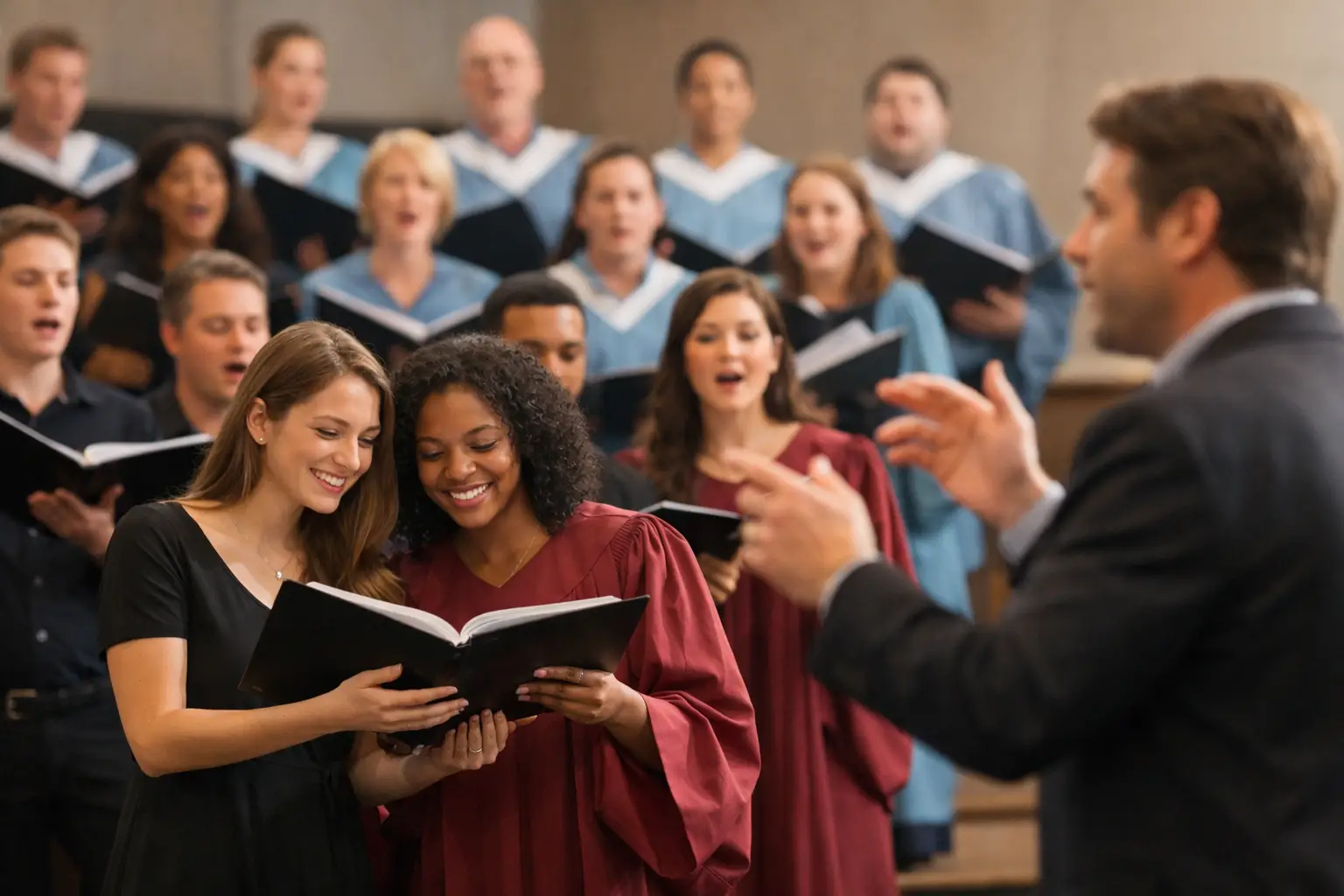
A final chord hangs in the air. Singers from different countries, traditions, and generations look at one another, knowing they have created something none of their choirs could have made alone. That moment captures what is a collaborative choir festival: an international gathering where ensembles learn, rehearse, perform, and connect through a shared musical purpose.
It is not simply a concert series in a beautiful destination. A collaborative choir festival brings individual choirs into a larger artistic community. Rather than measuring success by who receives the highest score, participants focus on listening closely, growing artistically, and building fellowship across borders. The result can transform both a choir’s sound and its sense of identity.
What Is a Collaborative Choir Festival?
A collaborative choir festival is a non-competitive choral event designed around shared music-making. Choirs arrive with their own repertoire, history, and voice, then join other ensembles for workshops, masterclasses, outreach experiences, cultural activities, and large combined performances.
The word collaborative matters. Each singer contributes to a sound that requires trust, preparation, and attention. A youth choir may stand beside a university ensemble. A church choir may sing with a community chorus from another country. Directors exchange ideas, singers encounter new musical languages, and audiences witness a performance shaped by many perspectives.
Most festivals include a mix of independent and combined opportunities. A participating ensemble may present its own program in a featured concert, then rehearse festival repertoire with every other choir under the leadership of a guest conductor. This balance allows each group to share its character while becoming part of something larger.
For choir directors, this structure offers a meaningful alternative to a traditional performance tour or adjudicated competition. The goal is not to prove that one choir is better than another. It is to create high-level musical experiences where excellence and generosity belong together.
How Collaboration Changes the Festival Experience
Singing in a combined choir asks more of participants than singing alongside familiar friends at home. It requires singers to adapt to a new conductor’s gesture, unfamiliar pronunciation, different vocal colors, and rehearsal habits that may not match their own. Those challenges are part of the education.
A well-organized collaborative festival creates the conditions for that learning to feel inspiring rather than overwhelming. Participants receive music and preparation guidance in advance. Rehearsal schedules are clear. Artistic leaders set a welcoming, focused standard from the first downbeat. When the festival reaches its final performance, the music has become a record of many small acts of listening.
That growth is especially valuable for developing singers. They discover that their part matters beyond the boundaries of their own section. They learn to enter confidently in a larger sound, to watch carefully, and to respond when the ensemble breathes as one. Experienced singers benefit as well, often returning home with renewed energy and a deeper awareness of their role in the choir.
Collaboration also strengthens individual ensembles. Sharing an intensive experience outside the usual rehearsal room can build trust among members. A choir that travels, rehearses, explores, and performs together often returns with stronger relationships and a fresh sense of purpose.
More Than a Performance Opportunity
The final concert may be unforgettable, but it is only one part of the festival. The most meaningful collaborative choir festivals create a complete environment for artistic development, cultural exchange, and human connection.
Masterclasses and artistic guidance
Guest conductors, vocal coaches, and clinicians bring perspectives that can expand a choir’s musical vocabulary. They may work on tone, diction, blend, healthy vocal production, style, interpretation, or the practical craft of ensemble leadership. For directors, observing another respected conductor can be as valuable as participating in the rehearsal itself.
The strongest masterclasses are not passive demonstrations. They invite singers to test an idea, hear an immediate difference, and carry that insight back to their home choir. A single session on breath, consonants, or phrase shape can continue influencing an ensemble long after the trip ends.
Cultural exchange with a human face
International choral travel can become shallow if participants only move from hotel to venue to sightseeing stop. A collaborative festival gives cultural exchange a place in the music itself. Participants hear languages they may not know, meet people whose daily lives are different from their own, and experience how local traditions shape a community’s relationship with song.
This does not mean every festival participant must become an expert in another culture within a few days. Meaningful exchange begins with curiosity and respect. It is present in a conversation after rehearsal, a shared meal, a local audience’s response, or the realization that a familiar song carries a different emotional weight in a new setting.
Outreach and singing with purpose
Many collaborative festivals include community concerts or outreach performances. These experiences move music beyond the formal stage and remind singers why choral art matters. A performance in a school, community setting, or public space can create a direct connection that no souvenir or group photograph can replace.
For organizations committed to peacebuilding, this is central rather than optional. Singing together does not erase differences or solve complex global problems by itself. But it does offer a practical experience of cooperation. It asks people to make room for one another, listen across distance, and create beauty through shared responsibility.
Why Non-Competitive Festivals Matter
Competition can be motivating. For some choirs, adjudication provides useful feedback, a clear deadline, and a chance to test their preparation. There is real value in that format when it fits an ensemble’s goals.
A non-competitive collaborative choir festival serves a different need. It creates room for artistic risk without the pressure of ranking. Singers can focus on learning, exchange, and collective achievement rather than wondering how their choir compares with the group performing before them.
This approach is particularly meaningful for school, church, youth, and community choirs whose members have varied levels of experience. A festival can maintain ambitious musical standards while welcoming singers who are still finding confidence. The measure of success becomes engagement, growth, and the quality of the shared experience.
It also shifts the relationship between choirs. Instead of competitors, they become musical partners. Applause feels less like a verdict and more like recognition of a common effort.
What Choir Directors Should Look For
Not every festival described as collaborative offers the same depth of experience. Directors should consider whether the event has a clear artistic plan, experienced musical leadership, realistic rehearsal time, and a meaningful balance between performances and cultural activities.
Travel coordination matters just as much. International group travel involves flights, lodging, ground transportation, meal planning, safety considerations, accessibility, and timely communication. A festival that provides thoughtful travel support allows directors to spend less time solving logistics and more time caring for their singers.
It is also wise to ask how the festival supports different ensemble types. A polished chamber choir, a large school chorus, and an adult community ensemble may all thrive in the same event, but they need repertoire, scheduling, and performance structures that respect their realities. The best festivals are organized enough to feel dependable and flexible enough to welcome each choir’s particular strengths.
Finally, consider the mission. A destination is appealing, but the setting should serve the experience rather than distract from it. Costa Rica, for example, offers an extraordinary setting for choirs seeking natural beauty, cultural warmth, and a spirit of environmental care alongside serious music-making. At Choral Fest Costa Rica, that setting supports a larger invitation: to sing with excellence, travel with intention, and meet the world as fellow musicians.
The Lasting Value of Singing Together
A collaborative choir festival gives singers something more durable than a concert program. It gives them evidence that connection is possible. They carry home new techniques, musical memories, friendships, and stories that can reshape the atmosphere of their own ensemble.
For a director, the impact may appear weeks later, when singers listen more carefully in rehearsal or speak with greater confidence about the world beyond their community. For a young participant, it may be the first time they understand that their voice belongs in a global conversation.
The finest festivals do not ask choirs to leave their identity behind. They invite every ensemble to bring its own voice fully, then discover what becomes possible when that voice joins a wider chorus. That is singing with purpose, and it is a powerful place for any choir to begin.