
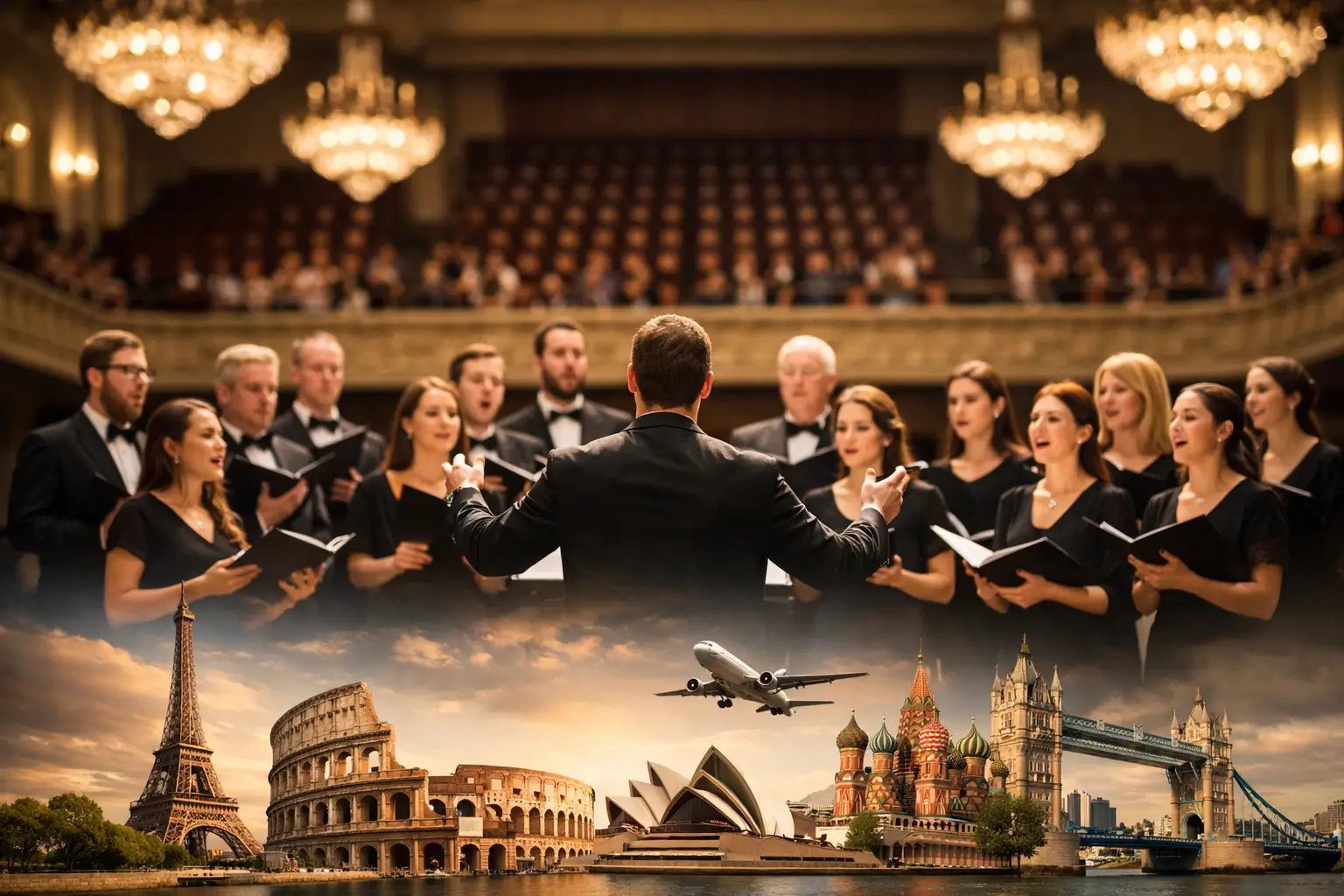
A choir’s most memorable international performance is not always the one in the grandest hall. It may be the moment a familiar song is answered by a local audience, a shared refrain rises in a church courtyard, or singers realize they are communicating across languages without needing translation. For directors asking, where do choirs perform abroad, the best answer begins with purpose: choose places where your ensemble can sing beautifully, learn deeply, and meet people with openness.
A thoughtful choral tour should offer more than a stage and applause. The venue shapes the sound, certainly, but it also shapes the encounter. A formal concert hall can stretch an ensemble artistically. A school visit can inspire young singers on both sides of the exchange. A community concert can turn a performance into a gesture of friendship. The strongest itineraries balance these experiences rather than treating every concert as the same event in a different location.
Where Do Choirs Perform Abroad for a Meaningful Tour?
Choirs perform abroad in a wide range of spaces, from celebrated cultural institutions to smaller community settings. What matters is not simply prestige or capacity. Directors should consider acoustics, audience connection, repertoire, accessibility, local partnerships, security, transportation, and the larger story they want the tour to tell.
Concert halls and performing arts centers
Concert halls remain a natural choice for a featured performance abroad. These venues usually provide professional lighting, dependable acoustics, audience seating, and production teams accustomed to hosting musicians. For advanced high school, university, adult, and professional-caliber community choirs, a concert hall can create the focused listening environment needed for demanding repertoire.
There is also an artistic benefit to singing in a room designed for sound. Ensembles can hear balance, blend, and dynamic contrast in a new way. That makes a hall performance especially valuable when paired with a masterclass, adjudicated-style feedback session, or collaborative concert with a local choir.
The trade-off is that formal venues can feel less personal, particularly if the choir is unfamiliar to the local public. They may require stricter arrival times, technical rehearsals, formal attire, and a more carefully timed program. A concert hall is often strongest as one important moment in the tour, not the sole expression of it.
Churches, cathedrals, and sacred spaces
Sacred spaces are among the most moving places for choirs to perform internationally. Their resonance can give unaccompanied singing remarkable warmth, while historic architecture creates a sense of occasion that singers remember for years. These settings can be ideal for sacred repertoire, folk arrangements, reflective music, and programs centered on peace, hope, or shared humanity.
Yet directors should not choose a church simply because it looks beautiful. Reverberation can blur fast text and complicated rhythms. A piece that is clear in a school auditorium may need slower tempos, more space between phrases, or a different placement of singers in a large cathedral. It is also essential to respect the customs of the host community. Ask about repertoire expectations, dress, photography, movement in the space, and whether a concert should include local musicians or spoken welcome remarks.
When approached with care, sacred venues offer more than atmosphere. They invite choirs to sing with humility and listen to the cultural and spiritual life of the place they are visiting.
Schools, universities, and conservatories
For many traveling ensembles, educational settings offer the richest exchange. A joint rehearsal with a local school choir or university ensemble gives singers a reason to connect before the concert begins. They learn how another conductor rehearses, hear another language in song, and discover that young musicians in different countries often share the same nerves, ambitions, and joy in making music together.
A combined performance does not need to be complicated to be meaningful. Each choir might present two or three selections, then unite for one accessible piece prepared in advance or learned during the visit. The shared finale often becomes the emotional center of the event because it shows cooperation in real time.
These venues are particularly well suited to youth choirs and educational travel programs. They may not offer the polish of a major hall, but they often deliver something more lasting: genuine peer-to-peer connection.
Community centers, public plazas, and civic spaces
Outdoor and civic performances place choral music directly in the life of a destination. A plaza concert, municipal gathering, cultural center appearance, or community celebration can reach listeners who would never purchase a concert ticket. These are powerful venues for an ensemble that wants its tour to feel welcoming rather than enclosed.
Open-air singing does bring practical challenges. Weather, ambient noise, uneven ground, limited power, and changing crowds all affect the experience. Directors should select repertoire that communicates clearly without relying on delicate dynamics or intricate accompaniment. A short, lively program with recognizable contrasts usually works better than a full formal concert.
The reward is visibility and spontaneity. A public performance can turn a choir into cultural ambassadors, offering local residents a direct invitation to share in music. When local artists, dancers, or choirs participate, the event becomes a celebration rather than a presentation from visitors.
Community outreach settings
Hospitals, senior living communities, social service organizations, and neighborhood centers may not appear on a typical tour brochure, but they can be among the most purposeful places to sing. In these settings, the goal is not perfection. It is presence.
A short outreach program can bring comfort, energy, and dignity to listeners who may have limited access to live music. For choir members, especially young people, it can change the meaning of performance. They begin to understand that artistry and service are not separate paths.
These visits require sensitivity. Confirm the appropriate volume, length, audience needs, and repertoire. Avoid treating a vulnerable community as a backdrop for photos or a quick stop between tourist activities. Build enough time for a welcome, a few moments of conversation, and a respectful departure. The relationship matters more than the itinerary.
Choosing the Right Overseas Performance Venue
The right venue depends on your choir’s age, experience, musical identity, and travel goals. A youth ensemble may thrive on a school exchange and a community concert, while an experienced adult choir may seek a formal hall, a cathedral program, and a workshop with a respected conductor. Church choirs may find special meaning in sacred settings, though they should still make room for cultural exchange beyond their own tradition.
Before committing to a tour, directors should ask practical questions: Who will be in the audience? Will the venue provide a piano, risers, microphones, lighting, and rehearsal time? How far is it from lodging? Is there a safe and realistic arrival plan for a group? Are singers expected to bring concert attire through multiple flights or long bus transfers? These details affect morale as much as musical preparation.
Just as important, ask what the host community gains. A meaningful performance abroad should not feel like a choir passing through to collect scenic memories. It should leave room for local voices, shared learning, and mutual appreciation. That is where music becomes a form of cultural diplomacy.
A Costa Rica Setting for Singing With Purpose
Costa Rica offers an especially compelling mix of performance possibilities: vibrant cultural venues in San José, educational partnerships, welcoming community spaces, and landscapes that encourage travelers to slow down and notice where they are. For choirs, that combination supports both artistic focus and human connection.
At Choral Fest Costa Rica, collaborative concerts, masterclasses, workshops, and community outreach are designed around the belief that singing can build fellowship across borders. Rather than asking ensembles to compete for recognition, the festival creates opportunities to learn alongside other choirs and perform as part of a global family united by harmony and purpose.
A destination should never replace musical substance. But when travel is organized thoughtfully, the destination can deepen it. Singers return home with stronger musicianship, renewed ensemble trust, and a clearer sense that their voices belong to a wider world.
The venue your choir remembers most may not be the one with the largest stage. It may be the place where a local singer joins the final song, where an audience member wipes away a tear, or where your ensemble discovers that peace can begin with people willing to stand together and listen.