
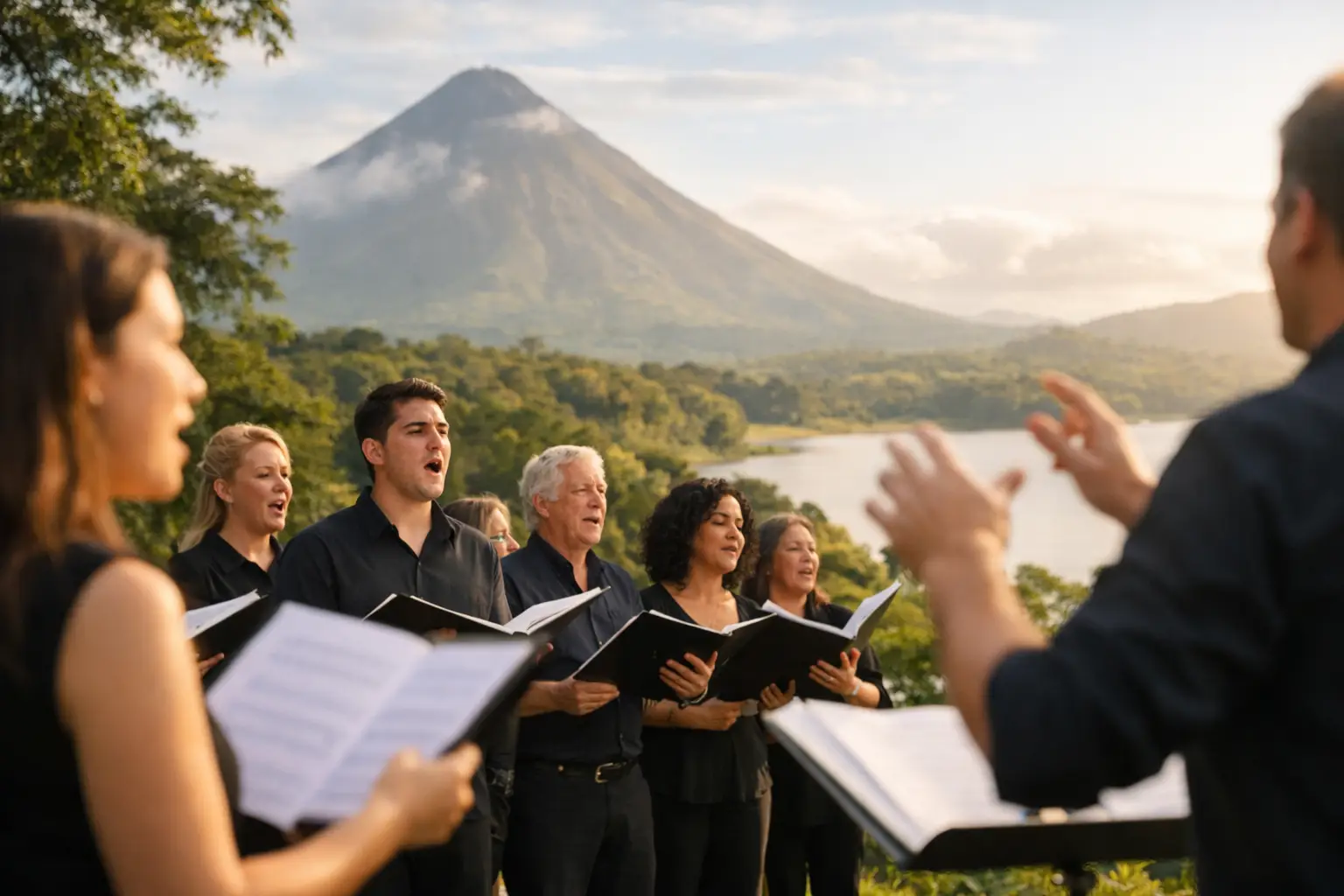
A choir can rehearse a difficult passage for months and still be changed most by what happens after the final chord: sharing a meal with another ensemble, hearing unfamiliar accents blend into one sound, or singing for a community that receives the music as a gesture of friendship. That is the promise behind experiencias de coros en Costa Rica. They are not simply performance trips. At their best, they give singers a reason to listen more deeply – to one another, to a new culture, and to the human purpose behind choral music.
For directors, this distinction matters. A successful international choir experience must offer artistic credibility while also respecting the practical realities of group travel: varied ages, different skill levels, budgets, safety concerns, and the need for every participant to feel included. Costa Rica offers a setting where those needs can meet a larger vision of cultural exchange, natural beauty, and peacebuilding through song.
What makes choral travel meaningful
A destination alone does not create transformation. A beautiful concert hall, a tropical landscape, or a packed itinerary can be memorable, but meaningful choral travel begins with intentional programming. Singers need time to rehearse, reflect, connect, and participate rather than simply move from one attraction to the next.
The strongest festival experiences place music at the center of the journey. Collaborative performances invite ensembles to hear how other choirs shape tone, rhythm, language, and expression. A shared work can become a powerful symbol: independent groups arrive with their own identities and leave having built one sound together. That process requires musical discipline, but it also teaches generosity.
For youth ensembles especially, this can be a formative moment. Students see that artistic excellence is not limited to their school, church, or hometown. Adult community choirs often find a similar renewal. Members who have sung together for years can return home with a revived sense of commitment, friendship, and creative purpose.
Experiencias de coros en Costa Rica beyond the stage
Costa Rica brings a distinctive spirit to a choral gathering. Its cultural warmth, commitment to environmental stewardship, and reputation for peaceful civic life make it a fitting place for music that seeks connection rather than competition. When choirs travel here, the experience can extend naturally from the concert platform into the streets, neighborhoods, landscapes, and conversations that surround it.
A community outreach concert, for example, changes the meaning of a performance. Instead of singing only for a formal audience, singers offer their art in a setting where presence and generosity matter as much as polish. The repertoire may still demand precision. Yet the emotional goal is different: to make people feel seen, welcomed, and connected.
Cultural exchange also works both ways. Visiting choirs should not arrive expecting only to present their own traditions. The most rewarding programs create opportunities to encounter Costa Rican music, artists, stories, and local communities with curiosity and respect. A director may choose repertoire that leaves room for this dialogue, perhaps by preparing a piece in Spanish, introducing the choir’s own musical heritage, or discussing the meaning of the texts before a joint performance.
That balance matters. An international event should feel organized and uplifting, but never detached from the place hosting it. When travel is approached as a relationship rather than a backdrop, the memories carry more weight.
Artistic growth that serves the ensemble
Masterclasses and workshops are often among the most valuable parts of a choral festival. A recognized conductor can offer a new way to approach breath, diction, gesture, blend, or storytelling. Sometimes one thoughtful comment changes how an entire section hears a phrase. More often, the real value is cumulative: singers leave with stronger habits and directors gain ideas they can adapt in their own rehearsal rooms.
Not every choir needs the same level of instruction. A highly experienced chamber ensemble may seek detailed interpretation, stylistic precision, and challenging repertoire. A school or community choir may benefit more from practical work on confidence, vocal health, ensemble awareness, and joyful communication. A well-designed festival honors both ambitions without treating one as more worthy than the other.
Directors should also consider the pace of the program. Too many workshops can exhaust singers and reduce the time they need to absorb what they are learning. Too few educational moments can make the trip feel like a tour with a concert added on. The right balance depends on the ensemble, but a strong plan gives participants both challenge and breathing room.
At Choral Fest Costa Rica, that balance is shaped around collaborative music-making, learning with respected choral leaders, and opportunities to sing with a clear purpose. The goal is not to collect another credential or prove who is best. It is to help each choir return home artistically stronger and more connected to the wider choral family.
Planning a choir trip with care
The emotional impact of a festival depends partly on details that participants may never see. Lodging, transportation, meal planning, rehearsal access, clear communication, and realistic transitions between events all influence whether singers can be fully present. For directors, organized travel support is not a luxury. It is what allows them to focus on their ensemble instead of solving logistics at every turn.
Before committing to an international experience, leaders should ask practical questions. Is the program appropriate for the ages and abilities in the group? How much independent travel is expected? Are performance spaces and rehearsal schedules clearly defined? What support is available for lodging and ground transportation? Is there enough time to rest, especially after flights or full performance days?
Cost deserves equal attention. A lower price may not represent better value if essential coordination is left to volunteers or if the itinerary lacks meaningful artistic opportunities. On the other hand, an elaborate package may not be right for every choir. The best choice is the one that matches the group’s resources and gives members a clear understanding of what their participation makes possible.
Transparent planning also builds trust with families, school administrators, church leaders, and donors. When they see that a trip combines education, cultural awareness, group safety, and community impact, they can understand why it is more than a vacation.
Singing as a practice of peace
Peacebuilding can sound like an abstract ambition until singers experience it firsthand. It happens when a young person makes a friend across a language barrier. It happens when a director chooses encouragement over comparison. It happens when ensembles from different countries hold silence before a shared performance, then begin together on the same breath.
Music does not erase conflict or solve every division. It can, however, create a temporary and meaningful space where people practice the habits peace requires: attention, cooperation, humility, courage, and mutual respect. Choirs know this instinctively. No section can carry the whole piece alone. Every voice has to make room for the others.
This is why non-competitive choral gatherings can be so powerful. Without rankings, singers can direct more energy toward learning, collaboration, and celebration. Excellence still matters. Preparation still matters. But the final measure is not whether one choir stands above another. It is whether participants have created something honest and generous together.
Carrying the experience home
The value of an international festival should not end when the choir boards the plane. Directors can preserve the momentum by scheduling a post-trip reflection, programming a newly learned work into a home concert, or inviting singers to share stories with supporters who made the journey possible. These simple steps help transform a powerful week into a lasting part of the ensemble’s identity.
For singers, the lasting lesson may be even simpler: their voice belongs to something larger than a single performance. When a choir travels with care, learns with openness, and sings for connection, Costa Rica becomes more than a destination. It becomes a reminder that harmony is not only something we hear. It is something we choose to build, one attentive voice at a time.