
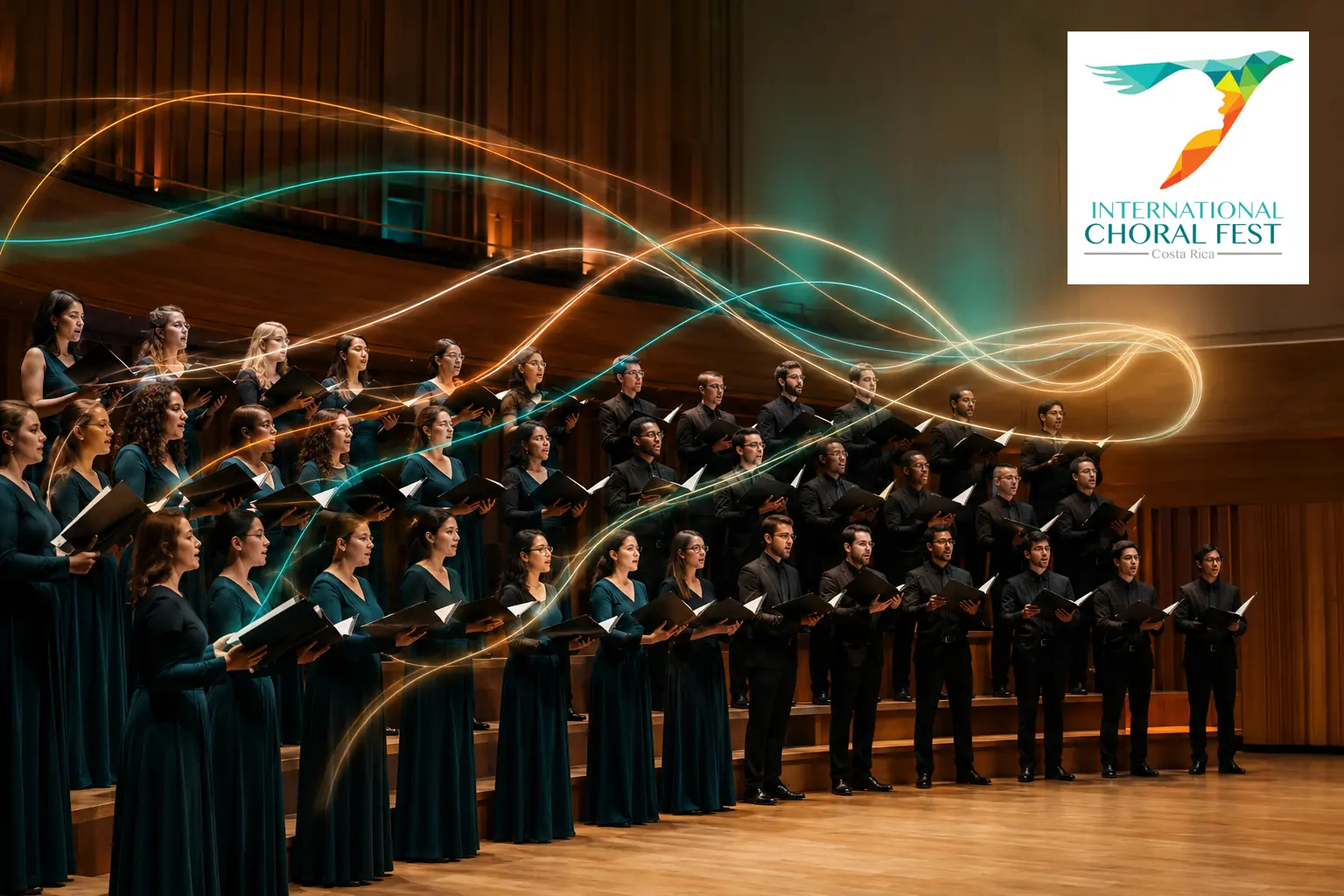
htmlCounterpoint is one of the most fascinating techniques in choral music. It allows several independent melodic lines to exist at the same time, creating music in which every voice has its own direction while contributing to a larger musical whole.
For singers and choir directors, understanding counterpoint is more than a theoretical exercise. It develops listening, rhythmic independence, intonation, ensemble awareness, and the ability to understand how an individual voice functions within a larger musical structure.
In this article, we explore the history, principles, rehearsal techniques, and practical applications of counterpoint in choral music, from Renaissance polyphony to contemporary choral writing.
Understanding Counterpoint in Choral Music
Counterpoint, derived from the Latin expression punctus contra punctum (“point against point”), refers to the technique of combining two or more independent melodic lines into a coherent musical composition.
Unlike a texture in which one principal melody is primarily supported by chords, contrapuntal writing gives several melodic lines meaningful independence. Each voice follows its own musical direction while contributing to the harmony, rhythm, and architecture of the composition.
One of the most famous examples of highly developed counterpoint is Johann Sebastian Bach’s The Art of Fugue, where musical subjects interact through imitation, inversion, development, and other contrapuntal techniques.
Counterpoint, however, is not limited to Baroque music. Its principles appear throughout the history of Western choral music and continue to influence contemporary composers.
The Historical Evolution of Counterpoint in Choral Music
Counterpoint During the Renaissance
During the Renaissance, particularly in the fifteenth and sixteenth centuries, polyphonic writing became one of the defining characteristics of European sacred choral music.
Composers such as Josquin des Prez and Giovanni Pierluigi da Palestrina developed sophisticated approaches to melodic independence, imitation, voice leading, consonance, and controlled dissonance.
Palestrina’s Missa Papae Marcelli (Pope Marcellus Mass) remains one of the best-known examples of Renaissance sacred polyphony, demonstrating flowing vocal lines, carefully treated dissonances, and remarkable clarity within a multi-voice texture.
This tradition established many of the principles that choir directors and singers still encounter when studying polyphonic choral repertoire today.
Counterpoint During the Baroque Period
The Baroque period brought counterpoint to extraordinary levels of structural sophistication.
Johann Sebastian Bach became particularly associated with fugue and contrapuntal composition, while George Frideric Handel frequently combined contrapuntal techniques with dramatic choral writing.
Bach’s Mass in B Minor and St. Matthew Passion contain numerous examples of independent vocal lines interacting within larger harmonic and expressive structures.
In this repertoire, singers must often maintain a demanding melodic line while simultaneously recognizing subjects, responses, rhythmic patterns, and entrances occurring elsewhere in the ensemble.
Counterpoint in the Classical and Romantic Eras
Although composers of the Classical period often favored greater textural clarity and homophonic writing, counterpoint remained an important compositional resource.
Wolfgang Amadeus Mozart, Joseph Haydn, and Ludwig van Beethoven all used contrapuntal techniques in significant choral and instrumental passages.
During the Romantic period, composers including Johannes Brahms and Anton Bruckner drew upon earlier contrapuntal traditions while combining them with richer harmonic language and expanded expressive possibilities.
Principles of Counterpoint: How Independent Voices Work Together
Contrapuntal writing can range from relatively simple two-part textures to extremely complex compositions involving many independent voices.
Although approaches vary according to historical period and musical style, several fundamental principles help explain how contrapuntal music works.
Voice Independence
Each melodic line should retain a recognizable musical identity.
Independence may be created through differences in melodic direction, rhythm, phrasing, articulation, range, timing, and text placement.
Contrary and oblique motion can strengthen the perception of independence between voices. Parallel motion is not universally avoided, but certain types of parallel intervals—particularly parallel perfect fifths and octaves—were restricted in many traditional contrapuntal styles because they can weaken the perception of independent voice leading.
Dissonance and Consonance
Counterpoint depends heavily on the relationship between consonance and dissonance.
In many historical styles, dissonances are carefully prepared, approached, and resolved according to recognizable patterns.
Suspensions, passing tones, neighboring tones, and other non-chord tones can create tension and movement before resolving into more stable sonorities.
Contemporary composers may treat dissonance more freely, but the interaction between tension and resolution remains an important expressive element in choral writing.
Imitative Counterpoint
Imitative counterpoint occurs when a melodic idea introduced by one voice is repeated or transformed by another voice.
For example, the soprano section might introduce a short melodic idea that is subsequently sung by the alto, tenor, or bass section.
This technique creates the impression that musical ideas are moving through the ensemble.
Canons and fugues are among the clearest examples of imitative counterpoint.
Non-Imitative Counterpoint
In non-imitative counterpoint, the voices maintain melodic independence without necessarily reproducing the same musical material.
The lines may differ considerably in rhythm and contour while still forming a coherent harmonic and musical relationship.
Counterpoint, Polyphony, Canon, and Fugue: What Is the Difference?
These terms are related, but they do not mean exactly the same thing.
Polyphony describes a musical texture in which several relatively independent melodic voices occur simultaneously.
Counterpoint refers more specifically to the techniques and relationships used to organize those independent melodic lines.
A canon uses relatively strict imitation. One voice begins a melody and another voice follows it according to a predetermined interval or time relationship.
A fugue begins with a principal musical idea called the subject. The subject enters successively in different voices and is then developed through episodes, transformations, overlapping entrances, and other contrapuntal techniques.
Practical Counterpoint Techniques for Choir Directors
Understanding contrapuntal structure can help choir directors make complex music clearer, more expressive, and easier for singers to understand.
- Analyze the score: Identify subjects, imitative entrances, important secondary lines, dissonances, cadences, and moments when a particular voice becomes temporarily prominent.
- Study relationships between voices: Rather than treating soprano, alto, tenor, and bass as isolated parts, determine which voices are responding to, imitating, supporting, or contrasting with one another.
- Develop vocal independence: Help each section understand its own melodic direction before combining it with the rest of the ensemble.
- Rehearse in combinations: Pair soprano and tenor, alto and bass, or voices that share imitative material. These combinations often reveal relationships that are difficult to hear during a full ensemble rehearsal.
- Work carefully with dissonance: Singers need to understand that certain notes are intentionally dissonant. They should not instinctively alter the pitch in an attempt to make the chord sound more consonant.
- Balance according to musical function: Contrapuntal clarity does not mean that every voice must always sing at exactly the same volume. Important entrances and thematic material may need temporary prominence.
- Connect text with musical structure: In choral repertoire, contrapuntal entrances often reinforce important words or ideas. Understanding this relationship can improve phrasing and interpretation.
Counterpoint Techniques for Choir Singers
Singers play a crucial role in making contrapuntal music understandable to an audience.
- Develop active listening skills: Learn not only your own part, but also which other voices enter before, after, or simultaneously with you.
- Build rhythmic independence: Contrapuntal passages often place different rhythmic patterns against one another. Singers must maintain the pulse even when another section is singing contrasting material.
- Understand your musical function: Know when your line introduces an important idea, imitates another section, provides supporting material, or leads toward a cadence.
- Practice entrances independently: Learn what musical event happens immediately before your entrance so you are not dependent only on counting rests.
- Pay attention to intonation: Suspensions and other dissonant sonorities require confidence and careful listening.
- Shape your melodic line: Independent lines still require phrasing. Breath, articulation, dynamics, text, and musical direction should support the larger structure of the piece.
How to Rehearse Counterpoint with a Choir
One of the most effective ways to rehearse contrapuntal music is to build the texture gradually.
Begin by rehearsing each section separately so singers understand their melodic and rhythmic identity.
Then combine sections that have a direct musical relationship. If the tenor imitates a phrase first introduced by the soprano, for example, rehearse those two voices together before adding alto and bass.
Directors can also ask one section to sing while another listens and follows the corresponding material in the score.
This develops an important ensemble skill: singers begin to recognize the entire musical conversation rather than experiencing the piece exclusively from the perspective of their own part.
Modern Counterpoint in Choral Music
Counterpoint remains an important compositional resource in contemporary choral music, although modern composers often combine traditional techniques with harmonic languages and textures that differ significantly from Renaissance or Baroque practice.
Contemporary choral writing may include imitation, overlapping phrases, layered rhythmic patterns, canonic entrances, independent melodic fragments, clusters, ostinatos, and gradually evolving vocal textures.
Composers such as Eric Whitacre and Ola Gjeilo are particularly known for creating layered choral sound worlds.
Their music demonstrates how independent or overlapping vocal gestures can contribute to color, atmosphere, harmonic movement, and emotional intensity.
Works such as Whitacre’s Lux Aurumque and Gjeilo’s Northern Lights provide useful opportunities to explore how contemporary composers organize multiple vocal layers, even when their musical language differs considerably from traditional species counterpoint or the contrapuntal writing of Bach and Palestrina.
Why Counterpoint Matters in Choral Singing
Counterpoint teaches one of the most important skills in ensemble music: the ability to remain independent while simultaneously listening to others.
A singer must know their own line with confidence, but that line only reaches its full meaning through its relationship with the other voices.
One section may introduce an idea. Another may answer it. A third may create tension underneath it. Later, all those independent lines may converge toward the same musical destination.
That combination of individuality and cooperation is one of the qualities that makes choral singing particularly powerful.
Counterpoint as a Musical Model of Collaboration
Counterpoint also offers an interesting way to think about collaboration.
In contrapuntal music, individual voices do not disappear into one another. Each retains its own character and direction while contributing to something larger.
This principle has a natural connection with international choral exchange. Different choirs may bring their own languages, traditions, repertoire, vocal colors, and interpretations while still creating a meaningful musical experience together.
That philosophy is closely connected with the mission of the International Choral Festival in Costa Rica for Peace, where choirs meet not to compete, but to share music, culture, friendship, and a commitment to peace.
Frequently Asked Questions About Counterpoint in Choral Music
What is counterpoint in choral music?
Counterpoint in choral music is the combination of two or more independent melodic lines sung at the same time. Each voice has its own melodic shape and rhythmic identity, while all the parts work together to create a coherent musical texture.
What is the difference between counterpoint and harmony?
Harmony focuses primarily on how notes sound together vertically, while counterpoint focuses on how independent melodic lines interact horizontally over time.
In choral music, the two concepts frequently work together: individual vocal lines create melodies while simultaneously producing harmony.
Is counterpoint the same as polyphony?
Not exactly. Polyphony describes a musical texture in which multiple relatively independent melodic voices occur simultaneously.
Counterpoint refers more specifically to the techniques and relationships used to organize those melodic lines. Much polyphonic choral music is therefore constructed through contrapuntal writing.
What are some common types of counterpoint in choral music?
Common approaches include imitative counterpoint, canon, fugal writing, and non-imitative counterpoint.
In imitative writing, one voice introduces a musical idea that is subsequently repeated or transformed by another voice. In non-imitative counterpoint, independent melodic lines interact without necessarily sharing the same thematic material.
What is the difference between a canon and a fugue?
In a canon, one voice presents a melody that another voice imitates according to a relatively strict pattern, often beginning after a specific amount of time or at a particular interval.
A fugue is generally more flexible and structurally elaborate. It begins with a principal musical idea called the subject, which enters successively in different voices and can later be developed through episodes, transformations, overlapping entrances, and other contrapuntal techniques.
Why is counterpoint difficult for choir singers?
Counterpoint requires singers to maintain their own melodic and rhythmic line while several other musical ideas may be happening simultaneously.
This demands strong rhythmic independence, accurate intonation, confidence during entrances, and the ability to listen actively without being pulled away from one’s own part.
How can a choir rehearse contrapuntal music effectively?
A useful approach is to rehearse individual lines first and then combine voices gradually.
Directors can pair sections that imitate one another, identify important entrances, isolate difficult dissonances, and rehearse transitions into cadences.
It is also helpful for singers to hear the musical material performed by other sections. Once they understand how their line relates to surrounding voices, complex passages often become easier to perform.
How can singers become more independent when singing counterpoint?
Singers can develop independence by practicing their part against a metronome, singing while another voice is played on a piano or recording, marking important entrances from other sections in the score, and learning how their melody fits into the larger structure.
The goal is not to stop listening to the ensemble. Instead, singers learn to listen without losing their own rhythmic and melodic direction.
What are good examples of counterpoint in choral music?
Examples appear throughout the history of choral music.
Renaissance works by Josquin des Prez and Palestrina demonstrate flowing polyphonic writing, while the sacred works of Johann Sebastian Bach contain some of the most sophisticated examples of Baroque counterpoint.
Handel, Mozart, Beethoven, Brahms, and many other composers also incorporated contrapuntal techniques into their choral works.
Do modern choral composers still use counterpoint?
Yes. Contemporary choral composers continue to use imitation, canonic writing, overlapping melodic ideas, rhythmic layering, and other forms of vocal independence.
Modern counterpoint does not always follow the rules associated with Renaissance or Baroque composition, but the fundamental idea of multiple musical lines interacting remains highly relevant.
Why is listening so important when singing counterpoint?
Counterpoint depends on relationships between voices.
A singer may need to recognize a phrase introduced by another section, tune a temporary dissonance, match an articulation, or respond to an imitative entrance.
For that reason, successful contrapuntal singing requires a balance between individual confidence and ensemble awareness.
Why can singing contrapuntal music with other choirs be a valuable experience?
Performing music built from independent vocal lines teaches singers to listen beyond their own section.
In collaborative performances, that same principle can extend beyond individual voices to entire ensembles, each bringing its own sound, interpretation, language, and musical tradition.
Individual voices and ensembles do not need to become identical in order to create something meaningful together. They can retain their identity while contributing to a shared musical result.
The Timeless Beauty of Interwoven Voices
Counterpoint remains one of the most fascinating dimensions of choral music.
From Renaissance polyphony and the extraordinary fugues of the Baroque period to contemporary compositions built from overlapping vocal textures, the idea of independent melodies interacting continues to inspire composers, conductors, and singers.
For choir directors, studying counterpoint can reveal the architecture hidden inside a score.
For singers, it develops independence, listening, intonation, rhythmic confidence, and ensemble awareness.
For audiences, it creates the remarkable experience of hearing several musical journeys unfold simultaneously.
Perhaps that is part of the enduring beauty of choral counterpoint: each voice matters on its own, yet its full meaning emerges through its relationship with the others.
Hear Interwoven Melodies Live at Choral Fest Costa Rica
Counterpoint and layered harmonies take on another dimension when singers from different ensembles meet and make music together.
The International Choral Festival in Costa Rica for Peace is a non-competitive gathering where choirs come together through musical exchange, cultural discovery, shared performances, and a commitment to peace through choral music.
If your choir is considering an international festival experience, discover what a choir trip to Costa Rica can look like and how music, travel, culture, and collaboration become part of the same experience.
You can also review the practical side of participating through our guide to choir travel costs and logistics in Costa Rica.
When your ensemble is ready to take the next step, visit the Choral Fest Costa Rica application page.
Plan Your Choir’s Journey to Costa Rica
Planning an international choir trip involves more than selecting repertoire.
Explore our guide to traveling to Costa Rica with a choir, review festival costs and logistics, and learn how your ensemble can apply to participate in Choral Fest Costa Rica.
If you have questions about participation, performances, travel, or the festival experience, contact the Choral Fest Costa Rica team.