
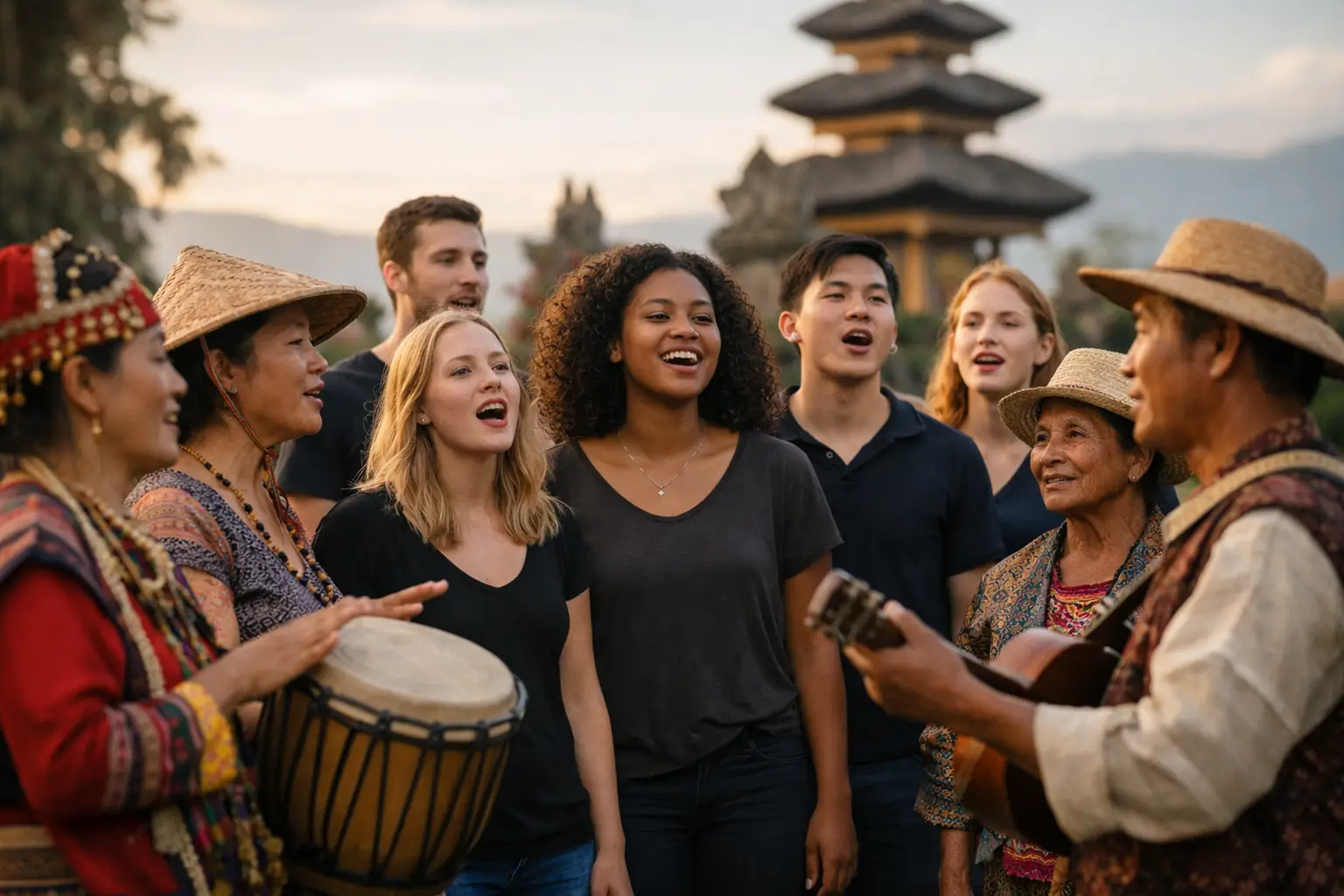
A choir can rehearse a foreign-language piece for months and still only know it from the page. Then comes the moment when singers hear that music in the place that shaped it: in a local church, a community gathering, a conversation with a host family, or the rhythm of a city street. Cultural immersion for choirs makes that moment possible. It turns international travel from a performance itinerary into an experience of listening, learning, and singing with greater purpose.
For choir directors, this distinction matters. A successful tour is not measured only by applause, beautiful venues, or the number of photographs taken. It is measured by what singers carry home: a stronger sense of ensemble, a wider view of the world, and a deeper understanding that music can create human connection across language, age, faith, and national background.
Cultural Immersion for Choirs Creates Better Musicians
Choral music is inherently relational. Every rehearsal asks singers to balance their individual sound with a shared intention. Traveling together expands that lesson beyond the rehearsal room.
When a choir encounters another culture with curiosity and respect, singers begin to hear more than notes and vowels. They notice different approaches to rhythm, phrasing, movement, storytelling, worship, celebration, and community. A traditional Costa Rican melody, a local percussion pattern, or a conversation with a fellow musician can offer context that no recording can fully provide.
That context changes performance. Singers become more attentive to the meaning behind the repertoire and more willing to take artistic risks. They understand that style is not simply something to imitate. It grows from people, history, place, and lived experience.
For directors and vocal coaches, immersion also offers a valuable teaching opportunity. A masterclass with an internationally recognized conductor may sharpen technique, but the cultural setting gives those technical insights emotional weight. Breath, diction, blend, and interpretation are no longer isolated skills. They become tools for communicating honestly with a new audience and with one another.
The Difference Between Visiting and Participating
It is possible to travel internationally without truly engaging with the destination. A tightly packed schedule of hotels, buses, and concerts may be efficient, yet it can leave little room for meaningful exchange. Cultural immersion asks more of a choir, but it gives more back.
Participation might mean sharing a collaborative performance with local singers rather than presenting a program and leaving. It might mean attending a workshop led by artists from the host community, learning about local traditions before a concert, or performing outreach music for people who may not normally have access to live choral events. These encounters create reciprocity. The visiting choir is not simply an audience for a destination. It becomes part of a musical conversation.
That does not mean every activity must be solemn or academic. Joy is part of cultural understanding, too. Sharing a meal, visiting natural landscapes, learning a dance, hearing local instruments, and celebrating after a concert can strengthen the bonds that formal programming begins. The most memorable exchanges often happen in unplanned moments, when singers realize they have found common ground with people they had only just met.
Why This Matters for Choir Identity
Group travel reveals a choir’s culture to itself. Members see how they make decisions, handle unfamiliar situations, support one another, and represent their community abroad. For youth ensembles especially, this can be a defining experience of responsibility and belonging.
A choir that travels with purpose must practice humility. It is a guest in every community it enters. That means preparing singers to be punctual, attentive, adaptable, and respectful of local customs. It also means helping them avoid the assumption that their own musical traditions are the universal standard.
This preparation is not a limitation on artistic freedom. It is part of artistic maturity. The best cultural exchange happens when singers arrive ready to share what they do well while remaining open to being changed by what they encounter.
The result is often a stronger ensemble. Members return with shared stories that go beyond a concert program. They have navigated new places together, encouraged one another through challenges, and experienced the power of their collective sound in a broader human setting. That shared history can renew a choir long after the trip is over.
Planning an Immersive Choral Journey With Care
Purposeful travel needs thoughtful planning. Directors are right to consider budget, safety, supervision, lodging, transportation, dietary needs, accessibility, and the amount of time singers can reasonably spend away from school, work, or family. Cultural immersion should not come at the expense of a well-organized experience.
The right balance depends on the ensemble. A school choir may need a more structured schedule and close supervision, while an adult community choir may welcome more independent exploration. Church choirs may prioritize opportunities for worship and service. Advanced ensembles may seek intensive artistic study alongside cultural activities. There is no single model, but every program should align with the choir’s values and capacity.
Before departure, directors can build anticipation through repertoire study, listening sessions, basic language preparation, and conversations about respectful travel. Rather than treating this as an extra assignment, invite singers to connect the preparation to the music they will perform. Ask what stories the repertoire carries, whose voices are represented, and how the choir can show gratitude to its hosts.
During the journey, resist the pressure to fill every hour. Reflection time is valuable. A short group conversation after a workshop or outreach concert can help singers process what they have heard and felt. Questions such as “What surprised you?” and “What did we learn from our hosts?” keep the focus on exchange rather than consumption.
Singing as a Practice of Peace
Peacebuilding can sound like an ambitious goal for a choir tour. Yet choral singing offers a practical, deeply human starting point. People who sing together must listen. They must make room for different voices. They must commit to a common pulse while honoring the unique color each section brings.
Those habits matter beyond music.
When choirs from different countries stand together on one stage, they offer a visible alternative to division. They do not erase differences in language, culture, or experience. Instead, they show that difference can become harmony when met with respect and care. A shared concert does not solve every conflict, but it can create the kind of personal connection from which peace grows.
At Choral Fest Costa Rica, this belief shapes the festival experience. Collaborative performances, educational opportunities, community outreach, and carefully curated cultural experiences invite ensembles to sing not only for artistic achievement, but for global fellowship. Costa Rica’s natural beauty and welcoming spirit provide a meaningful setting for choirs to encounter one another as fellow artists and fellow human beings.
Bringing the Experience Home
The value of an immersive tour should continue after the return flight. Directors can revisit recordings, invite singers to share reflections, and program music that connects to what the ensemble experienced. A choir might host a community presentation, introduce a newly learned song, or create a service project inspired by its outreach concert abroad.
These follow-through moments help prevent travel from becoming a closed chapter. They also allow singers who could not attend to learn from the group’s experience. More importantly, they remind participants that cultural exchange is not limited to international travel. The same openness can shape how a choir welcomes new members, chooses repertoire, partners with local communities, and listens to voices within its own hometown.
A meaningful choral journey does more than place singers in a beautiful destination. It gives them a reason to return home with wider ears, fuller hearts, and a renewed commitment to make harmony wherever they gather.