
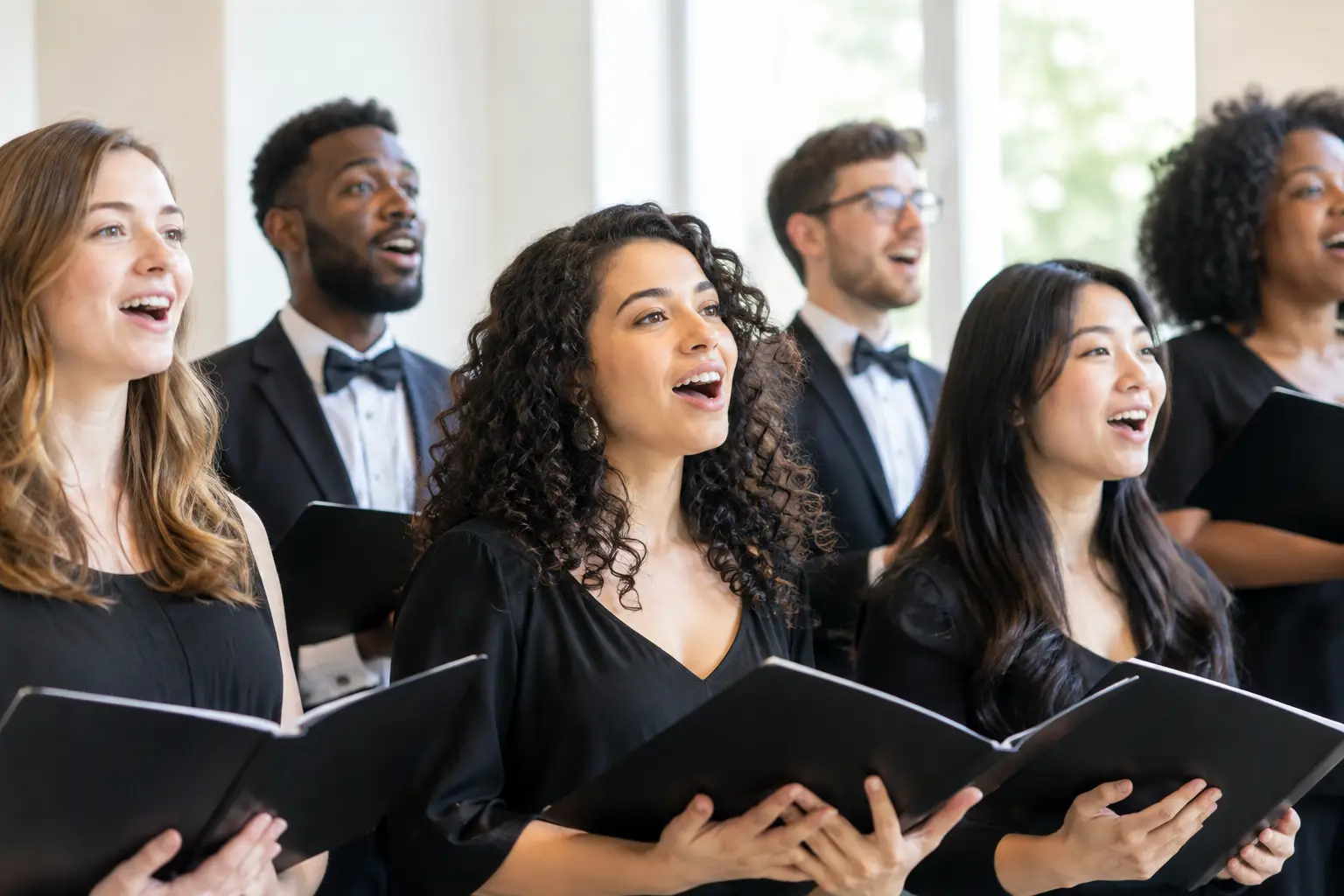
A festival performance asks more of a choir than a concert at home. Your singers may be sharing a stage with ensembles whose languages, traditions, ages, and vocal colors are entirely different from their own. The right festival repertoire for mixed choirs gives them a musical home in that setting: challenging enough to inspire growth, welcoming enough to communicate across borders, and purposeful enough to leave a lasting impression.
For directors planning international travel, repertoire is not simply a program choice. It shapes rehearsal priorities, packing plans, singer confidence, and the way your ensemble contributes to a larger gathering. A memorable festival set should honor the identity of your choir while making room for connection with the global choral family around you.
Start With the Festival Moment, Not Just the Score
Before selecting pieces, consider what kind of moment your choir is being asked to create. A formal concert, a community outreach appearance, a shared finale, and an outdoor cultural presentation each call for a different kind of repertoire. A work that fills a concert hall with dramatic sound may not translate well in an open-air venue. A quiet, text-driven piece can be deeply moving in a church or intimate community setting, but it needs careful placement in a larger program.
Festival programs also benefit from contrast. If every selection is dense, fast, and demanding, singers can tire quickly and listeners may lose the emotional thread. If every piece is gentle and reflective, the choir may not show the full range of its artistry. Consider building a short set that moves through welcome, energy, reflection, and hope.
For many mixed choirs, three to five well-chosen selections create more impact than an overly ambitious program. The goal is not to prove how much music your ensemble can prepare. It is to offer a complete artistic statement with clarity, generosity, and purpose.
Choose Music That Lets Every Voice Belong
Mixed choirs come in many forms. Some have strong, experienced tenor and bass sections. Others are youth ensembles with changing voices and limited lower-voice depth. Community choirs may include singers who read music fluently alongside those who learn primarily by ear. Festival repertoire must meet your actual ensemble where it is.
Look closely at tessitura before falling in love with a piece. Repeated high writing for sopranos, exposed entrances for tenors, or low sustained passages for basses can turn an exciting selection into a source of anxiety over several days of performances. The best music stretches singers without leaving any section behind.
Texture matters as much as range. Homophonic writing can create immediate unity and clarity, especially in unfamiliar acoustics. Independent lines bring color and sophistication, but they require rhythmic security and confident listening. A balanced festival program often includes both: one piece where the choir can breathe and speak together, and another that highlights its ability to weave distinct vocal lines into a shared sound.
If your choir will be traveling, remember that stamina changes on the road. Flights, early departures, warm weather, sightseeing, and the excitement of meeting other musicians all affect focus and vocal energy. Include at least one selection your singers know so deeply that it feels grounding wherever they perform.
Balance Ambition With Preparation Time
A festival invitation can motivate a choir to reach higher. That is a gift. Yet repertoire should fit the preparation calendar, not an idealized rehearsal schedule. Ask how many rehearsals remain, whether sectionals are realistic, and how much time will be available for memorization, pronunciation, and expressive detail.
A challenging work is worthwhile when its demands serve the musical experience. It may develop blend, deepen language skills, or introduce a meaningful cultural tradition. It is less worthwhile when complexity is there only for prestige. In a festival setting, a beautifully prepared accessible piece will often communicate more powerfully than difficult music performed with uncertainty.
Build a Program With Cultural Care
International choral festivals invite us to encounter music beyond our own traditions. That opportunity carries responsibility. When choosing music from another culture, go beyond the sound of the language or the appeal of a rhythmic style. Learn the text, the context, the composer or arranger’s intent, and the performance practices that give the piece integrity.
This does not mean directors should only program music from their own backgrounds. Cultural exchange is one of choral music’s great strengths. It means approaching each work with humility, accurate pronunciation, appropriate resources, and a willingness to teach singers why the piece matters.
A thoughtful program might pair a work rooted in your choir’s home community with music that reflects the festival’s host culture or a broader global perspective. In Costa Rica, repertoire that celebrates the natural world, peace, hospitality, human dignity, or shared joy can resonate especially well. The connection should be sincere rather than decorative.
When performing in Spanish or another unfamiliar language, begin pronunciation work early. Invite a fluent speaker, language coach, or cultural advisor into the learning process when possible. Singers are more expressive when they understand not only what they are saying, but who has said these words before them and why.
Make Space for a Shared Peace Message
At a non-competitive festival, repertoire can do something competition programs rarely have time to do: it can invite people into a common purpose. A peace-centered piece does not need to be sentimental or grand. It can be a prayer for courage, a folk song about home, a celebration of the earth, or a setting of words that affirm dignity and compassion.
The strongest choices allow singers to inhabit the message rather than merely present it. Give them room to discuss the text. Ask what the music asks of them as guests in another country and as members of a choir. Those conversations often change posture, diction, phrasing, and presence in ways no technical instruction can replace.
At Choral Fest Costa Rica, this sense of purpose can extend beyond the concert stage through collaborative singing, outreach experiences, and conversations with fellow musicians. Prepare one piece that your choir can offer as a genuine expression of its values. It may become the selection singers remember long after the travel photos are put away.
Consider Collaboration Early
Some festival experiences include a massed choir selection, a workshop performance, or a piece learned alongside other ensembles. These moments deserve early attention because the challenge is different from preparing your own set. Singers need accuracy, flexible listening, and enough familiarity with the score to respond quickly to a guest conductor.
Choose your individual repertoire with that workload in mind. If the shared festival work is rhythmically intricate or in a new language, your choir’s own program may benefit from greater simplicity. If the collaborative piece is accessible and uplifting, you may have room to feature a more demanding selection from your home repertoire.
It also helps to practice singing while watching a conductor other than your own. Invite another director to lead a rehearsal, or ask singers to focus on visual cues during warm-ups. Small exercises build adaptability and prepare the ensemble for the excitement of a large, unfamiliar stage.
Plan for Practical Performance Realities
Music travel rewards preparation. Confirm whether your choir will use printed folders, tablets, or memorized repertoire. Outdoor humidity, sudden rain, limited lighting, and transportation schedules can affect what is practical. A complicated staging plan may not be possible if the choir is moving quickly from a workshop to a concert venue.
Keep copies organized, label folders clearly, and prepare a performance order that can be adjusted if needed. Your singers should know where each piece begins, who gives the pitch, and what happens if a venue requires a shorter set. This kind of preparation is not glamorous, but it protects the calm, joyful atmosphere you want your choir to experience.
Also consider how repertoire supports physical presence. One energetic selection may invite natural movement or rhythmic involvement, while another asks for stillness and close listening. Encourage singers to practice transitions between pieces, including how they enter, acknowledge the audience, and reset their focus. A festival audience notices the spirit of an ensemble before the first chord sounds.
Let Your Choir Sound Like Itself
The most meaningful festival repertoire is not necessarily the newest piece, the most difficult score, or the one another choir has already performed. It is music your ensemble can sing with conviction. A school choir may bring fresh honesty to a simple work of hope. A church choir may offer profound warmth in a spiritual or sacred selection. An adult community choir may communicate remarkable depth through music shaped by years of shared life.
Choose repertoire that reveals those strengths. Then rehearse beyond notes and rhythms until singers understand the message they are carrying into the room. When a mixed choir sings with preparation, cultural respect, and openhearted purpose, it does more than represent its home community. It helps strangers hear one another as neighbors.
As you make your final choices, leave room for one piece that reminds your singers why they travel together in the first place: to grow, to listen, and to offer their voices in service of a more peaceful world.