
Polyphony in music is a texture in which two or more independent melodic lines sound at the same time. In choral music, each voice part contributes a distinct line while remaining connected to the complete ensemble.
This guide explains how polyphony differs from monophony and homophony, how it developed from medieval organum through Renaissance counterpoint and Baroque fugue, and what singers and directors should listen for in rehearsal.
Polyphony in Music at a Glance
| Texture | How it works | Choral example |
|---|---|---|
| Monophony | One melodic line | Unison chant |
| Homophony | Parts move together with one dominant melody | Four-part hymn |
| Polyphony | Independent melodies overlap | Canon, fugue or Renaissance motet |
What Is Polyphony?
Polyphony in music is created when two or more melodies maintain enough independence to be heard as distinct musical lines while sounding together.
Unlike homophony, where one main melody is supported by chords, polyphonic writing gives several parts meaningful melodic activity. In a choir, soprano, alto, tenor and bass may enter at different times, imitate one another, move in contrasting rhythms or carry equally important musical material.
This independence creates the woven quality that makes polyphonic music especially engaging for singers and listeners.
Polyphony vs. Monophony and Homophony
Monophony
Monophony uses one melodic line. Several singers may perform the same melody together in unison or octaves, but there is only one independent musical line.
Homophony
Homophony uses several parts moving together rhythmically while one line—often the soprano—has the strongest melodic role. Hymns and many chordal choral passages use this texture.
Polyphony
Polyphony gives multiple voices independent melodic importance. Entries may overlap, rhythms may differ and musical attention can move from one section to another.
For the broader development of these textures, see The History of Choral Music and The Evolution of Choral Music.
Historical Development of Polyphony
Medieval Organum
Early European polyphony developed from chant traditions. In organum, an existing chant line was combined with one or more additional voices.
By the 12th and 13th centuries, composers associated with the Notre Dame tradition, including Léonin and Pérotin, developed increasingly elaborate forms of multi-voice writing.
Renaissance Polyphony
The Renaissance became one of the most important periods in the history of polyphony in music. Composers such as Josquin des Prez, Giovanni Pierluigi da Palestrina and Thomas Tallis created vocal works in which independent lines were carefully balanced through imitation and counterpoint.
Imitation became especially important: one voice introduces a melodic idea and another enters later with the same or related material.
This technique appears prominently in motets, Mass settings and madrigals. See Motet vs. Madrigal for a closer comparison of two major Renaissance forms.
Baroque Counterpoint and Fugue
During the Baroque period, contrapuntal writing became highly systematic. Johann Sebastian Bach developed some of the most celebrated examples of fugue and multi-voice counterpoint.
In a fugue, a principal subject is introduced and then answered by other voices, creating a structured network of independent lines.
The Role of Polyphony in Choral Music
Polyphony in music gives each choral section greater responsibility because singers cannot rely entirely on a single dominant melody.
Independent Voice Parts
Each section must know its own rhythm, intervals, entrances and text while hearing how the line interacts with others.
Imitative Entries
One section may introduce a musical idea before another section repeats it. Singers must understand both when they enter and what musical material they inherit from the previous voice.
Shared Musical Importance
In strong polyphonic writing, no section remains permanently in the background. The musical focus can shift from soprano to alto, tenor or bass within a few measures.
Texture and Emotional Impact
Because several lines remain active simultaneously, polyphony can create momentum, tension, transparency and a sense of dialogue between sections.
Famous Examples of Polyphonic Choral Works
Josquin des Prez — Ave Maria … Virgo serena
This motet is known for imitative entries in which voices introduce related melodic material in succession.
Giovanni Pierluigi da Palestrina — Missa Papae Marcelli
Palestrina balances independent vocal lines with clarity of text and harmonic direction, making the work a classic example of Renaissance choral polyphony.
Thomas Tallis — Spem in alium
This monumental motet uses 40 independent vocal parts arranged in eight choirs, creating one of the most extraordinary large-scale polyphonic textures in the repertoire.
Johann Sebastian Bach — Mass in B Minor
Many sections of Bach’s Mass combine fugue, imitation and contrapuntal writing, demonstrating how Baroque polyphony can remain both highly structured and deeply expressive.
How to Rehearse Polyphonic Music
1. Learn Each Voice Part Securely
Singers should first understand their own melodic line before trying to solve the complete texture.
Use How to Read Choral Music for notation, interval and rhythmic skills.
2. Rehearse Entrances Separately
Identify who begins each imitative phrase and where the next voice enters. Practice entrances in pairs before combining all sections.
3. Practice Without the Melody Dominating
If sopranos carry a familiar line, temporarily remove them and rehearse alto, tenor and bass together. This prevents inner voices from becoming dependent on the most obvious melody.
4. Build Harmonic Awareness
Even independent melodies still form chords. Singers should understand where their note functions as root, third, fifth, suspension or dissonance.
See How to Improve Choir Intonation for chord-building and tuning strategies.
5. Balance the Musical Lines
Polyphony does not mean every voice should sing at identical volume. The line carrying the current musical idea may need temporary prominence.
Our guide to Choir Blend and Balance explains how to shape musical hierarchy without losing ensemble unity.
6. Reduce Piano Dependence
Once notes are learned, gradually remove constant piano doubling so singers develop independent listening.
7. Rehearse in Smaller Combinations
Useful pairings include soprano–alto, alto–tenor, tenor–bass and soprano–bass. These combinations reveal relationships that may disappear inside the complete choir.
For more independence work, see How to Sing in Harmony.
What Singers Should Listen For in Polyphonic Music
Performing polyphony in music successfully requires listening beyond your own section.
Singers should listen for:
- the voice that introduces the main idea;
- the next imitative entrance;
- the bass or tonal foundation;
- dissonances and resolutions;
- shared consonants and vowel shapes;
- changes in musical priority;
- cadences where independent lines come together.
A useful exercise is to ask each section to identify which other voice it must listen to most closely during a difficult passage.
Common Mistakes When Singing Polyphony
- Following the soprano automatically: inner voices lose independence.
- Singing every line at the same volume: musical hierarchy disappears.
- Ignoring the bass: harmonic direction becomes unclear.
- Learning notes without rhythm: imitative entries lose precision.
- Overusing piano support: singers fail to develop internal hearing.
- Focusing only on blend: individual lines lose definition.
- Focusing only on independence: the ensemble stops sounding unified.
Frequently Asked Questions About Polyphony in Music
What is polyphony in simple terms?
Polyphony is music in which two or more independent melodies happen at the same time.
What is the difference between polyphony and homophony?
Polyphony gives multiple parts independent melodic importance, while homophony usually has one dominant melody supported by other voices moving in similar rhythm.
Is a canon polyphonic?
Yes. A canon is polyphonic because one melody is imitated by another voice after a time delay.
Is a fugue polyphonic?
Yes. A fugue is a highly organized form of polyphony built around a principal subject introduced and developed across several voices.
Is Gregorian chant polyphonic?
Traditional Gregorian chant is monophonic because it uses a single melodic line. Later medieval practices added additional voices to chant and helped develop polyphony.
Why is Renaissance music often associated with polyphony?
Renaissance composers developed sophisticated imitative counterpoint in which several vocal lines had independent melodic importance.
Why is polyphonic music difficult for choir singers?
Singers must maintain their own melody and rhythm while listening to several other independent lines at the same time.
How can a choir improve polyphonic singing?
Use sectionals, rehearse imitative entrances, reduce piano doubling, practice voice-pair combinations and clarify which line has musical priority at each moment.
What is imitative polyphony?
Imitative polyphony occurs when one voice introduces a melodic idea and another voice repeats or adapts that idea later.
Can modern choral music be polyphonic?
Yes. Polyphonic texture is not limited to historical repertoire. Contemporary composers continue to use independent melodic lines, imitation, canons, layered rhythms and contrapuntal techniques.
Conclusion
Polyphony in music is one of the defining textures of choral history. From medieval organum and Renaissance motets to Baroque fugues and contemporary vocal writing, independent melodic lines have given choirs extraordinary rhythmic, harmonic and expressive possibilities.
For singers, the challenge is to remain independent without becoming isolated. The strongest polyphonic performance happens when every section knows its own line, listens across the choir and understands how several melodies combine into one larger musical structure.
For the broader practical framework connecting harmony, tuning, balance and ensemble singing, see the Complete Guide to Choir Singing.
Experience Polyphony Live at Choral Fest Costa Rica
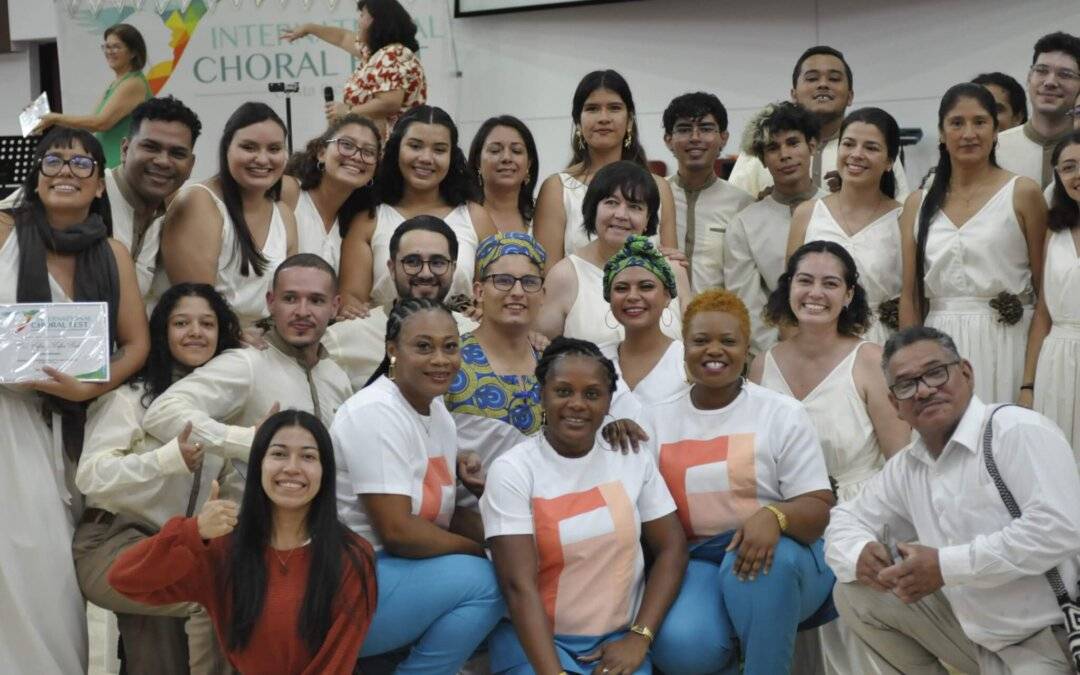
Interweaving vocal lines come alive when choirs from around the world gather at the International Choral Festival in Costa Rica for Peace, a non-competitive celebration of music, culture and peace.
Apply with your choir → or explore the festival to learn more.