
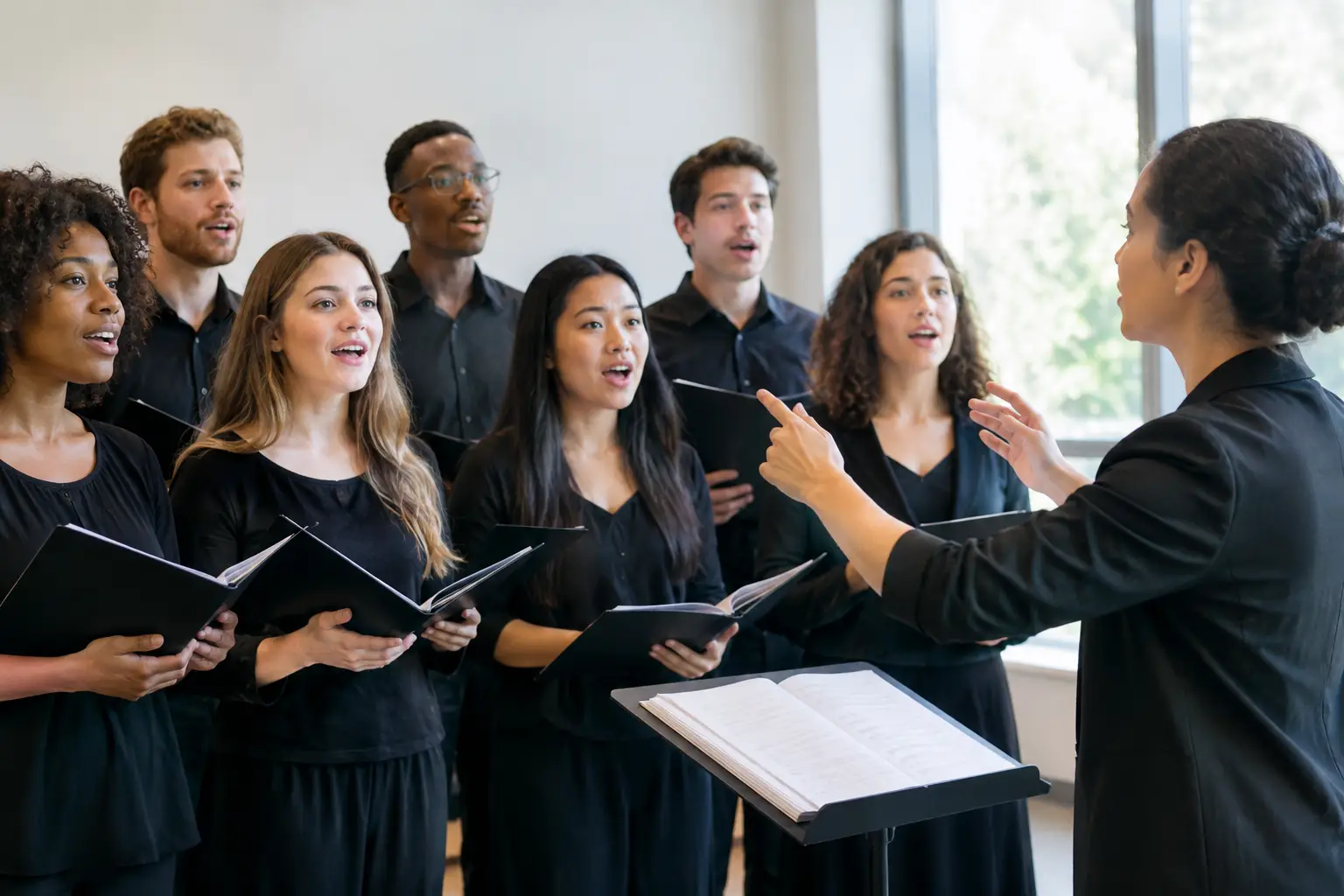
A choir can rehearse the same piece for months and still be changed most by what happens between rehearsals: sharing meals with new musical friends, listening to another culture’s songs, or singing for a community that receives the music with open hearts. So, what are choral residencies? They are immersive, structured experiences that give singers and directors time to learn, perform, connect, and grow together in a setting beyond their usual routine.
What Are Choral Residencies?
A choral residency is a dedicated period in which a choir, vocal ensemble, or group of singers gathers in a particular place for concentrated artistic work and shared cultural experience. It may last a weekend, several days, or a week or more. Rather than being a single concert or a standard sightseeing tour, a residency creates a temporary musical home where rehearsal, coaching, performance, reflection, and community exchange belong to the same experience.
The setting can vary widely. A residency may take place at a university, arts center, retreat venue, festival destination, historic city, or international host community. Some are designed for one established choir. Others bring together several ensembles for joint rehearsals, workshops, and culminating performances.
At its best, a residency has a clear purpose. It might prepare a choir for a major work, help a young ensemble develop confidence, connect singers with a guest conductor, or create meaningful exchange across borders. The goal is not simply to fill an itinerary. It is to make space for musical focus and human connection.
How a Choral Residency Differs From a Festival or Tour
A choral residency, a festival, and a performance tour can overlap, but they are not identical. A performance tour is often centered on presenting concerts in multiple locations. A festival typically brings ensembles together around scheduled events, performances, workshops, and celebration. A residency places special emphasis on sustained engagement: time to work deeply, learn from the place and its people, and develop relationships within the group.
That distinction matters for choir directors. A tightly scheduled tour can offer wonderful performance opportunities, but it may leave little room for reflection, coaching, or genuine cultural exchange. A residency usually moves at a more intentional pace. Singers may return to the same rehearsal space over several days, work with the same artistic mentors, and build trust with fellow participants.
Many of the strongest international music experiences combine these models. A festival may include a residency-style component through masterclasses, collaborative repertoire, community outreach, and shared final concerts. In that format, the excitement of a global gathering is supported by the deeper learning that makes the trip memorable long after the final applause.
What Happens During a Residency?
No two choral residencies follow the same schedule, because the program should serve the ensemble’s age, experience, repertoire, and goals. Still, most include a thoughtful blend of artistic development, performance, and cultural participation.
Singers often spend significant time in rehearsals that go beyond notes and rhythms. A guest conductor may explore style, language, vocal color, gesture, or interpretation. A vocal coach might help sections refine blend and healthy technique. For a choir that normally has limited access to specialist instruction, this concentrated attention can create a major leap in confidence and musical independence.
Performance is usually part of the experience, but the format can be more meaningful than a conventional concert. Choirs may sing alongside local ensembles, present music in a community space, or participate in a shared program with singers from several nations. When repertoire is selected with care, the performance becomes a conversation. Each choir brings its own voice, language, and tradition while contributing to a larger sound.
Cultural activities are not an optional extra. They give musical learning context. A local guide, musician, educator, or host family can help participants understand the history, customs, food, landscapes, and daily life of the place they are visiting. For singers, that context can change how they hear music and how they understand their own role as cultural guests.
Why Residencies Matter for Choirs
The most immediate benefit is artistic. Extended rehearsal time allows a director to move beyond survival mode. Instead of spending every rehearsal correcting entrances, the ensemble can ask richer questions: What does this text mean? Whose story are we telling? How can our sound serve the message? Those questions create more expressive, connected performances.
Just as important, a residency strengthens choir identity. Travel and shared work ask singers to care for one another in practical ways. They navigate early mornings, unfamiliar places, changing schedules, and the vulnerability of performing outside their comfort zone. A group that learns to meet those moments with patience and generosity often returns home more united.
For youth and student choirs, this can be a formative experience in global citizenship. They see that music is not confined to a classroom, sanctuary, or concert hall. It travels across language and geography. It can introduce people, honor traditions, and offer comfort when words alone are not enough.
For adult community and church choirs, a residency can renew purpose. Singers who have shared years of weekly rehearsals may rediscover why they began singing together. The experience reminds them that collective music-making has value beyond artistic achievement. It can be an act of welcome, service, faith, friendship, and peace.
Choosing the Right Choral Residency
A beautiful destination is a wonderful starting point, but it should not be the only reason to choose a program. Directors should look for a residency with artistic leadership they trust, a realistic schedule, well-defined performance opportunities, and organizers who understand group travel.
Ask how the program balances rehearsal, concerts, cultural activities, and rest. A packed schedule may sound exciting on paper, yet exhausted singers cannot learn or perform at their best. The right balance depends on the group. A highly experienced chamber choir may welcome intensive daily coaching, while a youth choir may need more time for recreation, orientation, and supervised cultural activities.
Safety and logistics deserve equal attention. International residencies require clear communication about lodging, transportation, meals, insurance expectations, accessibility, payment timelines, and emergency support. Strong organization does not diminish the magic of travel. It creates the security that allows singers and directors to be fully present.
It is also worth asking who benefits from the residency. Does the program create respectful exchange with local communities? Does it invite local artists into the learning process? Does it treat outreach as a genuine relationship rather than a photo opportunity? Purposeful programs recognize that visiting choirs are guests, and that every performance carries responsibility as well as privilege.
Building a Residency Around Purpose
The most powerful residencies begin with one honest question: What does this choir need now? A group preparing for an advanced concert may need focused musical coaching. A choir emerging from a difficult season may need restoration and renewed fellowship. A school ensemble may need a first international experience that builds independence and curiosity.
Once that purpose is clear, repertoire and activities can support it. Music about hope, peace, belonging, nature, or shared humanity can deepen a residency’s message, especially when singers have opportunities to meet people whose lives and traditions differ from their own. The repertoire does not need to be solemn to be meaningful. Joyful music, folk traditions, sacred works, and contemporary pieces can all create bridges when performed with care.
Programs such as Choral Fest Costa Rica show how a festival setting can become a residency-like experience when artistic learning, cultural discovery, and community outreach are held together by a shared peace mission. In this kind of environment, singers are not only visitors attending events. They become part of an international musical family with a common purpose.
The Lasting Value Is Often Unexpected
A residency may produce a polished final concert, new technical skills, and photographs that singers treasure. Yet its deepest effects are often less visible. A quiet singer volunteers for a solo. A director hears a renewed warmth in the ensemble’s sound. Two choirs that arrived as strangers sing together without being asked to separate by nationality.
Those are the moments that give choral travel its lasting value. A well-designed residency invites every singer to return home with more than memories of a destination. It gives them a larger sense of what their voice can offer: not just beauty, but welcome; not just performance, but connection; not just harmony in sound, but harmony in the way people live together.