
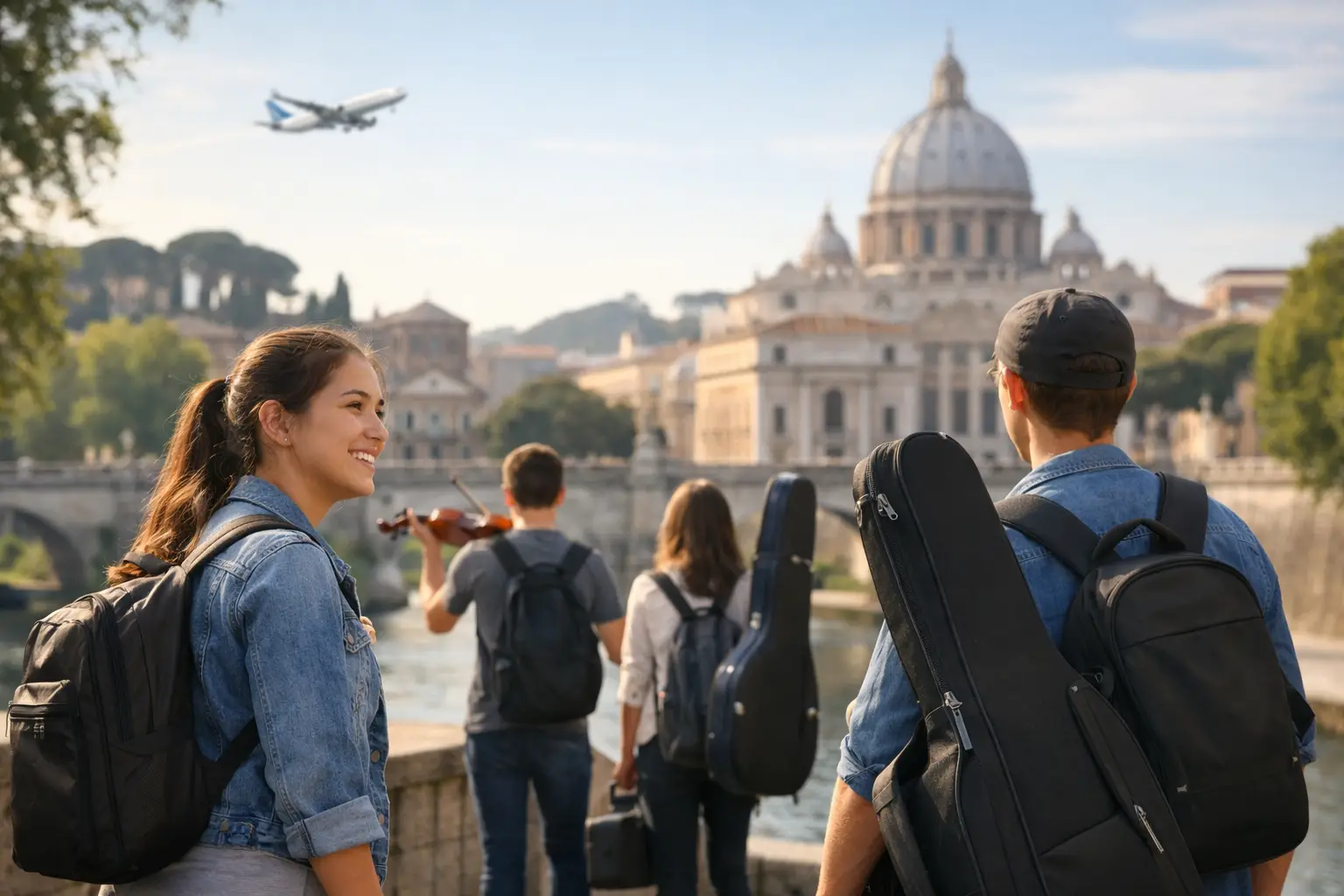
A choir can rehearse the same score for months and still be changed most by what happens after the final note. The bus ride to a community concert, the shared meal with local singers, the workshop that reframes a familiar technique – these are the moments when music education travel programs become more than a trip. They become a living classroom, a bridge between cultures, and, at their best, a way to teach young and adult singers how artistry and empathy belong together.
For choir directors and vocal leaders, that distinction matters. A travel experience built around music can either be a performance tour with educational elements added on, or it can be an intentional learning journey where performance, reflection, and cultural exchange are inseparable. The strongest programs do not just move an ensemble to a new destination. They move the ensemble toward deeper listening, stronger musicianship, and a wider sense of community.
What makes music education travel programs meaningful
The phrase can cover a wide range of experiences. Some programs center on adjudication and rankings. Others focus on sightseeing with one featured concert. Some offer excellent artistic coaching but little local connection. None of those models is automatically wrong, but they create very different outcomes.
Meaningful music education travel programs are designed with a clear educational purpose. That usually means students and directors know why they are traveling, what they will learn, and how the experience connects to their ongoing musical growth. A strong program creates room for technical development through rehearsals, clinics, and masterclasses, while also making space for cultural understanding through shared performances, local interaction, and time to absorb place.
For choirs, this matters because singing is inherently communal. Unlike many forms of solo study, choral music asks people to listen beyond themselves. Travel intensifies that lesson. A singer who performs in a new country, hears another language in rehearsal, or joins voices with an ensemble from a different tradition learns something no classroom lecture can fully replicate. The education is musical, but it is also human.
The educational value goes beyond performance
It is easy to market a choir trip around a headline performance. Directors need strong stages, audiences, and memorable venues. Those things matter. Still, if performance is the only goal, a program can miss the deeper value of travel.
The educational impact often shows up in quieter ways. Students return with improved rhythmic discipline because they had to adapt quickly in a collaborative rehearsal. Adult singers come home more confident because they worked with a guest conductor who challenged their assumptions about tone, phrasing, or diction. Directors gain fresh rehearsal strategies simply by observing how another musical culture approaches ensemble unity.
That is why the best music education travel programs combine structured instruction with real exchange. A masterclass without cultural context can feel isolated. A sightseeing-heavy tour without artistic rigor can feel thin. The most transformative experiences hold both together. Singers should leave feeling that they performed well, learned something specific, and encountered people and traditions that expanded their sense of what choral music can do in the world.
Why choir directors look for more than logistics
Well-organized logistics are essential. Transportation, lodging, safety, scheduling, and communication can determine whether a trip feels supportive or chaotic. But directors are rarely looking for logistics alone. They are looking for trust.
A choir director carries the responsibility for students, parents, budgets, repertoire, and educational outcomes all at once. That is why program design matters so much. Directors need to know whether the travel experience aligns with their ensemble’s values. Is the event competitive or collaborative? Will students be rushed from one obligation to the next, or will there be time for reflection and meaningful interaction? Is the destination treated as a backdrop, or as a partner in the educational experience?
These questions shape the tone of the entire journey. For some ensembles, competition can be motivating. For others, especially choirs seeking connection, artistry, and intercultural fellowship, a non-competitive setting creates more room for growth. When the atmosphere emphasizes shared singing over prestige, students often become more open, less guarded, and more willing to take artistic risks.
When travel supports peacebuilding
This is where music travel becomes especially powerful. Choral singing asks people to create harmony through difference. Separate voice parts, separate identities, separate histories – one shared sound. That is not just a musical skill. It is a social practice.
In a well-designed international festival, peacebuilding is not a slogan added to the brochure. It shows up in the structure of the event. It appears in collaborative performances instead of winner-take-all rankings. It appears in workshops where singers learn from one another rather than simply performing at one another. It appears in outreach concerts that bring music into community spaces with humility and care.
For directors leading youth choirs, church choirs, school ensembles, or community choruses, this can be one of the strongest reasons to choose purpose-driven travel. Students and singers do not just represent their ensemble. They practice global citizenship in real time. They see how music can carry respect across language barriers and how hospitality can become part of artistic training.
That is one reason festivals such as Choral Fest Costa Rica resonate so strongly with choirs seeking more than a tour. When artistic development is joined to cultural exchange and a clear mission of peace, the experience gains weight. Singers are not simply visiting a place. They are participating in a shared act of international harmony.
How to evaluate music education travel programs
Not every choir needs the same model, and the right fit depends on age, budget, repertoire level, and ensemble goals. Still, a few qualities tend to separate a meaningful program from a forgettable one.
First, look at the artistic structure. Are there workshops, clinics, or masterclasses led by credible musical educators? Will singers have opportunities to collaborate, not just perform? Educational quality should be visible in the program itself, not implied.
Second, examine the cultural dimension. Does the itinerary allow for authentic local engagement, or only staged tourist moments? The goal is not to eliminate sightseeing. Travel should be joyful. But the strongest programs let choirs encounter the host culture with respect and presence.
Third, consider whether the event’s values match your ensemble. Some directors want adjudication and awards. Others want community, service, and artistic exchange. Neither choice is universal. It depends on what your singers need most at this point in their development.
Finally, pay attention to support. Organized lodging, ground transportation, scheduling clarity, and responsive communication are not minor details. They create the conditions in which real learning can happen. If directors are constantly solving avoidable problems, the educational experience suffers.
The long-term effect on singers and ensembles
The most successful programs are not measured only by photos or applause. Their value appears months later. Rehearsals become more focused because singers have heard what disciplined artistry sounds like in a new setting. Ensemble culture becomes warmer because the group has navigated challenge and wonder together. Students become more curious, more adaptable, and often more committed to music itself.
Travel can also strengthen retention and identity. Choir members who share a meaningful international experience often feel a deeper sense of belonging. For school and community ensembles alike, that matters. A choir is not just a set of rehearsals. It is a musical family shaped by common purpose.
And for directors, the effect can be renewing. It is hard to overstate the value of stepping outside routine and remembering why choral work matters. In another country, in another acoustic, with another community singing beside your own, the mission becomes visible again. Music is not only something we teach. It is something we offer in service of connection.
Choosing programs that sing with purpose
There is no single formula for excellent music travel. Some groups need a first trip that feels simple and secure. Others are ready for deeper artistic challenge or broader cultural immersion. It depends on your singers, your resources, and your goals.
But the direction is clear. The most lasting music education travel programs are the ones that treat travel as part of the curriculum, not a reward after the real work is done. They respect singers as artists and as citizens of a wider world. They create space for excellence, for wonder, and for encounters that remind us why collective singing still matters.
When a choir returns home carrying stronger skills, deeper unity, and a renewed sense of human connection, the trip has done its work. And when that journey teaches singers to hear one another – across sections, across cultures, across borders – the education continues long after the concert ends.
Plan Your Choir’s Journey
Ready to take the next step? Explore what a choir trip to Costa Rica looks like, review the costs and logistics, or apply to bring your choir to Choral Fest Costa Rica. Have questions? Get in touch with our team.