
by admin | Aug 3, 2026 | Choral Music
Common choir terms help singers understand rehearsals, scores, conductor instructions and musical interpretation. Words such as blend, balance, dynamics, diction, tessitura, unison and divisi appear frequently in choral settings, but beginners may not always know...
by admin | Aug 3, 2026 | Choral Music
Breathing techniques for choir singers help support healthy tone, longer phrases, clear diction, stable pitch and controlled dynamics. Effective choral breathing is not about taking the largest possible breath; it is about inhaling efficiently, managing airflow and...
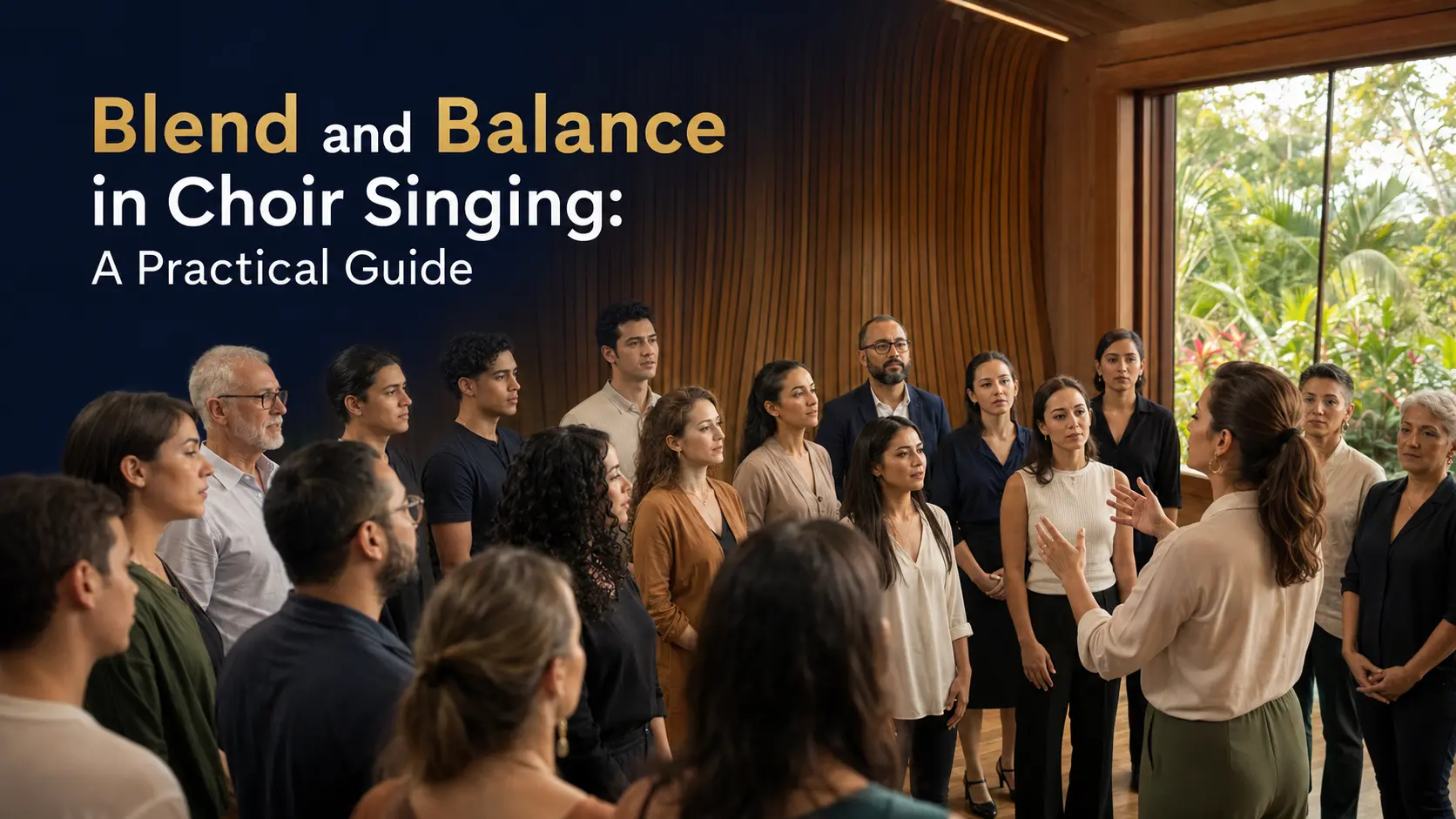
by admin | Aug 3, 2026 | Choral Music
Blend and balance in choir singing help individual voices become a unified ensemble without erasing the natural character of each singer. Blend refers to how vocal colors combine, while balance describes the relationship among sections, musical lines and dynamic...

by admin | Aug 3, 2026 | Choral Music
Learning how to read choral music helps singers understand their notes, rhythm, text, dynamics and relationship to the other voice parts. A choral score may look complicated at first, but it becomes much easier when you learn to identify the staff, clefs, measures,...

by admin | Aug 3, 2026 | Choral Music
Learning how to sing in harmony means developing the ability to perform one vocal line while other singers produce different notes around you. Harmony requires accurate pitch, rhythmic independence, careful listening and enough confidence to stay on your own part...
by admin | Aug 3, 2026 | Choral Music
Vocal warm-ups for choirs prepare the body, breath, voice and attention before rehearsal or performance. A good warm-up does more than produce sound: it helps singers release tension, coordinate breathing, improve resonance, unify vowels, strengthen listening and...
