by admin | Aug 3, 2026 | Choral Music
An effective choir rehearsal is carefully planned, focused and flexible. It helps singers improve vocal technique, learn repertoire, understand the text and develop the listening skills required to perform as one ensemble. This practical guide explains how to organize...

by admin | Aug 3, 2026 | Choral Music
Choosing music for your choir is one of the director’s most important responsibilities. The right repertoire helps singers develop healthy technique, improve musicianship and communicate meaningfully with an audience. The wrong music can create strain, frustration,...

by admin | Aug 3, 2026 | Choral Music
Starting a choir requires more than gathering people who enjoy singing. A successful ensemble needs a clear purpose, realistic leadership, suitable repertoire, regular rehearsals and an environment where singers feel welcome, respected and motivated to improve. This...

by admin | Aug 3, 2026 | Choral Music
A cappella vs. accompanied choir: the main difference is whether instruments participate in the performance. An a cappella choir creates melody, harmony, rhythm and expression using voices alone, while an accompanied choir performs with piano, organ, orchestra,...
by admin | Aug 3, 2026 | Choral Music
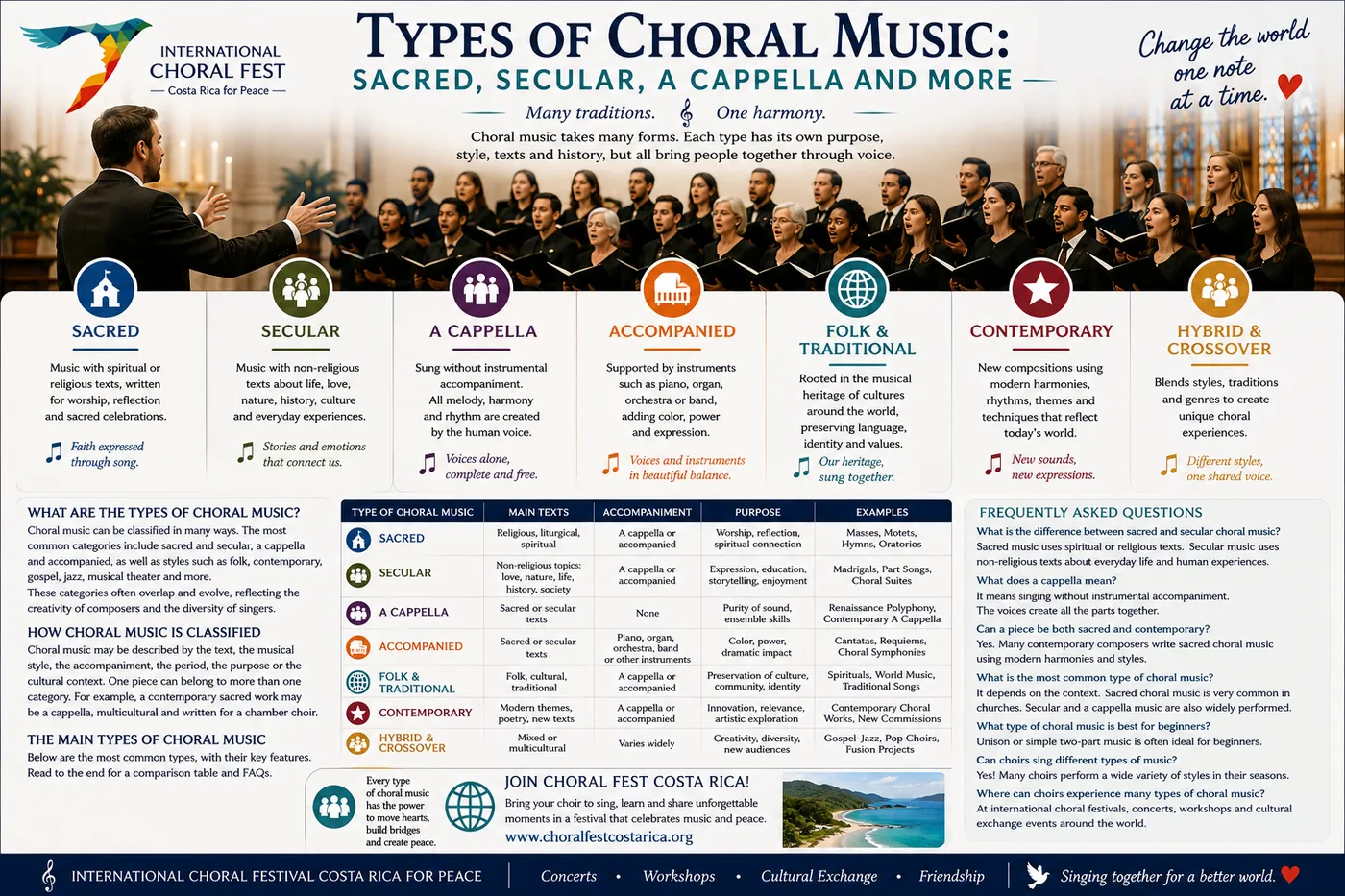
Types of choral music can be classified by text, purpose, musical style, accompaniment, historical period and cultural tradition. Sacred and secular music describe the subject of the text, while terms such as a cappella, accompanied, folk, gospel and contemporary...
by admin | Aug 3, 2026 | Choral Music
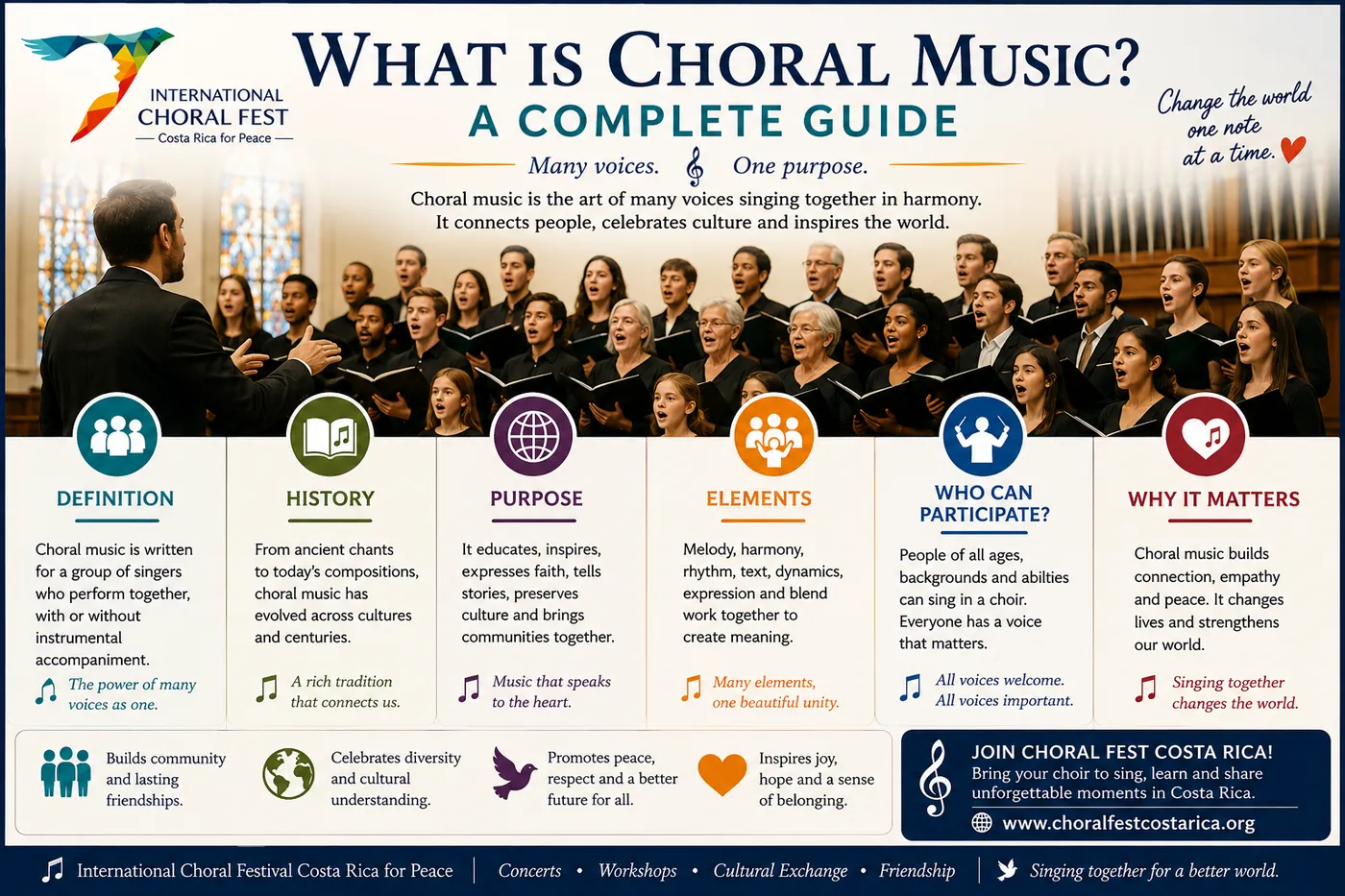
Choral music is music written or arranged for a group of singers who perform together. The singers may use one shared melodic line or several independent voice parts that combine to create harmony, counterpoint, rhythm and expressive meaning. Choral music can be...
