
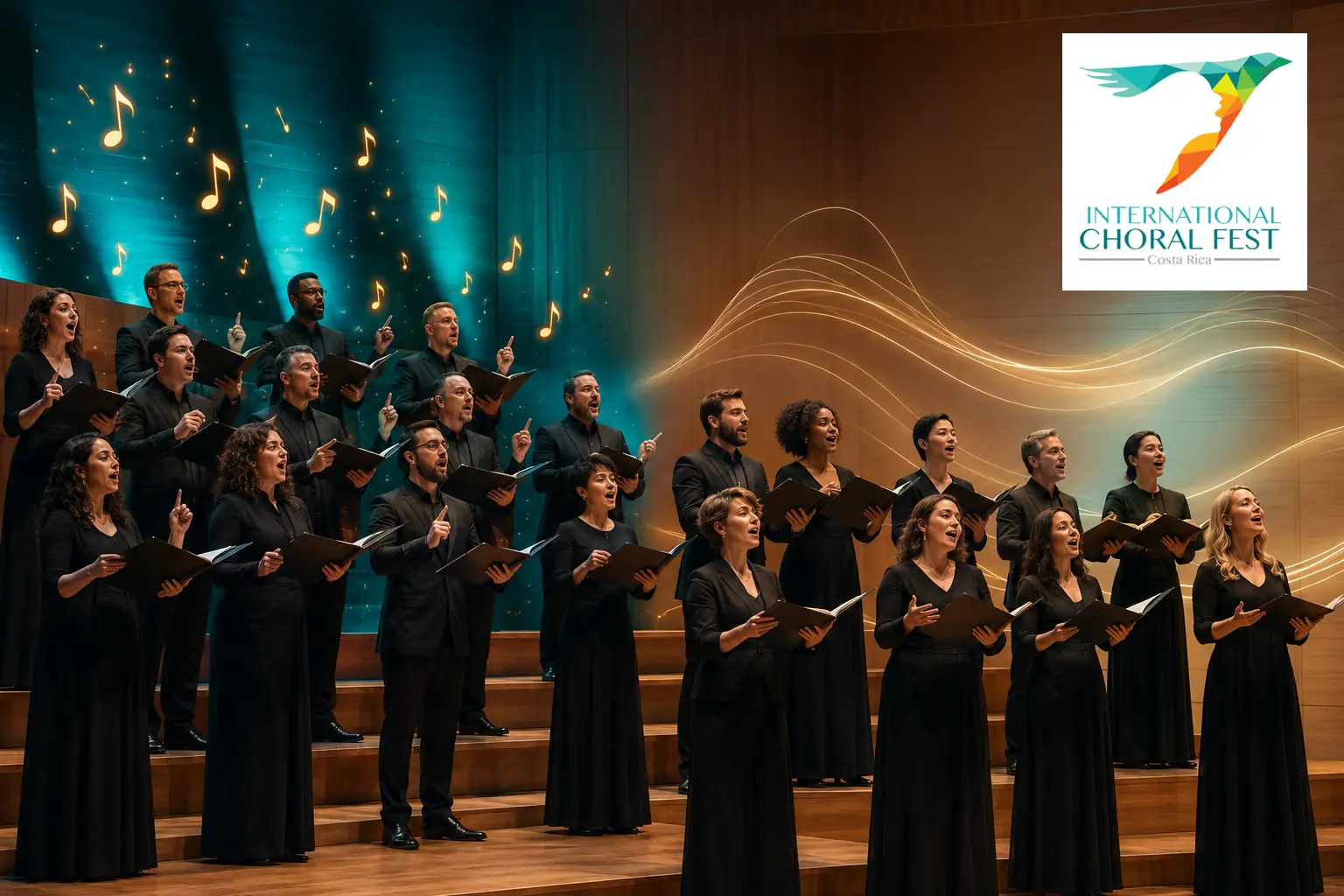
Staccato vs. legato describes two contrasting types of musical articulation. Staccato means short and detached, while legato means smooth and connected. In choral singing, the difference depends on vowel length, consonant timing, breath management, ensemble coordination and the conductor’s gesture.
This guide explains the meaning of staccato and legato, how they are notated, how they affect choral sound and how singers can practice both techniques without sacrificing tone, diction or vocal health.
Staccato vs. Legato at a Glance
| Technique | Sound | Typical notation | Choral focus |
|---|---|---|---|
| Staccato | Short, separated notes | Dots above or below notes | Precise attacks, vowel focus and unified releases |
| Legato | Smooth, connected line | Slurs, phrase markings or stylistic indication | Continuous vowels, supported breath and connected phrasing |
What Is Staccato?
Staccato comes from the Italian word for “detached.” In notation, it is usually shown by a dot above or below a note.
In singing, staccato does not mean chopping the voice or using a hard throat attack. Instead, singers produce a clear, brief tone with a coordinated beginning and release.
Good choral staccato requires:
- clean onset;
- short but resonant vowels;
- precise rhythm;
- coordinated consonants;
- unified releases;
- light, efficient breath energy.
Staccato often creates a lively, rhythmic, playful or energetic effect, although it can also be used for dramatic or stylistic contrast.
What Is Legato?
Legato means “tied together.” In legato singing, one note flows smoothly into the next with minimal interruption.
In choir, legato is created primarily by maintaining the vowel and allowing consonants to interrupt the line only as much as necessary for clear diction.
Good choral legato requires:
- steady airflow;
- continuous vowel connection;
- careful breath planning;
- smooth register transitions;
- consistent resonance;
- clear but efficient consonants.
Legato is especially important in lyrical, expressive and sustained repertoire.
Staccato vs. Legato: Key Differences
The clearest way to understand staccato vs. legato is to compare how the note begins, continues and releases.
| Element | Staccato | Legato |
|---|---|---|
| Note length | Shortened | Sustained and connected |
| Breath | Brief, energetic coordination | Continuous, controlled airflow |
| Vowels | Short but resonant | Long and connected |
| Consonants | Precise and rhythmically aligned | Clear without breaking the phrase |
| Musical effect | Crisp, light, energetic or detached | Flowing, lyrical, expressive or sustained |
How to Sing Staccato in Choir
Staccato singing should remain vocal, resonant and coordinated. The goal is not to create silence by squeezing or cutting off the throat.
Use a Clean Onset
Begin the note with coordinated breath and tone. Avoid hard glottal attacks or breathy starts.
Keep the Vowel Alive
Even a short note needs a clear vowel. If the vowel disappears, the ensemble may sound dry or percussive rather than musical.
Coordinate Releases
Short notes sound untidy when singers stop at different moments. Conductors should rehearse releases as carefully as entrances.
Stay Light
Staccato does not require extra volume. A lighter approach often improves speed, tuning and rhythmic clarity.
Use Vocal Warm-Ups for Choirs for short-note and articulation exercises.
How to Sing Legato in Choir
Legato singing depends on maintaining the musical line through vowels, breath and phrasing.
Connect Vowel to Vowel
Think of the phrase as a continuous stream of sound. Consonants should be placed efficiently so they do not interrupt the musical line.
Plan the Breath
Long phrases require efficient inhalation and coordinated support. See Breathing Techniques for Choir Singers.
Maintain Tone Through Phrase Endings
Choirs often lose legato when the sound weakens before the end of a phrase. Keep resonance and breath energy active until the release.
Use Staggered Breathing When Needed
For very long sustained lines, staggered breathing can preserve continuity without a collective break in the sound.
The Conductor’s Role in Staccato and Legato
Conductors shape articulation through gesture, preparation and release.
For staccato, useful gestures are usually:
- clear;
- compact;
- energetic;
- precise at the beat point.
For legato, gestures are often:
- smooth;
- connected;
- rounded;
- directed through the phrase rather than beat by beat.
The gesture should reflect the sound the conductor wants to hear. See How to Conduct a Choir for more on articulation, phrasing and cueing.
Practice Exercises for Staccato and Legato
Five-Note Staccato Exercise
Sing:
1–2–3–4–5–4–3–2–1
Use a light syllable such as “di,” “gi” or “no.” Keep each note short, clear and buoyant.
Five-Note Legato Exercise
Sing the same pattern slowly on “oo,” “ah” or “noo,” connecting each pitch smoothly.
Contrast Exercise
Sing the same pattern once staccato and once legato. This helps singers hear and feel the difference in articulation without changing pitch or rhythm.
Text Exercise
Choose one short phrase from the repertoire and rehearse it first legato, then staccato, then with the articulation marked by the composer. The contrast helps singers understand what changes physically and musically.
Section Echo Exercise
One section sings a short phrase staccato or legato and another section imitates the articulation exactly.
These exercises work well inside an effective choir rehearsal.
Staccato, Legato and Choir Blend
Articulation directly affects ensemble blend.
In staccato passages, singers must coordinate:
- the beginning of the vowel;
- note length;
- dynamic level;
- release timing.
In legato passages, singers must coordinate:
- vowel shape;
- breath flow;
- consonant placement;
- phrase direction.
For more on ensemble unity, see Choir Blend and Balance.
Common Staccato and Legato Mistakes
- Staccato with throat tension: short notes become hard and pressed.
- Staccato without vowel: the sound becomes dry or unclear.
- Uneven releases: sections stop at different times.
- Legato with weak diction: words become difficult to understand.
- Legato with too much breath: tone becomes airy and unstable.
- Breaking the phrase at every consonant: the line loses continuity.
- Ignoring the conductor: articulation becomes inconsistent across the ensemble.
Frequently Asked Questions About Staccato vs. Legato
What is the difference between staccato and legato?
Staccato uses short, detached notes, while legato connects notes smoothly into a continuous musical line.
What does a staccato dot mean?
A dot above or below a note usually indicates that the note should be shortened and separated from the next note.
What does a slur mean in singing?
A slur usually indicates connected notes within one smooth gesture or syllable, depending on the musical context.
Is staccato bad for the voice?
No, when sung with efficient onset, resonance and light breath coordination. Staccato becomes problematic when singers use throat tension or hard attacks.
How do singers make legato sound smooth?
By sustaining vowels, using steady airflow, placing consonants efficiently and maintaining phrase direction.
Can a choir sing staccato softly?
Yes. Staccato describes articulation, not volume. Short notes can be sung at any dynamic level.
Can legato singing still have clear diction?
Yes. Good legato keeps the vowel connected while consonants are precise and efficiently timed.
How can a conductor show staccato?
With smaller, clear and energetic gestures that define the beat and release precisely.
How can a conductor show legato?
With smooth, connected gestures that communicate the shape and direction of the phrase.
Why should choirs practice both articulations?
Because repertoire often moves between detached and connected styles. Practicing both improves rhythmic clarity, breath control, diction, phrasing and ensemble flexibility.
Conclusion
Staccato vs. legato is more than a contrast between short and long notes. These articulations shape rhythm, phrasing, diction and emotional character.
Choirs perform them successfully when singers coordinate breath, vowels, consonants, entrances and releases while responding to the conductor and listening across the ensemble.
For the broader practical framework, explore the Complete Guide to Choir Singing.
Experience Staccato, Legato and Everything In Between at Choral Fest Costa Rica
Techniques like these come to life when choirs perform together at the International Choral Festival in Costa Rica for Peace, a non-competitive gathering focused on musical exchange, culture and peace.
Apply with your choir → or explore the festival to learn more.